





Innovative Finance ISA: What It Is and the 2027 Rules
Innovative Finance ISA promises 7-12% returns by lending your money to strangers. Zero FSCS protection. Three UK platforms collapsed since 2019. Honest take inside.
Cite this article
Freedom Isn't Free (2026) Innovative Finance ISA: What It Is and the 2027 Rules. Available at: https://freedomisntfree.co.uk/articles/innovative-finance-isa-uk (Accessed: 10 October 2026).
Italicise the article title in your bibliography. Accessed date set to today.
TLDR
- An Innovative Finance ISA shelters interest on peer-to-peer loans and crowdfunded debt from UK tax. The £20,000 ISA allowance is shared across all wrapper types.
- IFISAs are NOT FSCS-protected. If the platform fails, you can lose your entire investment. Several UK P2P platforms have collapsed since 2019.
- From April 2027, the same anti-circumvention rules that hit stocks and shares ISAs also hit IFISAs: a charge on cash interest, a ban on transfers into cash ISAs, and cash-like tests on what counts as an investment.
- For most UK savers, an IFISA is not worth the risk. The yield premium over a cash ISA rarely compensates for the platform-collapse risk it carries.
IFISA vs Cash ISA: where your money sits in a failure
Cash ISA cash is bank-deposit, FSCS-covered. IFISA money is a loan to a platform user, with no compensation if either fails.
Innovative Finance ISA: What It Is and the 2027 Rules
The Innovative Finance ISA is the third type of ISA almost nobody uses, and the one most likely to surprise you with a permanent loss. It shelters the interest you earn on peer-to-peer loans and crowdfunded debt from UK income tax, exactly the way a cash ISA shelters savings interest. The wrappers look similar on paper. The risk profiles do not.
Most UK savers will never need an IFISA. A small number will, and for a narrow set of reasons. This is the honest explainer: how the wrapper actually works, why FSCS protection does not apply, which platforms have failed in recent years, and how the 2027 rules tighten the wrapper without fixing its underlying problem.
Contents
- What is an Innovative Finance ISA?
- How IFISAs work in practice
- The FSCS gap that catches people out
- The platforms that have failed
- How the 2027 cash ISA rules apply to IFISAs
- Who should consider an IFISA?
- Frequently Asked Questions
What is an Innovative Finance ISA?
The Innovative Finance ISA was introduced in April 2016, designed to extend the ISA tax shelter to peer-to-peer lending and equity crowdfunding. The idea was straightforward: give ordinary savers a way to access the higher yields that institutional lenders and private credit funds were earning, without taking a tax hit on the interest.
In practice, an IFISA is a wrapper around loans. You pay money in, the platform lends it out to borrowers (homeowners taking development loans, small businesses, renewable energy projects, property bridging), and you receive interest payments back. The interest is tax-free inside the wrapper. The £20,000 annual ISA allowance is shared across all your ISAs, so anything you put in an IFISA reduces what you can put in a cash ISA, stocks and shares ISA, or Lifetime ISA in the same tax year.
The headline returns are usually 6 to 12 per cent. That is several times what a cash ISA pays. The trade-off is that this is not interest in the traditional sense; it is the return on a loan, and the loan can default.
How IFISAs work in practice
When you fund an IFISA, the platform usually does one of four things with your money:
- Lends it directly to a named borrower. You choose the loan and the rate. Most niche platforms work this way.
- Spreads it across a pool of loans. The platform allocates your money automatically to diversify across many borrowers. This is the most common model on larger platforms.
- Buys bonds backing specific projects. Renewable energy IFISAs (Abundance, for example) work this way - you buy bonds in a wind farm or solar project and get coupon payments.
- Lends to property developers. Bridging and development loans, usually secured against the underlying property as first or second charge.
The yield comes from the borrower paying interest. Your principal comes back when the loan term ends, the borrower repays, or the secured asset is sold. The risks come from the borrower defaulting, the asset not covering the loan, or the platform itself going under.
The FSCS gap that catches people out
This is the single most important thing to understand about IFISAs. The Financial Services Compensation Scheme does not cover IFISA losses from borrower default or platform failure.
Cash sitting in a cash ISA with an FCA-regulated bank is covered by FSCS up to £120,000 per banking group, raised from £85,000 on 1 December 2025. If the bank collapses, you get your money back. That is the deal that makes cash ISAs the safest wrapper in UK personal finance - see our FSCS protection guide for how the per-licence rule actually works in practice.
IFISAs are different. The FCA regulates the platforms, so you have some recourse if a platform mis-sold a product or behaved fraudulently. But the loans inside the wrapper are not deposits and are not insured. If a borrower defaults, your loss is permanent. If the platform collapses, your loss is permanent. The £120,000 cap that protects cash ISA holders does nothing here.
This is not a technicality. It is the structural difference between holding a savings account and holding a portfolio of unsecured loans inside a tax wrapper.
The platforms that have failed
Anyone weighing an IFISA should know the recent history of UK peer-to-peer lending. Several platforms that were taking IFISA deposits have collapsed since 2019:
- Lendy (formerly Saving Stream): Collapsed in May 2019, taking £165 million of investor money into administration. Investors are recovering pennies in the pound through the administrators, years later.
- FundingSecure: Collapsed in October 2019 with around £80 million owed to investors. Same story: long-running administration, partial recoveries, some loans never repaid.
- Collateral: Smaller failure, but the platform turned out to be operating without FCA permission. Investors lost most of their capital.
- Funding Circle (the largest UK P2P platform): Did not collapse, but exited retail lending in 2022. Existing retail loans are being run off; the platform now lends only to institutional investors and through SME loan portfolios. The retail IFISA product is closed to new money.
- Zopa (the original UK peer-to-peer lender): Pivoted to a bank in 2020 and wound down its peer-to-peer book. Now a normal FSCS-covered savings provider.
The pattern across these failures is the same. A combination of bad underwriting, optimistic loss assumptions, and a market that was harder than the platforms claimed. Investors who thought they were earning 8 per cent on diversified portfolios were actually concentrated in a small number of large loans that all went bad together when the property market wobbled.
How the 2027 cash ISA rules apply to IFISAs
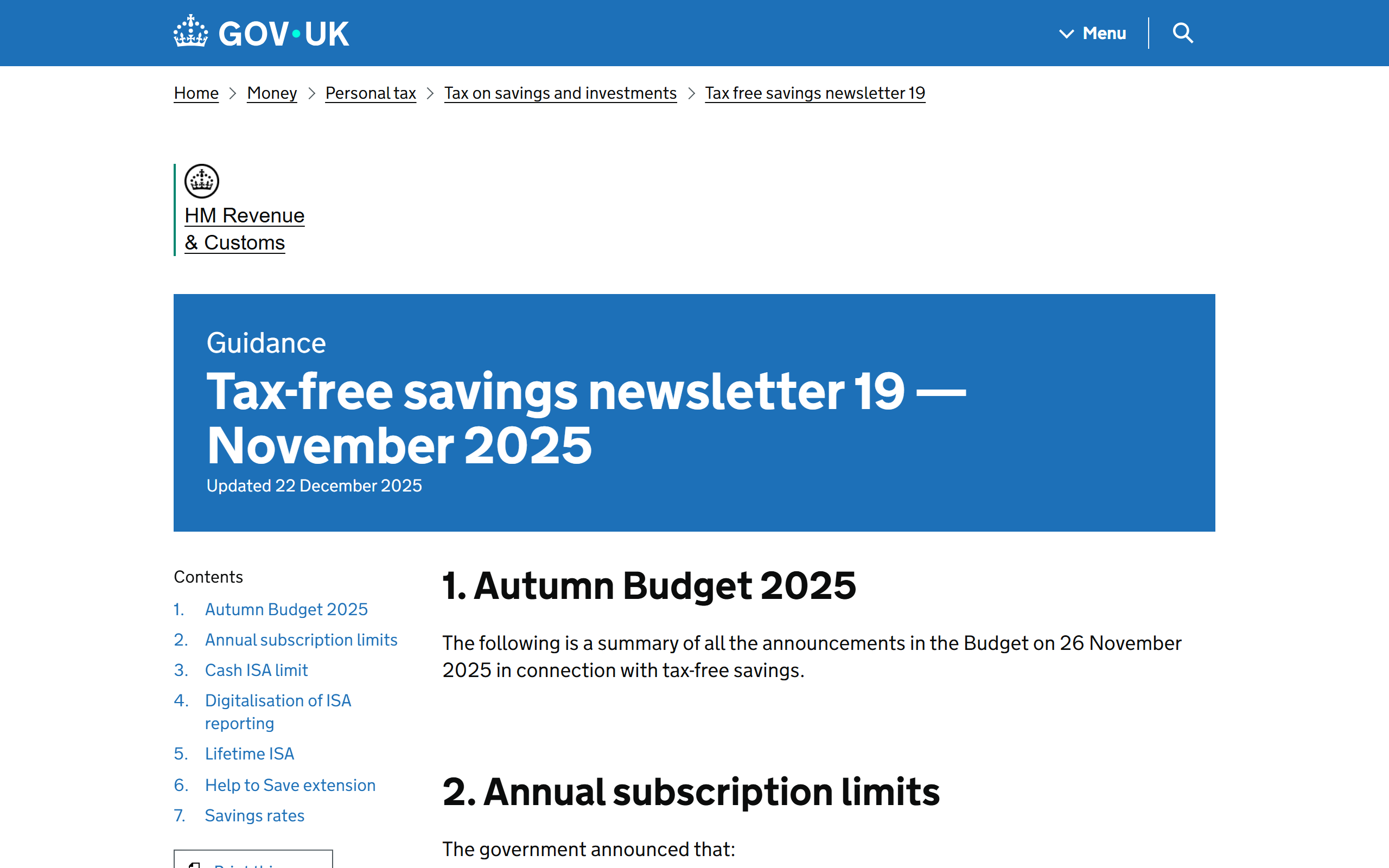
HMRC's Tax-free savings newsletter 19 confirmed that the April 2027 anti-circumvention rules apply to Innovative Finance ISAs as well as stocks and shares ISAs. The full set of changes - including the cash ISA allowance cut to £12,000 - is covered in our cash ISA cut 2027 explainer. From 6 April 2027, for under-65s:
- A charge on interest paid on cash held in an IFISA. If you have uninvested cash sitting in an IFISA between deployment cycles, the interest on that cash gets taxed as if you held it outside any wrapper.
- No transfers from an IFISA into a cash ISA. The flow becomes one-way. If you decide your appetite for P2P risk has waned, you cannot consolidate into the safer wrapper without selling, withdrawing, and re-subscribing.
- Cash-like tests on what counts as an investment. Money market funds and short-dated cash equivalents inside an IFISA get caught by the same definition as in a stocks and shares ISA.
The reforms tighten what counts as a "real" investment inside the wrapper and stop savers using it as a high-yield cash account. They do not change the FSCS gap, which is the actual structural risk.
Over-65s are exempt from the cash interest charge and the transfer ban. The split is the same as everywhere else in the 2027 reform.
Who should consider an IFISA?
Most UK savers should not. The yield premium over a cash ISA is rarely large enough to compensate for the risk, and the stocks and shares ISA wrapper gives you access to publicly traded high-yield credit funds with daily liquidity and proper accounting, while preserving the FSCS protections that come with a regulated investment platform.
A small set of savers can make a case for an IFISA:
- Anyone who already invests directly in property development or renewable energy bonds and wants the tax shelter. The wrapper is functioning as designed in this case.
- Anyone with a fully funded emergency fund, a fully filled pension, and a stocks and shares ISA building their long-term wealth, who has explicit appetite for high-risk lending exposure with a small slice (under 5 per cent) of their net worth.
- Anyone using a renewable energy IFISA for ethical reasons - putting money into UK wind, solar, or community energy projects directly via bonds, accepting the lower returns and longer lock-up that goes with that.
If you are funding an IFISA for the headline rate alone, you have probably misunderstood the product. The high rate is the market's price for the risk you are taking, not free money.
Frequently Asked Questions
Are IFISA returns guaranteed?
No. Returns depend on borrowers paying back their loans. If a borrower defaults, the platform may recover some of the loss from secured assets, but recoveries take months or years and rarely cover the full loan. The headline rates platforms publish are projected returns, not contractual ones.
Is an IFISA FSCS-protected?
Not for borrower default or loan losses. The FCA regulates the platforms themselves, so you have some recourse if the platform was operating illegally or mis-sold a product. But the loans you hold inside the IFISA are not bank deposits and are not covered by the £120,000 FSCS limit.
How much can I put in an IFISA?
Up to the £20,000 overall annual ISA allowance, shared across all your ISAs. From April 2027 the cash ISA limit drops to £12,000 for under-65s, but the overall £20,000 allowance is unchanged - so the IFISA cap also stays at £20,000 in theory, subject to anything you put in cash, stocks and shares, or Lifetime ISAs in the same tax year.
Can I transfer an old workplace pension into an IFISA?
No. Pensions can only be transferred between pension wrappers (SIPPs, other workplace schemes). You cannot fund an IFISA from a pension, and ISA contributions have to come from already-taxed income.
What changes for IFISAs in April 2027?
For under-65s, three rules from the cash ISA reform also apply: a charge on cash interest earned inside an IFISA, a ban on transfers from an IFISA into a cash ISA, and "cash-like" tests on holdings such as money market funds. Over-65s are exempt from all three.
Are IFISAs a good alternative to a cash ISA?
For almost all savers, no. The right comparison is "does the extra yield justify the risk of permanent loss?" - and the answer for cash held against household needs (emergency fund, house deposit, short-term goals) is almost always no. An IFISA is an investment product wearing a savings-account label.
Read Next
- Cash ISA Cut 2027: HMRC Closes the Workarounds - the full April 2027 reform and what changes for every ISA wrapper.
- Stocks and Shares ISA UK: The Complete 2026/27 Guide - the wrapper most IFISA candidates should fill first.
- FSCS Protection UK: What's Actually Covered Up to £120k? - what the £120,000 cap does and does not protect.
Prefer to watch?
We turn these money breakdowns into short videos
A few a week, plain-English UK money. If you would sooner watch than read, follow along:
Enjoying the content?
If this site has been useful, a coffee goes a long way.
Browse more articles
Browse all