





Cash ISA Cut 2027: HMRC Closes the Workarounds
Cash ISA allowance drops to £12,000 for under-65s from April 2027. HMRC is now closing every workaround, including the flexible S&S ISA cash trick most savvy savers use.
Cite this article
Freedom Isn't Free (2026) Cash ISA Cut 2027: HMRC Closes the Workarounds. Available at: https://freedomisntfree.co.uk/articles/hmrc-cash-isa-tax-2027 (Accessed: 10 October 2026).
Italicise the article title in your bibliography. Accessed date set to today.
TLDR
- From 6 April 2027 the annual cash ISA allowance for under-65s falls from £20,000 to £12,000. Anyone aged 65 and over keeps the full £20,000.
- HMRC plans to tax interest earned on cash held inside a stocks and shares ISA, block transfers from S&S ISAs into cash ISAs, and police what counts as "cash-like" inside an investment ISA.
- Taken together, the reforms make tax-efficient holding of safe assets harder for working-age households while leaving the £20,000 stocks and shares allowance untouched. That direction of travel is the real story.
- The draft rules are still in consultation. If you currently hold meaningful cash inside a stocks and shares ISA, you have until April 2027 to plan a response.
Cash ISA allowance from 6 April 2027
The cap drops for working-age savers; over-65s keep the original allowance.
Cash ISA Cut 2027: HMRC Closes the Workarounds
HMRC has signalled how it intends to enforce the upcoming cut to the cash ISA allowance, and the answer is more aggressive than most savers expected. From April 2027 the annual cash ISA allowance for anyone under 65 drops from £20,000 to £12,000. To stop people moving the missing £8,000 sideways into a stocks and shares ISA and just holding it as cash, HMRC is now proposing a charge on cash interest earned inside investment ISAs, a ban on transfers from stocks and shares ISAs into cash ISAs, and a new test for whether an investment is really an investment or whether it is "cash-like".
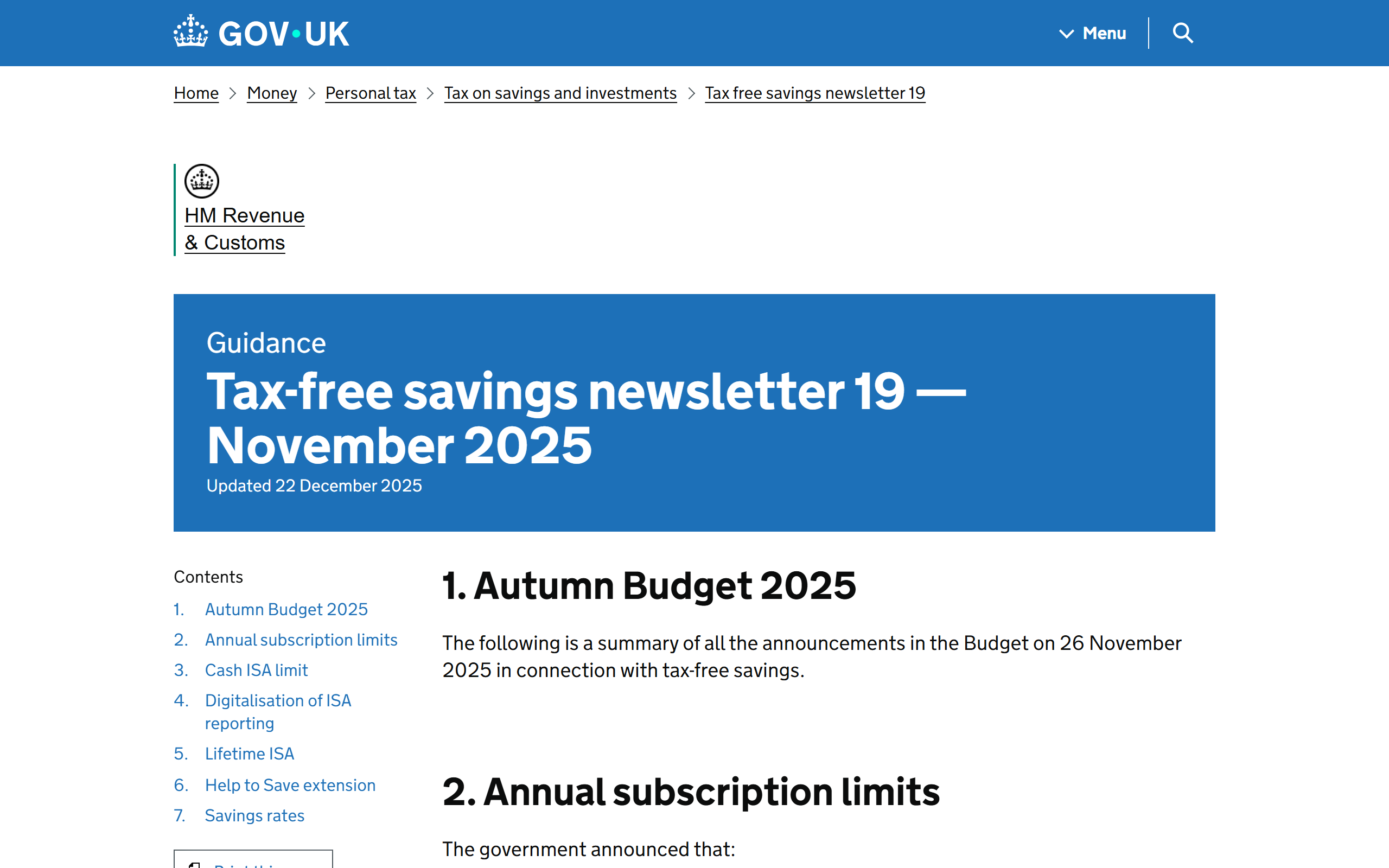
This is laid out in HMRC's Tax-free savings newsletter 19, published in November 2025. The legislation is still being drafted and the industry is being consulted, so nothing is set in stone, but the direction of travel is now clear enough to plan around.
Contents
- What's actually changing in April 2027
- The three anti-workaround rules
- Who actually gets hit
- The flexible S&S ISA trick is the real target
- What this is really about
- What you can do before April 2027
- Frequently Asked Questions
What's actually changing in April 2027
The headline change was confirmed in the Autumn Budget 2025: the annual cash ISA subscription limit will be £12,000 for investors under the age of 65 from 6 April 2027. Anyone aged 65 and over keeps the existing £20,000 cash ISA allowance, and the overall £20,000 ISA allowance across all wrappers is untouched. So you can still shelter £20,000 a year from tax. You just cannot put more than £12,000 of it into cash if you are working age.
In practice that leaves an under-65 saver with three options for the missing £8,000:
- Put it into a stocks and shares ISA and actually invest it
- Put it into an Innovative Finance ISA (peer-to-peer lending, mostly)
- Put it into a Lifetime ISA, if you are eligible and the use case fits
Or, in the obvious case the Treasury was worried about, put £20,000 into a stocks and shares ISA and just hold £8,000 of it as cash. That last option is what the new rules are designed to kill.
The three anti-workaround rules
HMRC's newsletter sets out three specific measures, all aimed at preventing under-65s from circumventing the lower cash limit:
1. No transfers from S&S or Innovative Finance ISAs to cash ISAs
You will not be able to transfer historic balances out of a stocks and shares ISA or Innovative Finance ISA and into a cash ISA. The flow is one-way. If you decide in five years' time that your goals have shifted and you want certainty rather than equity risk on a particular pot, you cannot move the wrapper without selling, withdrawing, and re-subscribing inside the new annual cap. (Today, consolidating ISAs across wrappers and providers is something most savers do at least once. From April 2027 the cash leg of that becomes one-way for under-65s.)
This is the rule that ages worst. People's circumstances change. A house deposit gets close, a parent gets ill, a redundancy package lands and the priority becomes capital preservation rather than growth. Today you can move an old S&S ISA into a cash ISA and lock in safety. From April 2027, under-65s cannot.
2. "Cash-like" tests on what you can hold
HMRC will introduce tests to determine whether an investment is genuinely eligible to be held in a stocks and shares ISA, or whether it is "cash-like" and therefore caught by the cash-ISA rules.
The draft rules have not yet been published, but the obvious target is money market funds, alongside certain short-dated gilt funds and cash-plus funds. The argument the Treasury will make is that these pay an interest-like yield with low volatility and are functionally used as cash equivalents. The counter-argument, which we will come to, is that they are not actually cash and the holder has accepted real market risk to own them.
3. A charge on interest paid on cash inside investment ISAs
This is the big one. HMRC will introduce a charge on any interest paid on cash held in a stocks and shares ISA or Innovative Finance ISA. The wording in the newsletter is that the rule applies to "persons under the age of 65" only.
The mechanism has not been published yet, but the policy intent is clear: if you park cash inside a S&S ISA for the tax-free interest it pays, you will be taxed on that interest as if it had been earned outside the wrapper. The whole point of the wrapper, which is to remove tax friction, is being deliberately broken for one specific use case.
Who actually gets hit
Three groups feel this most:
- Emergency-fund holders inside an ISA wrapper. A six-month emergency fund for a higher-rate taxpayer running on a £60,000 salary is roughly £15,000 to £20,000. At 4 to 5% interest, that fund crosses the £500 Personal Savings Allowance almost immediately, which is why many readers already hold their emergency fund inside an ISA. Under the new rules, that interest gets taxed.
- People saving for a known short-term goal. Anyone saving for a house deposit, a wedding, a career break, or school fees usually does not want their pot in equities. They want it in cash. The £12,000 cap for under-65s makes that harder, and the cash-like tests will close the money-market-fund workaround.
- Flexible-ISA users. Anyone using a flexible Stocks and Shares ISA, like Trading 212, as a combined cash-and-investment account. The flexibility feature lets you withdraw cash mid-year and put it back without burning allowance. Combined with tax-free interest on uninvested cash, it has been one of the cleanest setups available to UK savers. It is now squarely in HMRC's sights.
The 65-and-over carve-out is worth noting. Retirees, who tend to hold more cash because their investment horizon is shorter and their need for certainty is higher, are protected. Working-age savers, who are the people actually trying to accumulate the wealth that funds those retirements, are not. The age threshold is doing real work.
The flexible S&S ISA trick is the real target
What this is really about
Step back from the individual measures and look at the direction. The £12,000 cash ISA cap, the interest charge on cash inside investment ISAs, and the "cash-like" tests on MMFs and short-dated bonds all do the same thing in different ways: they make it harder for a working-age household to hold safe assets inside a tax wrapper. The £20,000 stocks and shares allowance is untouched. The wedge has been deliberately moved against safety.
That is a strange direction to push household finances. Cash deposits behind FSCS protection are the safest asset class a UK saver can hold. Money market funds and short-dated gilts are next. Diversified equities are riskier. Individual stocks and crypto are riskier still. The 2027 reform makes every wrapper for the safer end of that spectrum less attractive while leaving the riskier end fully sheltered. A working-age saver who follows the textbook advice, hold an emergency fund in cash and a house deposit in low-volatility assets, pays more tax in 2027 than they do today. A saver who puts £20,000 into a single tech stock gets the full shelter. The state has just told households the wrong way round.
The political pitch is that Britain has too much idle cash and not enough productive equity investment. There is a real argument there. UK retail equity ownership is low by international standards. But the response designed in this reform is to make safety less attractive rather than risk-taking more attractive. The S&S allowance could have been raised. Stamp duty on share purchases could have been cut. The LISA could have been fixed. None of that happened. Instead, the cheapest political move was chosen: squeeze the cautious end of the spectrum and hope the money turns up in equities.
The historical echo is uncomfortable. The lesson the policy world spent 2008 to 2012 absorbing was that households and institutions had taken too much risk and held too little safe-asset buffer. Higher capital requirements for banks, ring-fencing, FSCS reforms, all of it pointed the same way: more safety, more buffer, more resilience. The 2027 ISA reform pulls in the opposite direction at the household level. It is exactly the kind of policy you write in a long bull market and regret in the next crisis.
The three measures sit on a sliding scale of defensibility. The interest charge on cash you are parking inside a S&S ISA is consistent with what the wrapper was designed for, and is the easiest of the three to justify. The "cash-like" tests are weaker, because an MMF is a market security, not cash, and the holder has accepted real credit and liquidity risk to own it. The £12,000 cap and the transfer ban are the parts that genuinely sting: the first asks working-age savers to absorb a real reduction in their tax-free safety allowance, the second restricts choice on money already in the system when life circumstances change. The over-65 carve-out across all three tells you who the government feels politically comfortable asking to absorb the change, and who it does not.
This is not the worst thing the Treasury has ever done to savers. It is mild compared with the stealth taxes created by frozen tax thresholds. But the direction of travel is what matters. The tax code now favours the equity buyer over the cautious saver, in a system where the cautious saver is doing what the rest of the policy world has been asking households to do for fifteen years.
What you can do before April 2027
You have until 6 April 2027. A few things worth thinking about now:
- Use the existing rules while they last. If you have unused cash ISA allowance and meaningful cash savings, fill the 2025/26 and 2026/27 cash ISA allowances at the full £20,000 if it makes sense for you. Anything already inside a cash ISA stays inside a cash ISA, the cap is annual not cumulative.
- Review your S&S ISA cash holdings. If you currently hold a sizeable cash balance inside a stocks and shares ISA for the tax-free interest, plan what you will do when that interest becomes taxable. Options include moving the cash into a cash ISA before April 2027, deploying it into actual investments, or accepting the tax charge and treating the wrapper as a pure investment account.
- Reconsider your emergency fund location. Above the £12,000 cash ISA cap, the cleanest home for an emergency fund for an under-65 might be a non-ISA easy-access savings account. The Personal Savings Allowance still shelters £1,000 of interest for basic-rate taxpayers and £500 for higher-rate, which is meaningful for a six-month fund.
- Watch the consultation. The legislation is being drafted and the industry is being consulted. The 65-and-over threshold, the cash-like tests, and the interest charge are all subject to change before the rules go to Parliament. The basic policy direction is unlikely to reverse, but the detail might.
Frequently Asked Questions
When does the new cash ISA limit come in?
The reduced £12,000 cash ISA allowance for under-65s takes effect from 6 April 2027. Until then the full £20,000 cash ISA allowance remains in place for all ages.
Does the change affect my existing cash ISA balance?
No. Anything already inside a cash ISA is unaffected. The £12,000 cap applies to new subscriptions in each tax year from April 2027 onwards. Money paid in under previous years' allowances stays where it is, tax-free.
Does the £20,000 overall ISA allowance change?
No. The overall annual ISA allowance stays at £20,000 across all wrappers (cash, stocks and shares, Innovative Finance, Lifetime). Only the slice that can go into a cash ISA shrinks for under-65s. You can still shelter £20,000 a year in total, you just have to put at least £8,000 of it into something that is not cash.
Will I really be taxed on cash interest in my stocks and shares ISA?
If the rules go through as drafted, yes, for under-65s. HMRC has confirmed it plans to introduce "a charge on any interest paid on cash held in a stocks and shares or Innovative Finance ISA" for investors under 65. The mechanism is still being consulted on, but the policy intent is clear.
What counts as "cash-like"?
The detail has not been published yet. The obvious targets are money market funds, ultra-short-dated bond funds, and certain cash-plus investment funds that pay an interest-like yield with very low volatility. The exact test will appear in the draft legislation when it is laid before Parliament, which HMRC has said will be "well ahead of April 2027".
Are over-65s really exempt?
Yes, on every part of the reform. The £20,000 cash ISA allowance, the freedom to transfer S&S ISAs into cash ISAs, and the absence of a charge on cash interest inside investment ISAs all continue to apply once you turn 65. It is one of the more clearly age-gated tax reforms the UK has seen in years.
Can the rules still change?
The cash ISA cut itself is confirmed in the Autumn Budget. The anti-circumvention measures are still being drafted and the industry is being consulted. The headline policy is unlikely to reverse, but the detail of how "cash-like" is defined and how the interest charge is collected could change before the legislation is laid before Parliament.
Prefer to watch?
We turn these money breakdowns into short videos
A few a week, plain-English UK money. If you would sooner watch than read, follow along:
Enjoying the content?
If this site has been useful, a coffee goes a long way.
Browse more articles
Browse all