






Reassure Pension: What to Do When Yours Lands Here
A letter from Reassure landed on a million doormats. They are not a scam, but they are not a great long-term home. The one box on the statement that decides whether you stay or transfer.
Cite this article
Freedom Isn't Free (2026) Reassure Pension: What to Do When Yours Lands Here. Available at: https://freedomisntfree.co.uk/articles/reassure-pension-uk (Accessed: 10 October 2026).
Italicise the article title in your bibliography. Accessed date set to today.
TLDR
- Reassure is the UK's largest closed-book pension consolidator and a subsidiary of Phoenix Group. About a million policyholders were moved to them when Aegon UK sold its book in 2020, with earlier transfers from Old Mutual Wealth, HSBC Life and Zurich UK.
- Before doing anything else, check your statement for a Guaranteed Annuity Rate, a Guaranteed Minimum Pension or other safeguarded benefits. These can be worth two to three times the headline transfer value and you can sign them away by mistake.
- Charges in legacy Reassure schemes often sit between 0.5 percent and 1 percent a year, with narrower fund choice than a modern SIPP. Over twenty years a 0.5 percent fee gap on a 50,000 pound pot is roughly 17,000 pounds in lost growth.
- If your statement shows no safeguarded benefits and the fees are uncompetitive, transferring to a low-cost SIPP is often the better long-term home. Anything with safeguarded benefits worth more than 30,000 pounds legally requires FCA-regulated advice before transfer.
Stay or transfer out of Reassure?
| Situation | Stay if | Transfer if | Why |
|---|---|---|---|
| Small or medium DC pot, modern fund needs | Charges below 0.5% and fund choice fits you | Charges above 0.75% or no global tracker option | Fee drag and fund limits compound for decades |
| Statement shows a Guaranteed Annuity Rate | Almost always | Almost never | GARs of 8 to 11 percent can be worth 2 to 3 times the transfer value |
| Statement mentions GMP or safeguarded benefits | Almost always | Only after FCA-regulated advice | These are guaranteed income for life and easy to give up by accident |
| With-profits pot with terminal bonus | If the bonus only vests on the policy maturing | If there is no bonus or you are decades from maturity | Terminal bonuses can be 20 to 40 percent of the pot value |
Reassure Pension: What to Do When Yours Lands Here

If you opened a letter from a Reassure pension recently, you are not alone. Around a million people in the UK have. Your pension provider sold the book, the policy quietly moved across, and now a brand you have never heard of is administering money you spent years paying in. The instinct is to assume the worst. It is not the worst, but it is not the best either, and the next move depends almost entirely on what is printed on one specific line of your annual statement.
This article walks through who Reassure are, why your pot ended up with them, the guarantees you should check before doing anything, and how to decide whether to stay or move. None of what follows is financial advice. It is general information aimed at UK readers, and it sits alongside our UK pensions explained pillar guide. For any pot above 30,000 pounds with safeguarded benefits, you must take advice from an FCA-regulated independent financial adviser with the relevant pension-transfer permission before any provider will process a transfer. Capital at risk. Tax rules can change.
Contents
- Who Reassure are and why your pension is there
- What to do first when the welcome pack arrives
- How to read a Reassure annual statement
- The GAR and GMP warning you cannot afford to skip
- Charges and fund choice inside Reassure
- Should you transfer out of Reassure?
- How a pension transfer actually works
- Frequently asked questions
Who Reassure are and why your pension is there
Reassure is one of the UK's largest closed-book life and pensions administrators, looking after around 3 million policies on behalf of roughly £70bn of customer money. It is a subsidiary of Phoenix Group, the FTSE 100 insurer that has spent the last decade and a half buying up old pension and insurance books from providers that no longer want to administer them.
"Closed book" is the term that explains everything. These are pension schemes that have stopped accepting new business. The original provider decided the administration was no longer profitable or no longer fitted their strategy, and sold the entire policyholder base to a specialist. Reassure runs those legacy schemes at scale. That is the whole business model.
Books that have been moved into Reassure over the last decade reportedly include:
- Aegon UK (2020) - the Aegon UK individual protection and pensions book, said to be one of the largest single transfers in UK pensions history.
- Old Mutual Wealth / Quilter Life Assurance (2019).
- HSBC Life UK (2015).
- Zurich UK Life (2017), via Swiss Re ReAssure.
- Older absorptions from Tomorrow (the rebranded GAN UK), Guardian Assurance and the National Mutual book.
If your old provider is anywhere on that list, your pension is likely to be with Reassure now. These transfers happen under a court-approved Part VII scheme - you did not have to consent to the move and you cannot opt out of it. The policy terms travel across unchanged, which is the single most important point in this whole article. Whatever guarantees, charges, fund choice and access rules applied at your old provider apply now at Reassure.
What to do first when the welcome pack arrives
Do not panic. Do not transfer anywhere on impulse. Do not respond to any third party that contacts you after the move offering to "review" your new pension. Cold-calling about pensions has been illegal in the UK since January 2019, so any unsolicited phone call out of the blue about your pension is, by definition, somebody breaking the law.
The three things to actually do, in order:
- Read the welcome pack carefully and keep it. It will contain your new policy number, the scheme details, contact information and a summary of where the funds are invested. Photograph or scan it and save it somewhere you will find it again.
- Log in to the Reassure online portal and verify the balance. Your transfer value as of the move date should match what your old provider had on their last statement (give or take normal daily fluctuation). If the numbers do not roughly tie up, raise it with Reassure in writing within 30 days.
- Find your most recent annual statement from the old provider. This is the baseline against which to read everything Reassure sends. Old provider final statement plus Reassure opening statement should tell a consistent story.
That is the first hour of work done. Now the more important part.
How to read a Reassure annual statement
The annual statement is the single most useful document Reassure will send you. Read it once a year, slowly. Five lines matter more than the rest.
- Transfer value. The cash value of your pot today if you moved it elsewhere. This is the number most readers focus on, but it is not always the most important.
- Projected value at retirement. Reassure's projection of what the pot is likely to be worth at your selected retirement age, usually shown in today's money under a couple of growth assumptions. Take the central case as a rough guide, not a forecast.
- Annual management charge (AMC). The platform and admin fee Reassure deducts from the fund each year. This is the silent tax on your pot. Legacy schemes often sit between 0.5 percent and 1 percent.
- Fund holdings and choice. What you are invested in now, and the menu of alternatives you can switch to without leaving Reassure. Most legacy schemes have a narrow fund range compared with a modern SIPP.
- Guaranteed benefits. This is the single most important section. If your statement mentions a Guaranteed Annuity Rate, a Guaranteed Minimum Pension, protected tax-free cash above 25 percent, a protected pension age below 55, or any with-profits terminal bonus, stop reading the rest of the statement and skip to the next section.
There is also a TVAS acronym worth knowing. A Transfer Value Analysis is a comparison document that a regulated adviser produces showing the cost of replacing any safeguarded benefits if you transfer out. It is not on your statement - you would commission one as part of taking advice. If your statement mentions safeguarded benefits, a TVAS is the next document you need.
The GAR and GMP warning you cannot afford to skip
This section is the whole reason this article exists. Read it twice.
A Guaranteed Annuity Rate (GAR) is a clause in some pension contracts written largely between the mid-1970s and the late 1990s that promises a specific annual income for every pound of pot value at retirement. Rates of 8 to 11 percent were common in policies of that era - the FCA's own thematic work on GARs has repeatedly cited that range as typical. For context: a modern open-market annuity in 2026 pays roughly 6 to 7 percent for a 65-year-old, and only that high because gilt yields rose in 2023-24. Through most of the 2010s a modern annuity paid closer to 4 to 5 percent.
A GAR of 10 percent on a 50,000 pound pot would pay 5,000 pounds a year for life. Replacing that income at today's open-market rates would cost roughly 70,000 to 90,000 pounds depending on age and options selected. In other words, the GAR can be worth substantially more than the headline transfer value - in many cases multiples of it.
A Guaranteed Minimum Pension (GMP) is a related promise tied to pensions that were contracted out of the State Earnings-Related Pension Scheme (SERPS) between 1978 and 1997. The scheme guarantees a minimum income from State Pension Age (historically 60 for women and 65 for men, with equalisation rules now in play), often partially inflation-linked. A GMP cannot be matched by a modern personal pension. If you transfer out, the guarantee disappears.
With-profits terminal bonuses are a third category. Some Reassure with-profits policies pay a terminal bonus at scheme maturity, which on long-running policies has historically been a meaningful share of the final payout. Transfer out early and you almost always forfeit it.
If any of these apply to your Reassure pension, the default answer is to stay until you understand what is on the table. Transferring out without understanding what you are giving up is one of the most expensive mistakes possible in UK personal finance, which is exactly why the FCA built the safeguarded-benefits rules around it. For any safeguarded-benefits pot above 30,000 pounds, advice from an FCA-regulated adviser with the relevant pension-transfer permission is a legal requirement, not a suggestion. For pots below 30,000 pounds the law does not force advice, but the maths usually still does.
Charges and fund choice inside Reassure
Assuming your statement shows no safeguarded benefits, the next question is whether Reassure is a competitive long-term home for the money.
The honest answer, for most modern accumulators, is usually no. Reassure exists to administer closed schemes at scale, not to compete with modern SIPP providers on investment performance or fees. AMCs in legacy Reassure schemes commonly sit between 0.5 percent and 1 percent a year, with a narrower fund range than a typical modern platform. You will usually see the original provider's branded funds, a handful of broad equity and bond options, and sometimes a default lifestyle strategy that switches into bonds and cash from a fixed age.
A modern low-cost SIPP can look very different. A platform charging 0.15 percent or less, holding a single global equity tracker at around 0.12 percent OCF, gives you a total cost of roughly 0.27 percent a year and access to the same global market the legacy fund is probably tracking less efficiently anyway.
Over twenty years on a 50,000 pound pot, a 0.5 percent annual fee gap is in the order of 17,000 pounds in lost growth at typical equity-return assumptions. Over thirty years the gap widens further. The numbers compound silently and they compound for decades. This is not theoretical - it is the cost of doing nothing, and it is precisely the kind of structural drag that the UK's pro-saver wrapper rules (tax relief, ISA growth shielding, salary sacrifice) were designed to offset. Letting an expensive legacy book quietly hoover that benefit back out is the opposite of what those wrappers exist for. Past performance is not a guide to future returns.
Should you transfer out of Reassure?
Again, this is not advice. It is a decision framework. The right answer depends on what is on your statement.
Transferring out is often worth considering when:
- The pot is small or medium sized (broadly, under 100,000 pounds), the statement shows no safeguarded benefits, and the AMC is 0.5 percent or higher.
- You want a wider fund range, particularly a low-cost global tracker the Reassure fund menu does not offer.
- You are decades from retirement, so the fee drag has time to compound meaningfully.
- You have multiple small pensions scattered across legacy providers and want a single online view in a low-cost SIPP.
Staying put is often the better answer when:
- The statement shows any GAR, GMP, protected tax-free cash, protected pension age or with-profits terminal bonus.
- You are within five years of retirement and the projected income from staying is already adequate.
- The charges are competitive (some Reassure-administered modern schemes do come in under 0.5 percent) and the fund choice meets your needs.
- The pot is large enough that the safeguarded-benefits rules apply and you have not yet taken regulated advice.
For anything with safeguarded benefits worth more than 30,000 pounds, the law requires you to take advice from an FCA-regulated independent financial adviser with the relevant pension-transfer permission before any provider can process the transfer. This is a hard regulatory rule, not a guideline, and providers will refuse to action the transfer without sight of the advice. Below 30,000 pounds the legal requirement falls away but the substantive case for taking advice usually does not.
Our companion guides on finding lost pensions and SIPP vs workplace pension cover what a sensible destination looks like if you do decide to move. The drawdown calculator is useful for stress-testing whether the projected income from staying is enough.
How a pension transfer actually works
If you have decided to transfer (and where required, taken advice), the process is administrative rather than complicated.
- Open the receiving pension first. You cannot start a transfer until the new SIPP exists and is ready to receive funds.
- Initiate the transfer from the receiving end. The new provider asks for your Reassure policy number and basic details, then contacts Reassure directly. You do not deal with Reassure for this step.
- Reassure issues a transfer pack. They send you (and the receiving scheme) the formal transfer value, charges, and confirmation of any guarantees being given up. Read this carefully. If you spot anything you did not know about, pause and ask questions before signing.
- Sign and return the transfer authority. Once Reassure has the signed form they process the disinvestment, usually within four weeks.
- Money lands in the new scheme. Total elapsed time is typically four to twelve weeks from initiation. You then choose how the money is invested in the new pension.
There is no tax to pay on a like-for-like UK pension transfer between FCA-regulated UK schemes. The funds move from one pension wrapper to another. The annual allowance is not affected because nothing is being contributed in. The money never touches your bank account, which is precisely the point.
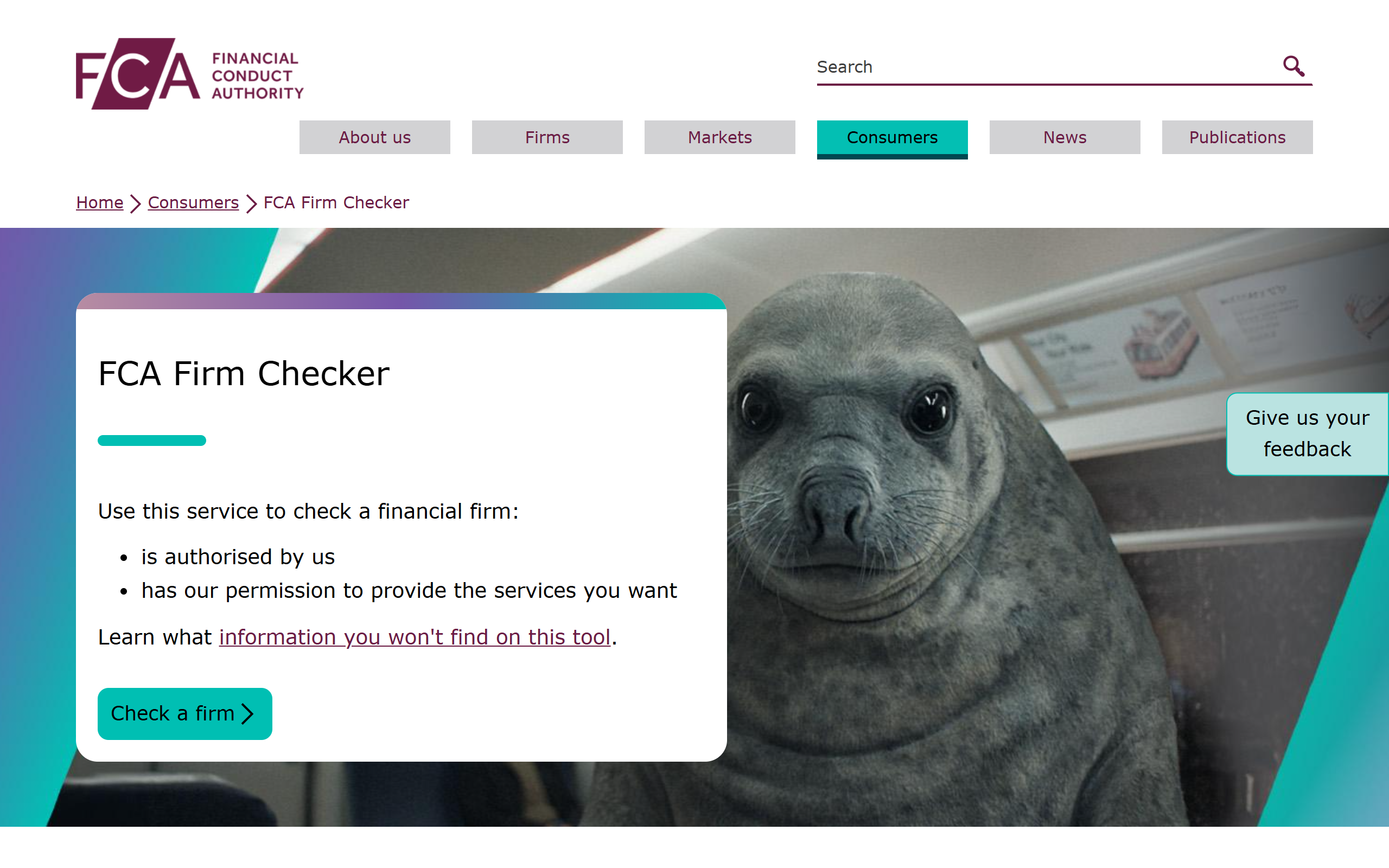
A final note on scams. Anyone who calls you out of the blue offering to "help" with a pension transfer is almost certainly a scammer, and the cold-call ban means they are also operating illegally. The FCA's Firm Checker lets you verify any firm is authorised before you engage with them. Legitimate financial advisers do not cold-call about pensions.
Frequently asked questions
Who took over Reassure pensions?
Reassure itself was acquired by Phoenix Group in July 2020 from Swiss Re. Phoenix is a FTSE 100 closed-book consolidator that also owns Standard Life and several other legacy life and pension brands. The Reassure brand continues to operate as a Phoenix subsidiary, administering the books it has taken on over the years from providers including Aegon UK, Old Mutual Wealth, HSBC Life and Zurich UK.
How do I contact Reassure pensions?
The main customer line is on the back of any letter Reassure has sent you, and on the reassure.co.uk website. Have your policy number to hand. For online access, register at the Reassure portal using the activation code in your welcome pack. Email and secure-message options are available through the portal once you are logged in.
Is Reassure a good pension?
Reassure is a safe administrator and is FCA-regulated, but it is not designed to compete with modern SIPP providers on cost or investment choice. It exists to run closed legacy schemes efficiently. For pots with safeguarded benefits, staying is often the right call. For pots without them, a modern low-cost SIPP usually offers better fund choice and lower fees, which compound meaningfully over decades.
When can I take my Reassure pension?
The same rules apply as any UK personal pension. The current minimum access age is 55, rising to 57 from April 2028. Some older Reassure-administered policies carry a protected pension age below 55, which would be lost on transfer. Check your policy schedule before assuming.
What did Reassure pension used to be called?
It depends on which book your policy came from. The most common previous brands now administered by Reassure include Aegon UK (transferred 2020), Old Mutual Wealth and Quilter Life Assurance (2019), HSBC Life UK (2015), Zurich UK Life (2017), Guardian Assurance, Tomorrow (formerly GAN UK), and National Mutual. Your original policy paperwork will show the brand you signed up with.
Is Reassure FCA regulated?
Yes. Reassure Limited is authorised by the Prudential Regulation Authority and regulated by the Financial Conduct Authority and the Prudential Regulation Authority. Your pension is also covered by the Financial Services Compensation Scheme (FSCS) in the unlikely event of provider failure. For pension products that are written as contracts of long-term insurance - which most legacy Reassure-administered personal pensions are - the FSCS protects 100 percent of the claim with no upper cap. The FSCS itself notes that it cannot confirm classification for individual policies, so check your policy schedule or ask Reassure to confirm in writing if it matters to you.
Read Next
- UK Pensions Explained - the pillar guide to what you actually get from each UK pension type.
- Find Lost Pensions UK - the step-by-step tracing guide if Reassure may not be the only legacy book with your money.
- SIPP vs Workplace Pension - the comparison if you are weighing where a transferred Reassure pot might go.
- Drawdown Calculator - stress-test whether the projected income from staying is enough.
Disclosure: This article is general information for UK readers, not regulated financial advice. Capital is at risk when investing. Pension and tax rules can change. Past performance is not a guide to future returns. For any pension transfer involving safeguarded benefits, or a pot above 30,000 pounds with such benefits, regulated advice from an FCA-authorised firm is a legal requirement.
Prefer to watch?
We turn these money breakdowns into short videos
A few a week, plain-English UK money. If you would sooner watch than read, follow along:
Enjoying the content?
If this site has been useful, a coffee goes a long way.
Browse more articles
Browse all