


Playing with FIRE Review: A UK Reader's Guide
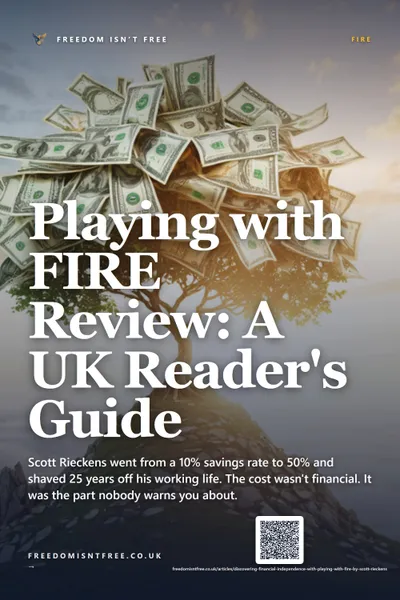
Scott Rieckens went from a 10% savings rate to 50% and shaved 25 years off his working life. The cost wasn't financial. It was the part nobody warns you about.
Cite this article
Freedom Isn't Free (2026) Playing with FIRE Review: A UK Reader's Guide. Available at: https://freedomisntfree.co.uk/articles/discovering-financial-independence-with-playing-with-fire-by-scott-rieckens (Accessed: 21 September 2026).
Italicise the article title in your bibliography. Accessed date set to today.
TLDR
- Scott Rieckens' book 'Playing with FIRE' offers a guide to achieving Financial Independence, Retire Early (FIRE) by drastically cutting expenses and investing.
- The book highlights that increasing savings rates significantly can reduce working years dramatically, and this principle applies to UK readers with tools like ISAs and SIPPs.
- Rieckens advocates for low-cost, diversified index fund investing, which UK investors can also use through platforms like Vanguard and Trading 212.
- The book candidly discusses the emotional challenges of pursuing FIRE, emphasizing the importance of open communication in a relationship.
Playing with FIRE Review: A UK Reader's Guide
Playing with FIRE by Scott Rieckens is one of the most accessible introductions to the FIRE movement - Financial Independence, Retire Early. Part memoir, part documentary companion, the book follows Rieckens and his wife Maddie as they overhaul their spending, discover index fund investing, and reshape their lives around the goal of financial independence. For UK readers, the story translates well, though it requires adapting the American details to our own tax wrappers and pension system.
How Scott Rieckens Discovered FIRE
Rieckens was earning good money in Southern California, but his family was spending almost all of it. A high mortgage, car payments, and lifestyle inflation meant that despite a six-figure household income, they had little to show for it. The turning point came when Rieckens listened to a podcast featuring Mr. Money Mustache and realised there was an alternative to working until 65.
He and Maddie set a target: cut their spending rate dramatically, invest the difference in low-cost index funds, and reach financial independence within ten years. The book documents the friction this created - relocating to a cheaper city, selling a car, and having honest conversations about what actually made them happy versus what they spent money out of habit.
For UK readers, the specifics differ but the pattern is familiar. Many households in the UK spend heavily on housing, cars, and subscriptions without questioning whether those costs align with their priorities. Rieckens' story is a useful mirror.
Cutting Expenses to Accelerate Savings
The heart of the FIRE approach in this book is the savings rate. Rieckens shows that the percentage of income you save matters far more than the absolute amount you earn. Moving from a 10% savings rate to a 50% savings rate can cut your working years from 40+ to under 15.
Working years to financial independence by savings rate
Source: Mr Money Mustache - The Shockingly Simple Math Behind Early Retirement (5% real return, 4% withdrawal)
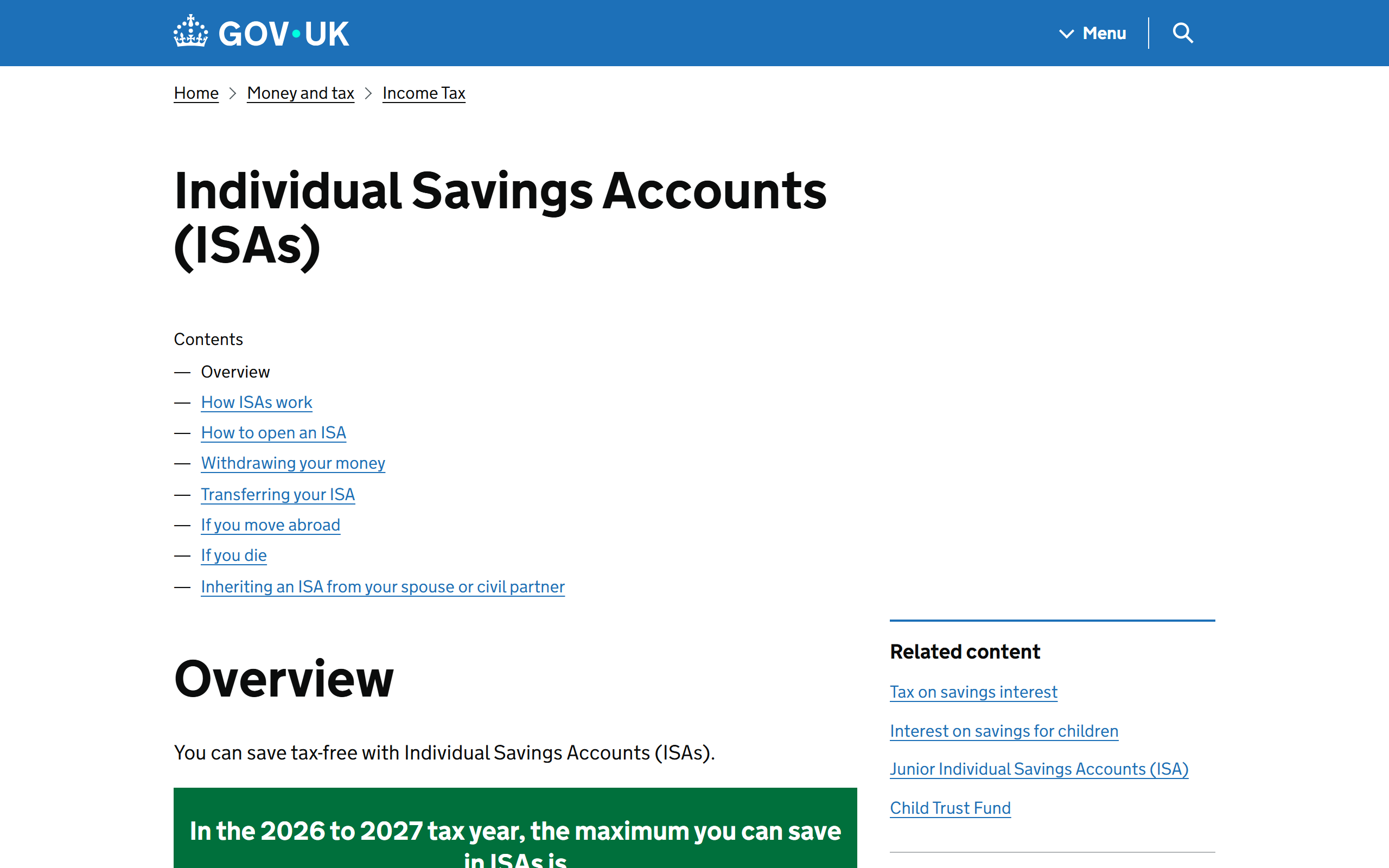
In the UK, the same maths applies. The key tools are different - ISAs allow up to 20,000 pounds per year in tax-free investments, and SIPPs offer tax relief on pension contributions - but the principle is identical. Every pound redirected from unnecessary spending into investments brings financial independence closer.
Rieckens is honest about the difficulty of this shift. He and Maddie disagreed about what to cut. The book does not pretend that slashing your budget is painless, and that honesty makes it more useful than the typical "just stop buying lattes" advice. For a structured approach to getting your spending under control, the site's budgeting 101 guide covers the fundamentals.
Index Fund Investing for FIRE
Rieckens follows the standard FIRE playbook for investing: buy low-cost, broadly diversified index funds and hold them for decades. He credits JL Collins (author of "The Simple Path to Wealth") for simplifying this approach, and the book does a good job of explaining why most actively managed funds underperform their benchmarks over time.
UK investors can apply the same strategy through Vanguard's LifeStrategy funds, HSBC Global Strategy funds, or individual index ETFs tracking global markets. Platforms like Vanguard Investor, InvestEngine, and Trading 212 offer low-cost access to these funds. The key is keeping total costs - platform fees plus fund charges - below 0.3% per year where possible. The compound interest calculator shows how small fee differences compound over decades. For more on building a low-cost index fund portfolio, we have a dedicated guide.
The Emotional Side of FIRE
One of the book's strengths is its honesty about the emotional toll of pursuing FIRE. Rieckens documents real tension in his marriage as he and Maddie worked through different attitudes to money. Not everyone in a household reaches the same conclusions at the same pace, and the book shows how to have those conversations without blowing up the relationship.
The broader lesson is that financial independence is not purely a spreadsheet exercise. Your relationship with money shapes every decision, from whether you feel comfortable investing in equities to whether you can resist lifestyle inflation when your income rises. Rieckens' willingness to show the messy parts of the journey makes this book more credible than many in the genre.
Applying Playing with FIRE in the UK
While the book is written from an American perspective, the core framework transfers well to the UK. Here is what UK readers should adjust:
Tax wrappers matter. The US has 401(k)s and Roth IRAs. The UK equivalents are workplace pensions, SIPPs, and ISAs. Maximising these wrappers should be the first priority, since they shelter investment growth from tax. Use the FIRE number calculator to estimate how much you need in these accounts to cover your expenses indefinitely.
The State Pension provides a floor. Unlike the US Social Security system, the UK State Pension is relatively straightforward: 35 qualifying years of National Insurance contributions entitle you to the full amount (currently around 12,500 pounds per year). This guaranteed income reduces the portfolio size you need.
Healthcare is not a barrier. One of the biggest obstacles to early retirement in the US is the cost of health insurance. In the UK, the NHS removes this concern entirely, making FIRE significantly more achievable on a lower portfolio value.
Housing costs dominate. For most UK households, the mortgage or rent is the single largest expense. Paying off your mortgage before or shortly after reaching FIRE dramatically reduces your required withdrawal rate. A mortgage calculator can help you model the impact of overpayments.
Frequently Asked Questions
Is Playing with FIRE suitable for beginners?
Yes. It is probably the single best starting point for someone who has never heard of FIRE. The memoir format makes it far more engaging than a textbook, and Rieckens explains financial concepts without assuming prior knowledge.
What is the FIRE movement?
FIRE stands for Financial Independence, Retire Early. The core idea is to save and invest a large portion of your income - typically 50% or more - so that your investment returns can cover your living expenses without needing to work. "Retire Early" does not necessarily mean doing nothing; many FIRE practitioners continue working on projects they care about, but without the financial pressure.
Can you achieve FIRE in the UK?
Absolutely. The UK's tax-free ISA allowance, generous pension tax relief, free healthcare through the NHS, and State Pension make it arguably easier to achieve FIRE in the UK than in the US. The main challenge is housing costs, particularly in London and the South East.
How much do you need to achieve FIRE?
A common rule of thumb is 25 times your annual expenses, based on the 4% withdrawal rule. If you spend 30,000 pounds per year, you would need a portfolio of 750,000 pounds. However, the State Pension reduces this target, and a dynamic withdrawal strategy can provide additional flexibility. See our guide to calculating your FIRE number for a detailed breakdown.
What are the best FIRE books for UK readers?
Playing with FIRE is an excellent starting point. For UK-specific advice, pair it with a guide to ISAs and SIPPs. Other strong choices include "Your Money or Your Life" by Vicki Robin for the philosophical foundation and "Quit Like a Millionaire" by Kristy Shen for a practical, numbers-driven approach to early retirement.
Conclusion
"Playing with FIRE" works because it tells a real story rather than lecturing. Rieckens shows the arguments, the compromises, and the gradual realisation that spending less can mean living more. For UK readers, the financial details need translating - ISAs instead of Roth IRAs, SIPPs instead of 401(k)s - but the human story at the centre of the book is universal. If you are curious about FIRE but have not taken the first step, this is the book to start with.
Purchase "Playing with FIRE" on Amazon to start your journey today.
Further Reading:
Quit Like a Millionaire - Kristy Shen - A more numbers-driven companion to Rieckens' memoir, covering the maths behind FIRE with practical strategies for building a portfolio that lasts. (Affiliate link - we may earn a small commission at no extra cost to you.)
I Will Teach You To Be Rich - Ramit Sethi - Covers the automation and systems side of personal finance that Rieckens touches on but does not fully develop. (Affiliate link - we may earn a small commission at no extra cost to you.)
Read Next:
Prefer to watch?
We turn these money breakdowns into short videos
A few a week, plain-English UK money. If you would sooner watch than read, follow along:
Enjoying the content?
If this site has been useful, a coffee goes a long way.
Browse more articles
Browse all