





Early Retirement Extreme Review for UK Readers
Jacob Fisker retired in his early 30s on roughly £5,500 a year. The maths needs an 80% savings rate, which sounds insane until you read his case for it.
Cite this article
Freedom Isn't Free (2026) Early Retirement Extreme Review for UK Readers. Available at: https://freedomisntfree.co.uk/articles/early-retirement-extreme-radical-fire-strategies-for-uk-readers (Accessed: 21 September 2026).
Italicise the article title in your bibliography. Accessed date set to today.
TLDR
- Early Retirement Extreme advocates for financial independence through radical lifestyle changes and reduced expenses, rather than increased income.
- The book emphasizes the importance of developing diverse skills to reduce dependency on paid services, which lowers living costs.
- Fisker's approach focuses on interconnected financial systems, suggesting that treating your financial life holistically is key to achieving early retirement.
- To achieve five years of financial independence, Fisker's method requires saving 80% of your income, but housing costs in the UK pose significant challenges to this plan.
- Fisker suggests restructuring housing and adopting extreme frugality to make the five-year retirement goal more feasible.
Early Retirement Extreme Review for UK Readers
Early Retirement Extreme by Jacob Lund Fisker is the most radical book in the FIRE movement. While most FIRE literature suggests saving 50-70% of your income and retiring in 10-15 years, Fisker argues you can reach financial independence in as few as five years by living on a fraction of the average wage. The book is dense, philosophical, and not for everyone - but its core ideas have influenced every FIRE thinker who came after. This review breaks down Fisker's approach and tests how well it applies to UK readers.
What Makes Early Retirement Extreme Different
Most FIRE books focus on earning more or investing better. Fisker starts from a completely different place: redesigning your entire life so that you need very little money to live well. He frames personal finance as a systems problem. Your spending, skills, housing, transport, food, and social life are all interconnected, and optimising one area in isolation misses the point.
Fisker retired in his early thirties on annual expenses of roughly $7,000 (around 5,500 pounds at the time). He achieved this not through high income but through radical reduction. The book lays out the mental models and practical frameworks behind that reduction.
For UK readers, the philosophy translates directly even though the specific costs differ. The UK's higher housing costs and different tax system change the numbers, but the systems-thinking approach - treating your financial life as an interconnected whole rather than a collection of separate problems - is universally applicable.
The Renaissance Ideal: Why Skills Matter More Than Income
Central to Fisker's philosophy is the idea of becoming a generalist - someone with a broad range of skills that reduce dependency on paid services. Instead of paying a mechanic, plumber, or accountant, you learn enough to handle most tasks yourself. This directly reduces your cost of living and makes you more resilient to economic shocks.
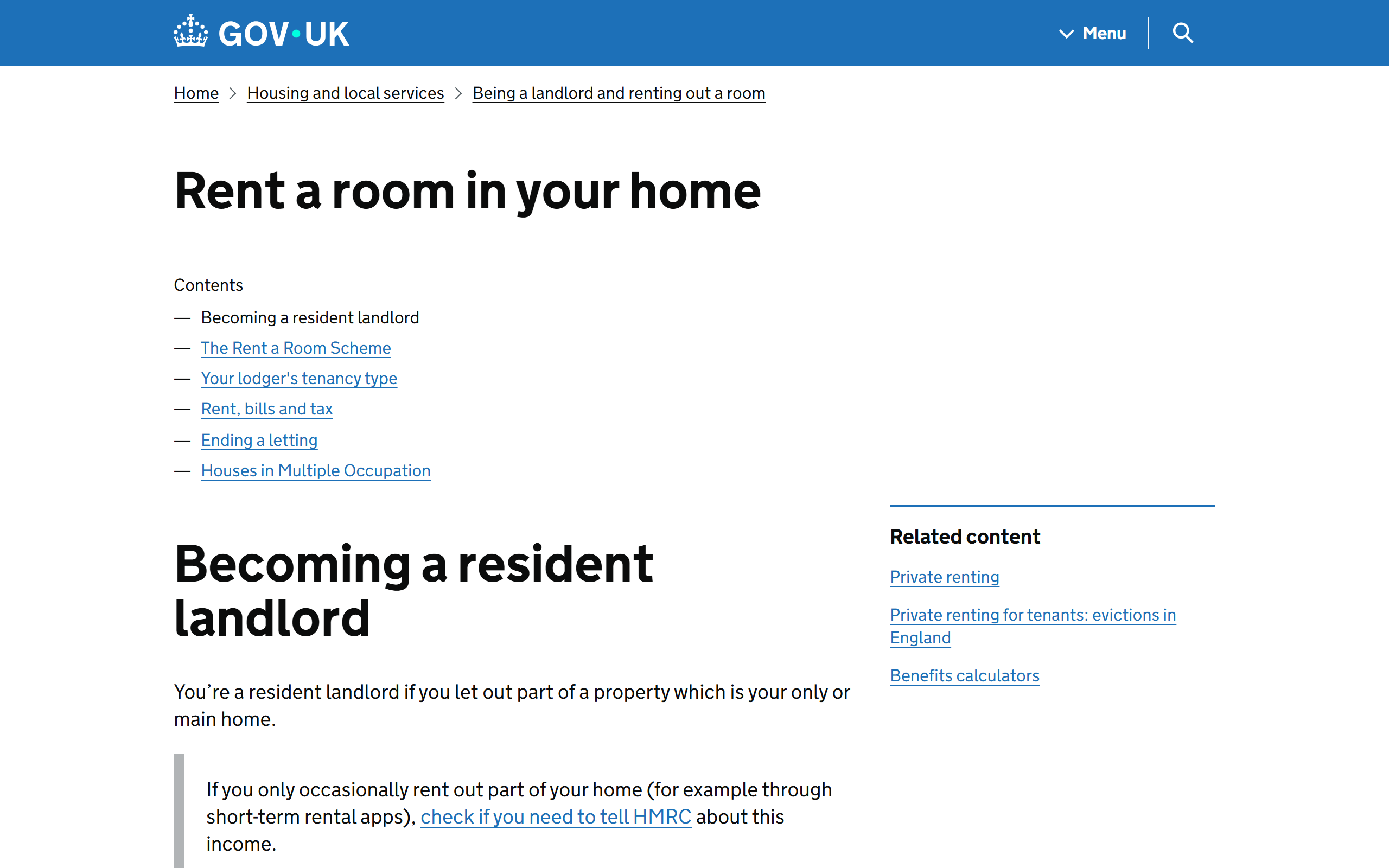
In the UK, this concept has practical applications beyond DIY. The Rent a Room scheme lets you earn up to 7,500 pounds tax-free by renting a spare room, which requires basic landlord skills. Growing food, repairing clothing, cycling instead of driving, and cooking from scratch all reduce expenses while building self-reliance. Fisker argues that this kind of competence is more valuable than a higher salary spent on outsourcing every life task.
The counterargument is that specialisation pays better - an hour spent earning at your highest-paid skill and outsourcing everything else produces more surplus. Fisker acknowledges this but argues it creates fragility. If your one specialised skill becomes obsolete or your employer disappears, a generalist recovers faster. For a deeper look at building personal capital, our article on investing in yourself covers complementary ground.
Extreme Frugality: The Maths Behind Five-Year Retirement
The core maths of Early Retirement Extreme is simple. If you save 80% of your income, you only need about five years of working to fund the rest of your life (assuming a 4% withdrawal rate and modest investment returns). Fisker lived on roughly 25% of the US median income, which in UK terms would mean living on around 7,000-8,000 pounds per year.
Plotted against the mainstream and FIRE-typical savings rates, the ERE figure shows just how steep the curve gets at the extreme.
Years to FI by savings rate (mainstream to ERE)
Source: Mr Money Mustache - The Shockingly Simple Math Behind Early Retirement (5% real return, 4% withdrawal)
Is This Realistic in the UK?
Housing is the biggest obstacle. Average UK rent sits above 1,000 pounds per month outside London and significantly more within it, according to ONS private rental data. That alone would consume most of a 7,000 pound annual budget. Fisker's response would be to restructure housing entirely: house-share, live in a smaller space, relocate to a low-cost area, or buy a cheap property outright.
For UK readers with a mortgage, overpaying to eliminate the debt early is one of the highest-impact moves. Use a mortgage calculator to see how even modest overpayments can shave years off your term. Once housing costs drop to zero, Fisker-level spending becomes far more achievable.
Beyond housing, the UK actually offers some advantages for extreme frugality. The NHS eliminates healthcare costs (a major expense for US-based FIRE practitioners). Council tax is relatively modest outside London. And the UK's public transport network, while imperfect, makes car-free living feasible in many areas.
Where Extreme Frugality Breaks Down
Fisker's approach works best for single people or couples without children. Adding dependants changes the equation dramatically - childcare costs in the UK average over 14,000 pounds per year for a full-time nursery place. The book does not address this in depth, and UK readers with families will need to adapt the framework significantly.
There is also a social cost. Living on 7,000 pounds a year in the UK means saying no to almost all paid social activities - meals out, holidays, events, gifts. Fisker is comfortable with this trade-off, but not everyone will be. The book is honest about this: it is not trying to appeal to everyone, just to show what is possible at the extreme end.
Using UK Tax Wrappers for Early Retirement Extreme
Fisker's investment approach is straightforward: save aggressively, invest in low-cost index funds, and live off the returns. For UK readers, the tax wrapper strategy matters enormously.
ISAs are the most flexible tool. You can contribute up to 20,000 pounds per year, and all growth and withdrawals are tax-free. For someone following Fisker's approach and investing heavily for five years, the ISA alone could shelter 100,000 pounds from tax.
SIPPs offer even more tax efficiency through upfront tax relief, but you cannot access the funds until age 57 (rising from 55). If you plan to retire at 35, you need enough in ISAs and general investment accounts to bridge the gap. Our guide to the ISA-SIPP bridging strategy explains how to structure this.
Workplace pensions with employer matching are free money and should be maximised regardless of your FIRE strategy. Even Fisker, who advocates doing everything yourself, would not turn down a 100% return on employer-matched contributions. The compound interest calculator shows how employer-matched contributions accelerate your portfolio growth.
To work out exactly how much you need, the FIRE number calculator can help you model different spending levels and see how Fisker's five-year target maps to your own situation.
Who Should Read Early Retirement Extreme
This book is not for casual readers. It is dense, academic in tone, and assumes you are willing to question nearly every assumption about how modern life should be structured. If you have already read mainstream FIRE books like "Playing with FIRE" or "Your Money or Your Life" and found them too conservative, Early Retirement Extreme is the logical next step.
It is also valuable as a thought exercise even if you never intend to live on 7,000 pounds a year. Understanding the extreme end of the spectrum helps you identify which of your own expenses are genuine needs and which are habits you have never examined. That self-awareness has value regardless of your target retirement age.
Frequently Asked Questions
What is Early Retirement Extreme about?
Early Retirement Extreme by Jacob Lund Fisker is a book about achieving financial independence in roughly five years through radical frugality, systems thinking, and broad skill development. Unlike most FIRE books, it focuses on reducing expenses to an extreme degree rather than maximising income.
Can you follow Early Retirement Extreme in the UK?
The philosophy applies anywhere, but the specifics need adjusting for UK costs. Housing is the main challenge - UK rents and house prices are higher than in much of the US. However, the NHS, lower car dependency, and tax-free ISA allowances make some aspects of extreme early retirement easier in the UK than in America.
How much money do you need for Early Retirement Extreme?
Fisker lived on roughly $7,000 per year (about 5,500 pounds). At a 4% withdrawal rate, that requires a portfolio of around 137,500 pounds. In the UK, realistic extreme frugality might mean spending 8,000-10,000 pounds per year, requiring a portfolio of 200,000-250,000 pounds - achievable in five to seven years with a high savings rate.
Is extreme frugality sustainable long-term?
Fisker has lived this way for over 15 years, suggesting it is sustainable for the right personality type. The key is that extreme frugality in this framework is not about deprivation - it is about replacing purchased goods and services with skills, self-reliance, and a different definition of what constitutes a good life.
How does Early Retirement Extreme compare to other FIRE books?
It is significantly more radical than books like "Playing with FIRE" or "The Simple Path to Wealth." Those books target a savings rate of 50-70% and a retirement timeline of 10-15 years. Fisker targets 75-85% savings and a five-year timeline. The trade-off is a much lower standard of living by conventional measures, but Fisker argues that conventional measures are the wrong yardstick.
Conclusion
Early Retirement Extreme is not a comfortable read, and it is not meant to be. Fisker challenges nearly every assumption about how much money you need, what skills you should develop, and how you should structure your life. For UK readers, the core lessons are clear: your expenses are the main lever you can pull, skills reduce costs more permanently than budgeting tricks, and the gap between what you need and what you spend is where financial freedom lives. Even if you never live on 7,000 pounds a year, understanding the extreme end of the FIRE spectrum will sharpen your thinking about money and make your own targets feel more achievable.
Purchase "Early Retirement Extreme" on Amazon to explore Fisker's radical framework in full.
Further Reading:
Quit Like a Millionaire - Kristy Shen - A more accessible take on early retirement with detailed maths on savings rates and withdrawal strategies, from someone who actually retired in her thirties. (Affiliate link - we may earn a small commission at no extra cost to you.)
The Millionaire Next Door - Stanley & Danko - Research-backed evidence that wealth comes from frugality and discipline rather than high income, reinforcing Fisker's core argument from a different angle. (Affiliate link - we may earn a small commission at no extra cost to you.)
Read Next:
Prefer to watch?
We turn these money breakdowns into short videos
A few a week, plain-English UK money. If you would sooner watch than read, follow along:
Enjoying the content?
If this site has been useful, a coffee goes a long way.
Browse more articles
Browse all