


Financial Freedom by Sabatier: The 5-Year FI Plan
Broke at 24, financially independent at 30. No inheritance, no windfall. His five-year playbook, UK-adapted.
Cite this article
Freedom Isn't Free (2026) Financial Freedom by Sabatier: The 5-Year FI Plan. Available at: https://freedomisntfree.co.uk/articles/financial-freedom-by-grant-sabatier-a-practical-guide-to-accelerating-your-path-to-financial-independence (Accessed: 21 September 2026).
Italicise the article title in your bibliography. Accessed date set to today.
TLDR
- Grant Sabatier's book outlines a practical plan for achieving financial independence quickly by increasing income and drastically cutting costs.
- The book provides strategies that can be tailored for UK readers, recommending the use of ISAs and SIPPs for tax-efficient savings and investments.
- Sabatier emphasizes the importance of a high savings rate, illustrating how different rates can significantly impact the timeline for financial independence.
- The book highlights the power of compound interest and encourages maximizing contributions to tax-efficient accounts to accelerate wealth-building.
- For UK readers, practical tips include using public transportation, shopping at discount stores, and taking advantage of ISAs for tax-free growth.
Financial Freedom by Grant Sabatier: Book Review
In "Financial Freedom," Grant Sabatier shares his journey from being broke to achieving financial independence in just five years. His approach is practical and number-heavy, providing a clear framework for dramatically increasing income while cutting costs. For a UK audience, this book offers practical insights, especially when adjusted for UK-specific financial instruments like ISAs (Individual Savings Accounts) and SIPPs (Self-Invested Personal Pensions).
Financial Freedom is, at its core, a step-by-step system for reaching financial independence as fast as possible. Sabatier argues that by combining aggressive saving with income growth, you can compress decades of wealth-building into just a few years.
Sabatier's Journey: From Broke to Financially Free
Sabatier's story is genuinely inspiring. Starting with a negative net worth, he built a substantial fortune by the age of 31. His journey rests on three core principles: increasing income, reducing expenses, and investing wisely.
For UK readers, Sabatier's strategies can be tailored to fit within the local financial ecosystem. While he emphasizes the use of high-yield savings accounts, UK residents can benefit from ISAs, which offer tax-free growth on savings and investments.
Framework for Financial Independence
How to Increase Your Income
Sabatier advocates for multiple income streams, urging readers to go beyond traditional employment. He suggests side hustles, freelancing, and entrepreneurial ventures. In the UK, platforms like Fiverr, Upwork, and Etsy provide opportunities for supplemental income.
For those looking to invest, Sabatier recommends a diversified portfolio. UK investors can use SIPPs to invest in a variety of assets - from stocks and shares to property - all while enjoying tax relief on contributions. If you are new to investing, low-cost index funds are often a sensible starting point, a view that Sabatier himself endorses.
Cutting Costs and Boosting Your Savings Rate
One of Sabatier's most impactful strategies is his focus on extreme frugality. He details how he cut his living expenses to a bare minimum, allowing him to save a significant portion of his income.
UK readers can apply this principle by taking advantage of the country's public transportation system, shopping at discount stores, and using free entertainment options. Energy-saving measures can also lead to substantial savings on utility bills. For a broader look at building a budget framework, our budgeting 101 guide walks through the basics.
The book goes further than standard budgeting advice. Sabatier introduces the concept of a "savings rate" as the single most important metric on your path to financial independence. A 50% savings rate, for example, could mean reaching financial independence in roughly 15 years, while a 70% rate could cut that timeline to under 10 years. You can model your own numbers with our FI number calculator.
Sabatier's savings rate vs years to FI
Source: Mr Money Mustache - The Shockingly Simple Math Behind Early Retirement (5% real return, 4% withdrawal)
The Maths of Wealth Building
Sabatier provides a detailed breakdown of how different savings rates can impact your path to financial independence. He uses compound interest to illustrate how even small increases in savings can lead to exponential growth over time.
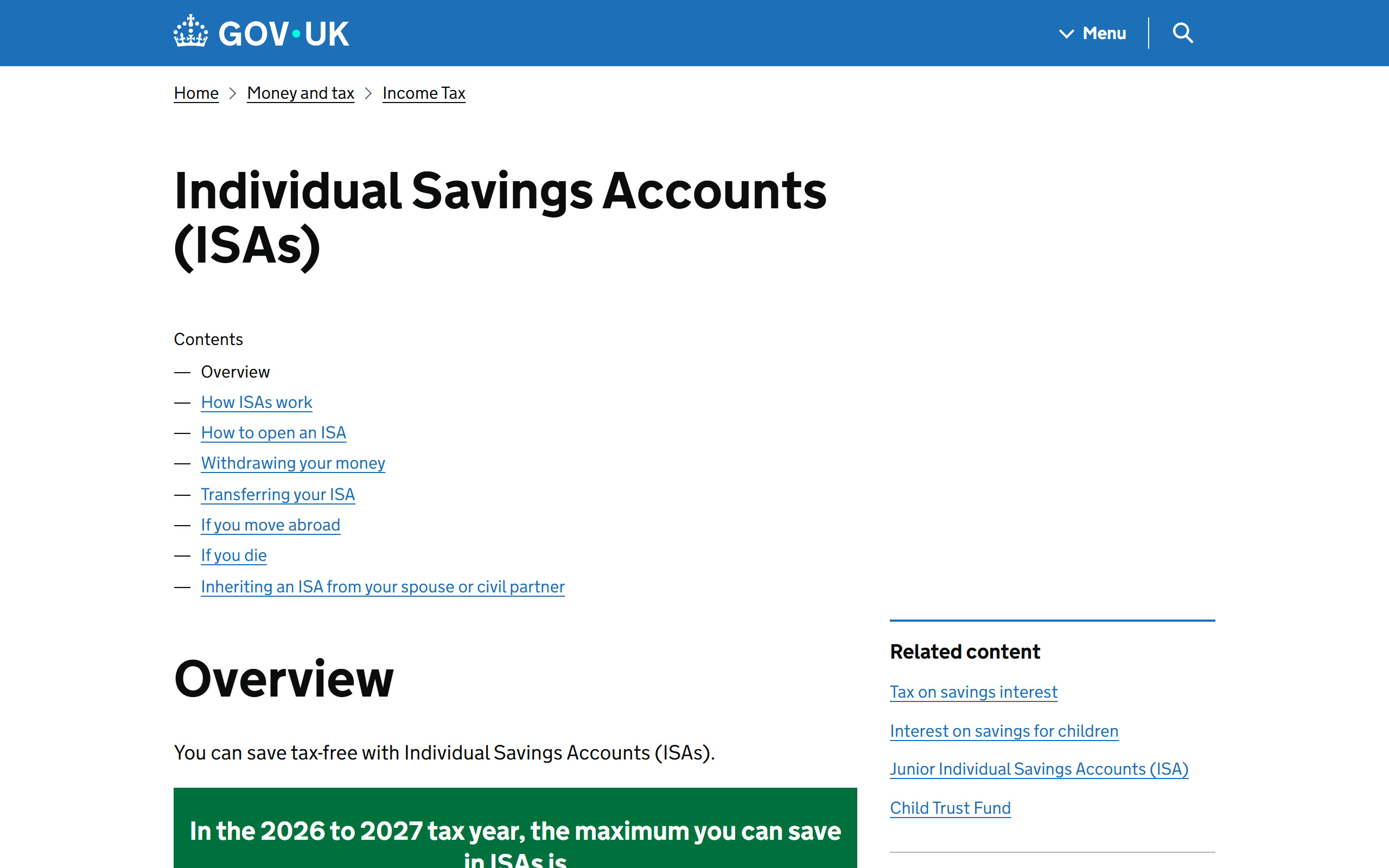
For UK investors, this principle matters enormously. By maximising contributions to ISAs and SIPPs, you can take full advantage of tax-efficient growth. For example, if you save £20,000 annually in a SIPP, you not only reduce your taxable income but also allow your investments to grow tax-free. The ISA allowance for 2026/27 remains at £20,000, making it a powerful tool for tax-free wealth accumulation.
UK-Specific Adjustments
ISAs and SIPPs
ISAs and SIPPs are central to the UK financial landscape. An ISA allows you to save up to £20,000 per tax year in a tax-free environment. A SIPP is a flexible pension arrangement where you can invest in a wide range of assets while receiving tax relief on contributions.
Sabatier's framework can be enhanced by incorporating these tools. By saving the maximum allowable amount in an ISA each year, you can significantly boost your savings rate. Contributing to a SIPP not only reduces your taxable income but also lets your investments grow tax-free until retirement.
Staying Compliant with HMRC and FCA Rules
You need to stay compliant with HMRC and FCA regulations when implementing Sabatier's advice. His strategies around investing and saving should be applied with an understanding of UK tax rules to avoid penalties and keep your financial plans legally sound.
How Financial Freedom Compares to Other FIRE Books
Sabatier's book is distinctive for its emphasis on income growth over pure frugality. Where books like "Your Money or Your Life" focus on redefining your relationship with money, and "Early Retirement Extreme" pushes radical spending cuts, Financial Freedom strikes a middle ground. Sabatier argues that there is a floor to how much you can cut, but no ceiling on how much you can earn.
This makes the book particularly useful for readers who feel they have already optimised their spending but want to accelerate their timeline. The combination of side-income strategies with traditional investing advice gives it a practical edge that many FIRE books lack.
Conclusion
"Financial Freedom" by Grant Sabatier is a solid read for anyone looking to accelerate their path to financial independence. His practical, number-heavy approach offers a clear roadmap, which can be further optimised for a UK audience by using ISAs, SIPPs, and understanding local tax regulations.
By adopting Sabatier's principles and making UK-specific adjustments, you can significantly shorten your journey to financial freedom.
Buy Financial Freedom on Amazon to start your journey today.
Frequently Asked Questions
Is Financial Freedom by Grant Sabatier relevant for UK readers?
Yes. While Sabatier writes from a US perspective, the core principles - increasing income, cutting costs, and investing aggressively - translate well to the UK. You will need to substitute US-specific accounts with ISAs and SIPPs, and adjust for UK tax rules, but the framework is sound.
What savings rate does Grant Sabatier recommend?
Sabatier recommends saving at least 50% of your income if you want to reach financial independence quickly. He provides detailed tables showing how different savings rates affect your timeline, and argues that earning more is often easier than cutting expenses further.
How does Financial Freedom differ from other FIRE books?
Unlike many FIRE books that focus primarily on frugality, Financial Freedom places equal weight on income growth. Sabatier devotes significant space to side hustles, freelancing, and entrepreneurship as ways to accelerate your savings rate beyond what expense-cutting alone can achieve.
Can you really achieve financial independence in five years?
Sabatier did, but his circumstances included a rapidly growing tech career and aggressive side-income strategies. For most people, a five-year timeline requires an exceptionally high savings rate and strong income growth. A more realistic goal for many UK readers is 10-15 years, which is still dramatically faster than the traditional retirement age.
What is the best account structure for FIRE in the UK?
Sabatier does not cover UK accounts specifically, but the best approach for UK readers is to maximise your ISA allowance (£20,000 per year) for accessible tax-free savings, then contribute to a SIPP for additional tax relief. This two-account strategy gives you both pre-retirement and post-retirement flexibility.
Further Reading:
Quit Like a Millionaire - Kristy Shen - Another practical FIRE book that pairs well with Sabatier's income-focused approach, offering a complementary perspective on optimising investment returns and geographic arbitrage. (Affiliate link - we may earn a small commission at no extra cost to you.)
I Will Teach You To Be Rich - Ramit Sethi - Shares Sabatier's emphasis on earning more rather than just cutting back, with step-by-step automation advice for UK-friendly financial systems. (Affiliate link - we may earn a small commission at no extra cost to you.)
Read Next
Prefer to watch?
We turn these money breakdowns into short videos
A few a week, plain-English UK money. If you would sooner watch than read, follow along:
Enjoying the content?
If this site has been useful, a coffee goes a long way.
Browse more articles
Browse all