








I Will Teach You To Be Rich: UK Review
Ramit Sethi wrote the most useful US personal finance book of the last 20 years. Swap his Roth IRA for an ISA, his 401(k) for a SIPP, and the 6-week plan works almost unchanged.
Cite this article
Freedom Isn't Free (2026) I Will Teach You To Be Rich: UK Review. Available at: https://freedomisntfree.co.uk/articles/automate-your-finances-a-uk-centric-review-of-i-will-teach-you-to-be-rich (Accessed: 21 September 2026).
Italicise the article title in your bibliography. Accessed date set to today.
TLDR
- Set up dedicated accounts like a current account, Stocks and Shares ISA, Cash ISA, and SIPP for different financial purposes.
- Automate savings and investments by setting up standing orders from your current account to your ISA and savings account.
- Prioritise paying off high-interest debt, like credit card debt, while making minimum payments on other debts.
- Build a strong credit score by keeping old credit cards open, registering on the electoral roll, and avoiding multiple hard searches.
- Invest in low-cost index funds like Vanguard FTSE All-World UCITS ETF inside a Stocks and Shares ISA for tax-free growth.
Sethi's US accounts and their UK equivalents
| US concept | UK equivalent | Use |
|---|---|---|
| 401(k) | Workplace pension | Auto-enrolled retirement pot |
| Roth IRA | Stocks and Shares ISA | Tax-free long-term investing |
| Traditional IRA | SIPP | Tax-relief retirement saving |
| FDIC insurance | FSCS protection | Up to £120k per banking licence (raised from £85k on 1 Dec 2025) |
The 6-week plan works almost unchanged once you swap the wrappers.
I Will Teach You To Be Rich: UK Review
Ramit Sethi's "I Will Teach You To Be Rich" is one of the most practical personal finance books written in the last two decades. Its central idea is simple: automate your money so the right things happen without willpower, then focus your energy on a handful of decisions that actually move the needle. While the book targets American readers, the principles translate well to the UK once you swap the account types and tax wrappers.
This review walks through Sethi's 6-week action plan, his "Big Wins" philosophy, and how to apply both using ISAs, SIPPs, and UK banking tools.
Sethi's 6-Week Plan to Automate Your Finances
The book's backbone is a structured 6-week programme that takes you from financial chaos to a system that runs itself. Here is each week adapted for UK readers.
Week 1: Set Up Your Accounts
Sethi recommends splitting your money across dedicated accounts so each pot has a clear purpose. In the UK, a solid starting structure looks like this:
- Current account for daily spending and salary deposits.
- Stocks and Shares ISA for long-term investing, sheltering gains and dividends from tax.
- Cash ISA or easy-access savings account for your emergency fund.
- SIPP (Self-Invested Personal Pension) for retirement savings, which also gives you tax relief on contributions.
If you are unsure how these fit together, the budgeting 101 guide covers the basics of allocating income across accounts.
Week 2: Automate Your Savings and Investments
Once accounts are open, set up standing orders so money moves automatically on payday. The sequence matters: pay yourself first, then cover bills, then spend what remains.
In practice this means creating standing orders from your current account to your ISA and savings account on the day after you get paid. Most UK banks let you do this through their app in a few minutes. If your employer offers salary sacrifice into a workplace pension, that is even more efficient because you save on both income tax and National Insurance.
Week 3: Tackle High-Interest Debt
Sethi's rule is straightforward: pay off high-interest debt aggressively while making minimum payments on everything else. In the UK, credit card debt typically charges 20-30% APR, so it should be the first target. Consider a 0% balance transfer card to buy breathing room, but set a calendar reminder before the promotional rate expires.
For student loans, the picture is different. Plan 2 loans (post-2012) charge interest at RPI plus up to 3%, and repayments are income-contingent. For most graduates, overpaying student loans is not the best use of spare cash because the balance is written off after 30 years regardless.
Week 4: Build Your Credit Score
A strong credit file makes mortgages cheaper and insurance easier to obtain. In the UK, the three main credit reference agencies are Experian, Equifax, and TransUnion. Free services like ClearScore (Equifax) and Credit Karma (TransUnion) let you check your report without affecting your score.
Quick wins include registering on the electoral roll, keeping old credit cards open (even if unused), and never missing a payment. Avoid applying for multiple products in a short window, as each hard search leaves a mark.
Week 5: Invest for the Long Term
Sethi is a strong advocate of low-cost index funds, and the evidence backs him up. For UK investors, a single global tracker like the Vanguard FTSE All-World UCITS ETF (VWRP) gives you exposure to thousands of companies for a total expense ratio of around 0.22%.
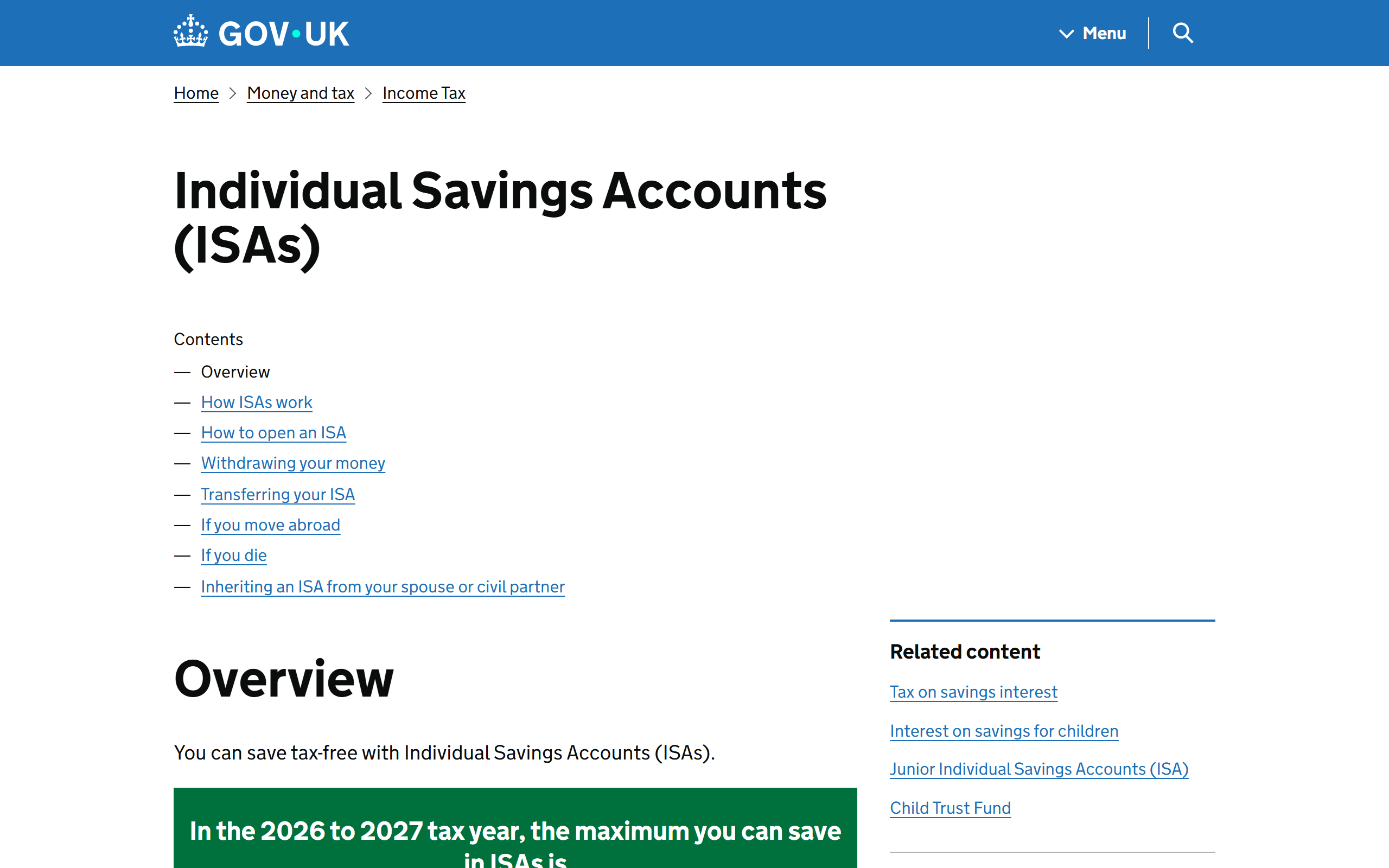
Hold your investments inside a Stocks and Shares ISA and you will pay zero tax on dividends or capital gains. If you have already maxed your £20,000 ISA allowance, a SIPP offers further tax-relieved space with an annual allowance of £60,000 (2025-26). If Sethi's chapter leaves you wanting more on the investing side, our best personal finance books for UK investors point you to the deeper UK-specific reads.
Week 6: Review and Adjust
Set a recurring calendar reminder - monthly or quarterly - to review your accounts. Check that standing orders are still running, contributions are on track, and your asset allocation has not drifted too far from your target. Use the net worth tracker to see your overall position in one place.
The Big Wins Philosophy
The most distinctive part of Sethi's thinking is his rejection of frugality theatre. Skipping lattes saves you a few hundred pounds a year. Negotiating your salary, choosing the right mortgage, or maximising your pension match can be worth tens of thousands. He calls these Big Wins - the handful of financial decisions that deliver outsized results.
Negotiate Your Salary
A single successful salary negotiation of 10% on a £40,000 salary is worth £4,000 per year - and that compounds over every future pay rise. Research benchmarks on Glassdoor or Levels.fyi before your next review, and practise the conversation out loud. Sethi provides specific scripts in the book for handling objections.
Max Out Tax-Efficient Wrappers
In the UK, ISAs and SIPPs are the two best tools for growing wealth tax-free. Filling your ISA each year and contributing enough to your pension to capture any employer match is worth more than almost any individual investment decision. The compound interest calculator shows how dramatic the difference becomes over 20 or 30 years.
Automate the Boring Stuff
The real power of Sethi's system is that it removes daily decision-making from your finances. Once your standing orders and direct debits are set up, you do not need discipline to save - the system does it for you. This frees your mental energy for higher-value decisions like career moves, property purchases, or starting a side business.
Adapting US Advice for the UK
Sethi's book references 401(k)s, Roth IRAs, and FDIC insurance - none of which exist in the UK. Here is a quick translation table:
| US Concept | UK Equivalent |
|---|---|
| 401(k) | Workplace pension |
| Roth IRA | Stocks and Shares ISA |
| Traditional IRA | SIPP |
| FDIC insurance (bank deposits) | FSCS protection (up to £120,000 per institution for deposits) |
| HSA (Health Savings Account) | No direct equivalent (NHS covers healthcare) |
One area where UK readers have an advantage is the Lifetime ISA, which gives first-time buyers a 25% government bonus on contributions up to £4,000 per year. If you are saving for your first home and are under 40, this is one of the best risk-free returns available anywhere.
UK Regulations to Know
The FCA (Financial Conduct Authority) regulates investment platforms and financial advisers in the UK. If you use a regulated platform - and you should - your investments are protected by the FSCS up to £85,000 per firm if the platform fails. HMRC sets the tax rules for ISAs, SIPPs, and Capital Gains Tax.
Frequently Asked Questions
Is "I Will Teach You To Be Rich" relevant for UK readers?
Yes. The core principles - automate your finances, focus on big wins, invest in low-cost index funds - work in any country. You just need to swap the US account types for their UK equivalents (ISAs instead of Roth IRAs, SIPPs instead of 401(k)s). The mindset shifts Sethi teaches are universal.
What is the best order to save and invest in the UK?
A sensible priority order is: build a one-month emergency fund, capture your full employer pension match, pay off high-interest debt, fill your ISA, then top up your SIPP. This sequence maximises free money (employer match, tax relief) before locking funds away in less accessible accounts.
How much should I automate into savings each month?
Sethi suggests starting with whatever you can manage - even £50 per month - and increasing as your income grows. A common target is saving 20% of take-home pay, split between short-term savings and long-term investments. The exact number matters less than the habit of automating it on payday.
Can I follow the 6-week plan if I have debt?
Yes. Week 3 specifically addresses debt. Sethi's approach is pragmatic: pay minimum payments on everything, then throw extra cash at the highest-interest debt first. You do not need to be debt-free before you start investing, especially if your employer offers a pension match you would otherwise miss.
What investment platform should I use in the UK?
For a simple, low-cost setup, Vanguard Investor is hard to beat - they charge 0.15% on funds with no dealing fees. If you want a wider range of ETFs, platforms like InvestEngine (commission-free) or Trading 212 work well. The point is to pick a platform with low fees and stick with it rather than spending weeks researching the "perfect" choice.
Further Reading:
I Will Teach You To Be Rich - Ramit Sethi - The book this review covers, packed with scripts and systems for automating your financial life. (Affiliate link - we may earn a small commission at no extra cost to you.)
The Psychology of Money - Morgan Housel - A perfect companion read that explains why we make irrational money decisions and how to build better financial habits. (Affiliate link - we may earn a small commission at no extra cost to you.)
Read Next:
Prefer to watch?
We turn these money breakdowns into short videos
A few a week, plain-English UK money. If you would sooner watch than read, follow along:
Enjoying the content?
If this site has been useful, a coffee goes a long way.
Browse more articles
Browse all