





Is a Recession Coming? A UK Investor's Guide
Paul Samuelson nailed the prediction industry in one sentence in 1966. It is still true. The recession is not the real threat to your portfolio. The threat sits between your ears.
Cite this article
Freedom Isn't Free (2026) Is a Recession Coming? A UK Investor's Guide. Available at: https://freedomisntfree.co.uk/articles/is-a-recession-coming-uk-investors (Accessed: 21 September 2026).
Italicise the article title in your bibliography. Accessed date set to today.
TLDR
- The US market looks expensive at the top end, but bearish recession calls have been wrong for years - Paul Samuelson called this out in 1966.
- Valuations and the economy are not the same thing. You can think markets are pricey without forecasting a recession.
- UK gilts above 5% have ended the "no alternative" era for cash and short-duration bonds, changing how to harden a portfolio.
- The biggest risk for most UK savers is not the next recession but their own reaction to it.
What a UK global tracker actually holds
Diversified by geography on paper, concentrated by valuation style in practice.
Recession, bear market, crash: not the same thing
| Concept | Definition | How often |
|---|---|---|
| Recession | Two quarters of negative GDP | Real, slow, measured in quarters |
| Bear market | Stocks fall 20%+ from peak | Common, often unrelated to GDP |
| Crash | Rapid panic selloff over days | Rare, often a buying opportunity in hindsight |
Half the noise comes from people using three different words to mean three different things.
Is a Recession Coming? A UK Investor's Guide
Pick up any financial paper this month and you will read that a recession is just around the corner. Pick up the same paper any time in the last decade and you will read the same thing. A recession has been six months away for years, and somehow stocks have managed to keep going up anyway.
The economist Paul Samuelson nailed this tension in a 1966 Newsweek column when he wrote that "the stock market has predicted nine of the last five recessions". The line has been repeated, exaggerated, and warped into "ninety of the last ten" by every generation of market commentator since, which tells you something about how often this prediction industry actually gets it right.
That does not mean valuations do not matter. They do, especially at the top of the US market. But "the index is expensive" and "a recession is imminent" are not the same statement, and conflating them is the easiest way to talk yourself out of a sensible long-term plan.
Here is what a UK investor can sensibly do about a market that looks pricey, an economy nobody can forecast, and gilts that finally pay something again.
Contents
- Valuations and the economy are not the same thing
- Recession, bear market, and crash all mean different things
- Sequence-of-returns risk hurts retirees more than accumulators
- "Defensive" does not mean "safe"
- UK gilts above 5% change the equation
- Portfolio-hardening ideas for UK investors
- The behavioural risk is bigger than the macro risk
- Historical humility
Valuations and the economy are not the same thing
The S&P 500 is expensive by historical standards. The CAPE ratio (cyclically-adjusted price-to-earnings, smoothed over ten years to remove the noise) sits well above its long-run average. Three or four mega-cap technology names drive a disproportionate share of every passive index fund's return. None of that is a forecast of a recession; it is a description of the price you are paying for ownership of those companies right now.
The two ideas have completely different time horizons too. Recession calls are about the next 12 months. Valuation matters across decades. You can think Apple, Microsoft, and NVIDIA are priced for perfection without claiming the economy is going to collapse in 2026.
For UK passive investors, the practical consequence is hidden in plain sight. If you hold a global tracker like VWRL or HMWO, you are roughly 60% to 65% in US equities, and a meaningful slice of that is concentrated in the same handful of mega-caps. You are diversified by geography on paper and quite concentrated by valuation style in practice. Our guide to reading an ETF factsheet walks through how to check exactly what your fund holds.
Recession, bear market, and crash all mean different things
Half the noise around "is a recession coming" comes from people using three different words to mean three different things.
| Concept | Definition | Typical UK frame |
|---|---|---|
| Recession | Two consecutive quarters of negative GDP growth (technical) or ONS-confirmed economic contraction | Real, slow, measured in quarters |
| Bear market | Stocks fall 20% or more from a recent peak | Common, often unrelated to GDP |
| Crash | A rapid, panic-driven selloff over days or weeks | Rare, traumatic, often a buying opportunity in hindsight |
You can have a bear market without a recession (1987, much of 2022). You can have a recession without a market crash (the early 1990s in the UK was awful for housing, less so for the FTSE). And you can have a crash that turns out, with a decade of distance, to have been the best buying opportunity of a generation (March 2020).
Knowing which one you are actually worried about changes the response.
Sequence-of-returns risk hurts retirees more than accumulators
The same 30% drawdown is two completely different events depending on what you are doing with your money.
A 28-year-old salting away £500 a month into a Vanguard LifeStrategy fund mostly benefits from a crash. The cheap units they buy this year compound for forty more before they touch them. The mathematics of compounding makes bear markets a feature of accumulation, not a bug.
A 62-year-old four years into drawdown sees the same crash very differently. They are selling units to fund their living expenses. A bad sequence in the early years of retirement permanently impairs the portfolio because the money is gone before the bounce arrives. This is sequence-of-returns risk, and it is the single biggest reason a "100% equities forever" portfolio looks great in a backtest but can be brutal in real life for anyone close to or in retirement.
The practical takeaway: how worried you should be about valuations depends less on the macro headlines than on how close you are to needing the money.
"Defensive" does not mean "safe"
"Defensive investor" usually means somebody who has done the responsible thing: held a global tracker, kept costs low, ignored the noise. What it does not mean is "insulated from a US market drawdown". Most defensive UK savers are still heavily exposed to the same expensive US mega-caps because their global tracker is market-cap weighted.
Holding the world by market cap is fine. But it is worth knowing what you actually own:
- Roughly 60-65% in US equities
- Roughly 25-30% of that US exposure concentrated in the top 10 names
- Most of those top 10 are high-multiple growth or technology businesses
That is a fine portfolio for an accumulator - the long-run evidence on passive investing is too strong to abandon over a single year of headlines. It is a portfolio that needs at least some thought for a near-retiree who would prefer not to relive 2008.
UK gilts above 5% change the equation
This is the genuinely new piece of the puzzle, and it has barely sunk in for most retail investors.
For more than a decade, UK savers lived in the "There Is No Alternative" (TINA) world. Cash paid nothing. Short gilts paid nothing. Anyone wanting to retire on more than the State Pension was forced up the risk curve into equities whether they had the stomach for it or not.
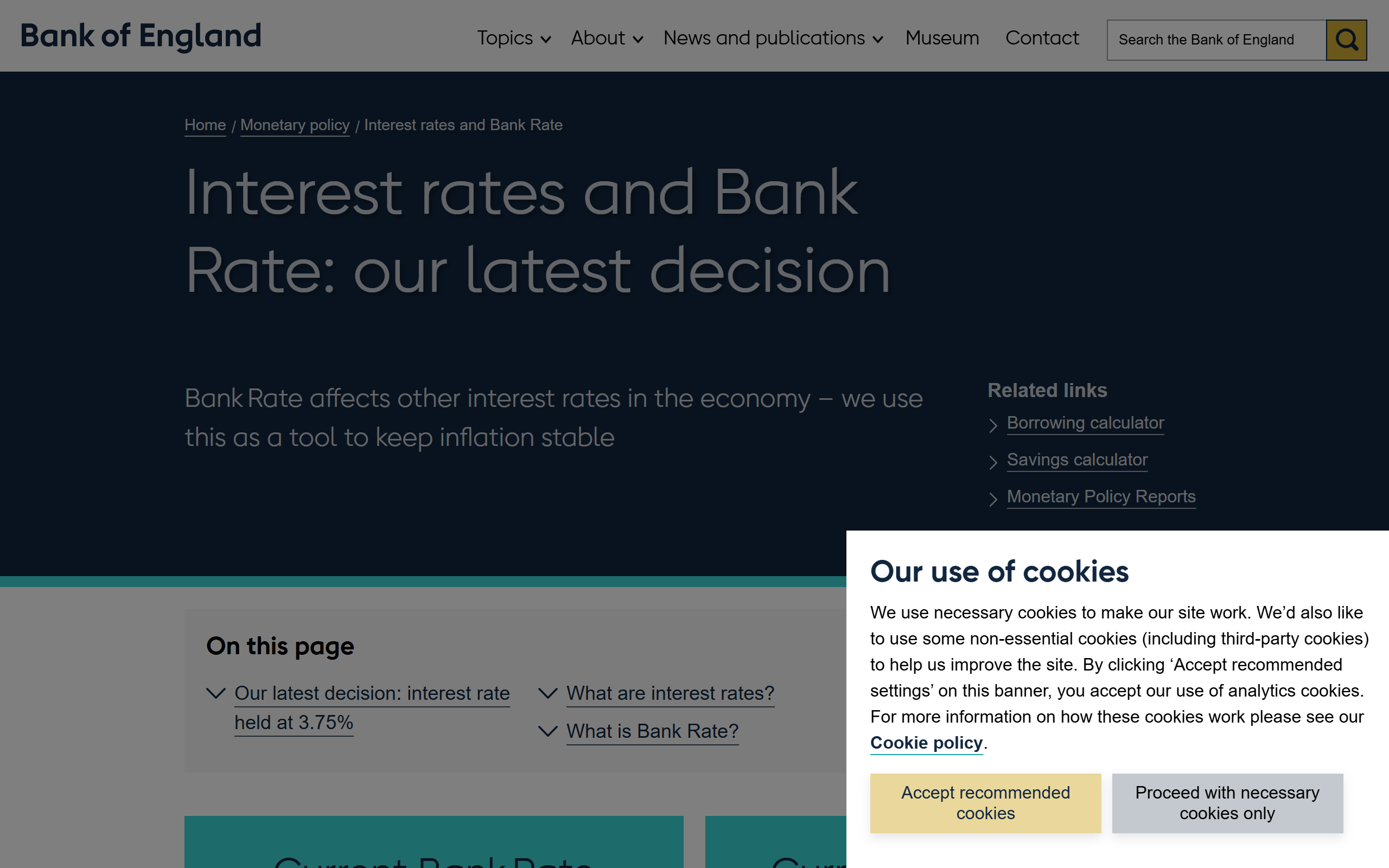
That is over. The Bank of England base rate sits above 4%, and short-dated gilts and money market funds yield well over 5% on an annualised basis. That changes the whole conversation about portfolio construction:
- Premium Bonds, money market funds, and short-dated gilts all genuinely pay you something now. They are no longer just inflation-losing parking.
- Higher risk-free rates pressure equity valuations mathematically. If you can earn 5% guaranteed, the implied "fair" P/E ratio on a growth stock falls. Long-duration growth (think AI darlings whose value sits in earnings 10 years out) is mechanically more sensitive to this than dividend payers.
- Bonds are doing their job again. Through the 2010s, a 60/40 portfolio's bond sleeve was dead weight. With yields where they are, the bond half has a credible return and an actual diversification benefit.
For a UK investor specifically, the gilt market is suddenly the most boring and most interesting part of the portfolio at the same time.
Portfolio-hardening ideas for UK investors
If you have decided that you would like to dial back exposure to one of the specific risks above, here are the levers that actually exist. None of these are recommendations: they are categories, with the trade-offs that come with each.
| Concern | Possible response | What it gives up |
|---|---|---|
| US tech valuations look stretched | Value tilt (e.g. value ETFs such as VHYL or IUVL) | Some upside if the AI rally keeps running |
| Mega-cap concentration in the index | Equal-weight or factor-tilted funds | Higher fees, slight tracking error vs the headline index |
| Equity volatility | Low-beta or minimum-volatility ETFs | Underperformance in strong bull markets |
| Recession fears | Short-dated gilts or money market funds | Lower expected long-term return |
| Need for liquidity | Cash, easy-access savings, MMFs | Inflation eats real returns over years |
| Inflation concern | Inflation-linked gilts (linkers) | Volatile if real yields shift, complex tax in some wrappers |
| Sequence risk near retirement | Larger bond allocation, glidepath strategy | Lower expected return, harder to retire on |
The point of the table is not "pick one and do it". It is "diversification is not a single dial". You can be diversified by geography and still concentrated by valuation style. You can be diversified across asset classes and still concentrated in duration. Knowing which dial you are turning matters more than turning every dial at once.
The behavioural risk is bigger than the macro risk
Here is the part everybody underrates. The biggest risk to most UK retail investors over the next decade is not the recession. It is what they do when the recession arrives.
Panic selling at the bottom turns a temporary mark-to-market loss into a permanent realised one. Switching strategies every six months guarantees you are perpetually chasing whatever asset class did best in the last cycle. Doomscrolling macro forecasts keeps you in a state of low-grade anxiety where every market wobble feels like the start of the big one. Our piece on why you should not time the market makes the case in detail.
A portfolio you can emotionally hold through a 30% drawdown is worth more than a theoretically optimal one you cannot. That is the actual case for a slightly more boring asset mix: not that it earns more in expectation, but that it stops you making the panic-sell decision that does the real damage.
Historical humility
Two things can be true at once. Markets look expensive. People have been screaming about a recession for years and have mostly been wrong. Both ideas survive contact with the data.
Expensive markets can stay expensive for years before they correct, or they may never correct in the way the bears expect. Cheap markets can stay unloved for a decade before anybody notices. The future is almost always messier than either the permabulls or the doomers predict, and the investors who do best across full cycles are the ones who never had a strong view on either side.
The honest answer to "is a recession coming" is: probably one of the next few years is going to disappoint, but nobody knows which. The honest answer to "what should I do about it" is: own a portfolio you understand, dial down the bits that worry you most, take a hard look at sequence risk if you are within a decade of retiring, and otherwise leave the macro guessing to the people whose job it is to be wrong on television.
This article is educational content only, not financial advice. If you are making material changes to your portfolio, speak to a qualified independent financial adviser first.
Frequently Asked Questions
Is the UK going to enter a recession in 2026?
Nobody knows. Various forecasters expect modest growth, others expect a mild contraction, and the data through to early 2026 has been mixed. The Bank of England's own forecasts have been revised more than once this year. The honest answer is that recession-forecasting is structurally hard; even the people paid to do it for a living are wrong as often as they are right.
Should I move my pension into cash if I think a crash is coming?
For most accumulators, no. Going to cash means betting on two things in a row: that the market falls, and that you successfully get back in before it recovers. The historical evidence on retail market-timing is brutal. For people within five years of needing the money, the question is different and the answer involves real planning, not a panic move.
What is the safest UK savings option in 2026?
If "safe" means "no chance of nominal loss", you are looking at FSCS-protected easy-access savings, NS&I Premium Bonds, fixed-term cash bonds, and gilts held to maturity. None of those will beat equities over the long run, but they will not crash either. Money market funds and short-dated gilt ETFs sit a step further out and pay a yield currently above 4% to 5% per year.
Are UK gilts a good buy right now?
That depends on what you are trying to do. Short-dated gilts and money market funds offer a genuine real return for the first time in a decade. Long-dated gilts are more sensitive to interest-rate moves; anyone who bought 30-year gilts in 2021 has lived through one of the worst bond drawdowns in modern history. Match the duration of the gilt to the time horizon of the money you are parking.
How do I protect against sequence-of-returns risk?
The standard answers are: hold a couple of years of expected withdrawals in cash or short bonds (a "cash bucket"), reduce equity exposure modestly in the five years before and after retirement (a "glidepath"), and accept a lower withdrawal rate. None of those are exciting and none of them require predicting the next recession.
Further Reading:
The Psychology of Money - Morgan Housel - The single best book on why the biggest investment risk is usually your own behaviour during a drawdown, not the drawdown itself. (Affiliate link - we may earn a small commission at no extra cost to you.)
The Intelligent Investor - Benjamin Graham - Graham wrote the original case for why valuations matter and why "Mr Market" is a manic-depressive worth ignoring most of the time. Still the right starting point on owning equities through cycles. (Affiliate link - we may earn a small commission at no extra cost to you.)
Prefer to watch?
We turn these money breakdowns into short videos
A few a week, plain-English UK money. If you would sooner watch than read, follow along:
Enjoying the content?
If this site has been useful, a coffee goes a long way.
Browse more articles
Browse all