






Rent, Profit, Interest: Are They All the Same Thing?
Gary Stevenson says rent, profit and interest are the same flow of money in three legal costumes. He is more right than most of personal finance is comfortable admitting.
Cite this article
Freedom Isn't Free (2026) Rent, Profit, Interest: Are They All the Same Thing?. Available at: https://freedomisntfree.co.uk/articles/rent-profit-interest-same-thing (Accessed: 21 September 2026).
Italicise the article title in your bibliography. Accessed date set to today.
TLDR
- Rent, profit and interest are the three classical returns to owning capital. Gary Stevenson argues they are functionally the same thing, dressed up in different legal scaffolding to obscure how alike they really are.
- He has a point. The legal and tax structures are genuinely different, but at the level of household cash flows all three are payments from someone who works for a living to someone who owns an asset. They are all passive income for somebody else.
- Where the argument gets uncomfortable is at the line between exploitation and ordinary participation in the economy. A pensioner with a workplace tracker fund is technically extracting all three. Most of us are on both sides of the ledger.
- The takeaway is not moral, it is practical. The economy rewards asset ownership. Shifting your income mix from labour to capital, via ISAs, pensions, and any other wrapper you can reach, is the deliberate move on the board.
Three names for the same flow of money
| Return | Who pays | Who receives | UK tax regime |
|---|---|---|---|
| Rent | Tenant | Landlord | Income tax, Section 24 mortgage relief |
| Profit | Customer / employee | Shareholder | Corporation tax then dividend tax |
| Interest | Borrower | Lender / depositor | Income tax, PSA covers first £500-£1,000 |
| Capital gain | Future buyer | Asset seller | CGT, separate regime |
Different legal scaffolding, same direction of travel: labour income to capital income.
Rent, Profit, Interest: Are They All the Same Thing?
Rent, profit and interest are the three names capitalism gives to the same flow of money. That is, broadly, what Gary Stevenson has been arguing on his YouTube channel for two years, and he is more right than most people in personal finance want to admit.
The textbook view is that they are different. Rent is what a tenant pays a landlord, profit is what a customer pays a business, and interest is what a borrower pays a lender. Different parties, different legal frameworks, different tax rules. The argument from the other side is that once you strip away the labels, all three are payments from people who do not own assets to people who do. This article works through both sides and lands somewhere in the middle, leaning toward Stevenson's view but with a caveat that matters.
Contents
- What Gary Stevenson is actually arguing
- How rent, profit and interest are different
- How rent, profit and interest are the same
- The line between exploitation and participation
- What this means for your money
- Frequently Asked Questions
What Gary Stevenson is actually arguing
For anyone who has not watched the videos, Stevenson's case is short and confrontational. We have covered the broader argument and where we agree with it in our piece on his wealth tax campaign, but the rent-profit-interest framing is its sharpest single claim. Rent, profit and interest, in his telling, are three legal disguises for the same economic process: an asset owner taking a share of someone else's labour income because they own the thing that person needs.
Tenant pays landlord. Customer pays Tesco shareholder. Borrower pays bank deposit holder. Three different cash flows, three different tax codes, but the direction of travel is identical. Labour income flows to capital income. The receiver does not have to do anything that week. Their previous purchase of the asset is doing the receiving.
This is not a new argument. Marx made it. Henry George made it. The classical economists carved the returns to the three factors of production into rent (land), profit (capital) and interest (loanable funds) for very specific reasons, and the question of whether the divisions are real or convenient has been live in political economy for two hundred years. Stevenson's contribution is to put the argument back on the front foot in 2020s Britain, when wealth concentration has made it visible again to ordinary households.
How rent, profit and interest are different
Start with the case for the defence. There are real differences between the three, and pretending they do not exist makes you sound naive.
Rent is tied to a specific physical asset. The landlord owns the flat. Their income depends on the scarcity of housing in that location. They take on legal obligations under the Housing Act, can be sued for disrepair, and bear the risk of voids and bad tenants. The cash flow is contractual and tied to a specific bilateral relationship.
Profit is the residual claim on a business after wages, costs, taxes and interest. A shareholder gets paid only if everything else gets paid first. The business takes operational risk every day, employs people, makes decisions, and can go to zero. Equity holders sit at the bottom of the capital stack and lose everything in a bankruptcy.
Interest is the price of patience. A lender hands over money today in exchange for a stream of payments and the principal back later. They take credit risk and inflation risk but do not control the asset that the money is being used to buy. They sit ahead of equity in a bankruptcy but behind senior creditors.
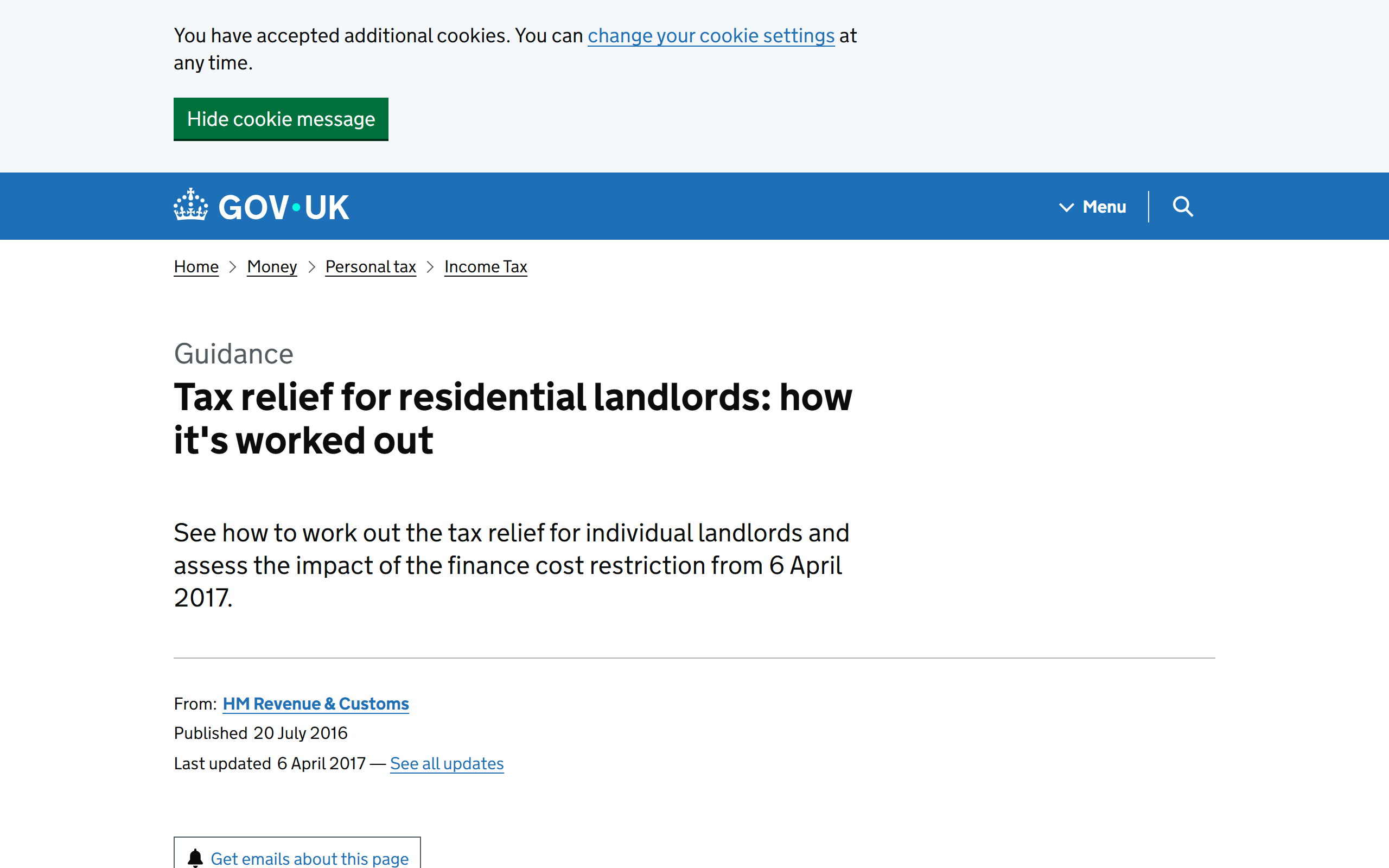
These differences are real enough that the UK tax system gives each its own regime. Rental income runs through income tax with Section 24 mortgage interest restrictions for individual landlords. Trading profit runs through corporation tax then dividend tax or wages. Interest income runs through income tax with the Personal Savings Allowance. Capital gains on the underlying asset is a separate regime again. Anyone telling you these are literally the same has not done a UK tax return.
How rent, profit and interest are the same
Now step back. Look at the cash flowing through a household budget. A renter pays £1,500 a month to a landlord. A shopper pays £80 of margin on a £400 weekly grocery run. A mortgage holder pays £900 a month of interest to a bank, which gets a fraction of it routed to depositors. All three are payments from labour income to capital income. All three are passive income for someone else.
The someone is sometimes a buy-to-let landlord, sometimes a Tesco institutional shareholder, sometimes a deposit holder at HSBC. The legal route is different. The substance is not. None of those recipients had to work that month for the money they received. The work was done by their past selves, when they bought the asset.
Imagine someone with £2 million in a buy-to-let portfolio, £2 million in a global equity tracker, and £2 million in a fixed-income ladder. They receive three different income streams with three different tax treatments. They write three different sets of paperwork at the end of the year. The economic role of those three streams in their life is identical. They do not have to work. The income arrives whether or not they get out of bed. Three different shaped vessels, the same water.
The same trick works in reverse, on the paying side. A first-time buyer who stretches to a £400,000 mortgage at 4.5% over 30 years pays roughly £1,500 a month in interest in the first year of the loan, against about £530 a month chipping away at the principal. A tenant in the same flat would call that £1,500 a month "rent". The borrower calls it "interest". The cash leaves their account at the same time, in the same amount, and lands with someone who already owns capital. The functional difference between paying rent to a landlord and paying interest to a bank, in the early years of a heavily-leveraged mortgage, is the small fraction of each payment that goes to principal. Strip that away and a 95% loan-to-value mortgage in year one looks indistinguishable from a tenancy with extra paperwork. Calling the borrower a "homeowner" is technically correct and economically generous: in interest-payment terms, the bank owns 95% of the asset and is taking 95% of the rent equivalent.
This is Stevenson's core claim and it is correct. The legal architecture is real but it is also scaffolding around something more basic, which is the question of who owns the productive assets in the economy and who has to pay them for access.
The line between exploitation and participation
This is where I would push back on Stevenson, gently.
If rent, profit and interest are all the same thing, and if that thing is morally suspect, then any asset owner is morally suspect. That has to include the worker auto-enrolled into a NEST pension that owns a fractional slice of every FTSE 100 company. It has to include the saver with £8,000 in a Cash ISA earning 4.5% interest. It has to include the first-time buyer with a small Stocks and Shares ISA. All of those people are receiving rent, profit and interest in tiny amounts, every day, from other people who do not yet own assets.
The honest version of the framing is not "asset owners versus workers". It is "where on the gradient are you and where are you trying to be". A 22-year-old graduate with no savings and rented accommodation is paying rent, profit and interest in three different directions and receiving none of it. A 65-year-old retiree drawing from a SIPP is receiving rent, profit and interest from across the global economy. Most of us are somewhere in between, and the project of personal finance is the deliberate decision to move along that gradient over a lifetime.
There is a fine line between calling this exploitation and calling it ordinary economic participation. This is one of the deeper questions in the late-stage capitalism conversation, and it does not have a clean answer. Stevenson's framing fits at the scale of large concentrations, where genuine power imbalances exist and asset returns dwarf the returns to work. It fits less neatly at the scale of an ordinary saver, where the question is less "are you extracting from someone" and more "can you reach the asset-owning side at all before retirement". The framing gets uncomfortable when it implies everyone with a workplace pension is part of the same system as a billionaire landlord. They are, technically. The difference of scale matters.
Maybe that is the point. In a capitalist economy, participating at all requires sitting on both sides of these transactions. You pay rent on the flat and receive a fraction of Sainsbury's profit through your tracker fund. You pay interest on the mortgage and receive interest on the ISA cash. The question is not whether to participate. The question is which side you want more of your income coming from by the time you stop working.
What this means for your money
Three practical takeaways drop out of the argument, whether or not you agree with the moral framing.
First, the maths is the maths. Asset ownership pays. Not owning costs. Over a 40-year working life the difference between being a net payer of rent, profit and interest and a net receiver of them is roughly the difference between retiring at State Pension age with nothing and retiring at 55 with options.
Second, compounding runs in both directions. For the asset owner, returns roll up into a larger asset base each year. For the renter and the borrower, payments leak away and never come back. The longer you sit on the wrong side of the line, the harder the catch-up gets.
Third, the path is not a moral choice, it is a budget choice. To shift the share of your income coming from capital, you have to consume less today. That is the trade. The UK gives ordinary workers some of the most generous wrappers in the world to do it, between the £20,000 ISA allowance and the £60,000 pension annual allowance. Most people use a fraction of them, not because they cannot, but because the asset-buying habit has not been built yet. The FI number calculator is one way of putting an actual figure on the size of the asset base you would need to flip from net payer to net receiver of these flows.
You do not have to like the system to use it. You do not have to call it exploitation to recognise that it is set up to reward the people who own assets. The most useful thing Stevenson's framing does is make the gap visible, which is the first step in deciding which side of it you want to be on.
Further Reading:
Debt: The First 5,000 Years - David Graeber - The deepest book ever written on how debt, credit, rent and interest relate to power, obligation and economic structure. Required reading if Stevenson's framing makes you uncomfortable in a way you can't quite articulate. (Affiliate link - we may earn a small commission at no extra cost to you.)
Frequently Asked Questions
Are rent, profit and interest the same thing in economics?
Classical economics calls them the three returns to the three factors of production: rent for land, profit for capital, and interest for loanable funds. Marx, Henry George and several modern heterodox economists argue the categories are arbitrary and that all unearned income from ownership is functionally the same. Mainstream economics still uses the distinctions, partly because they map onto different tax and legal regimes that exist in the real world.
Is Gary Stevenson right that all three are exploitation?
He is right that the economic substance is similar. The labels are different but the cash flow is the same. Where the argument gets harder is at the boundary between "extraction by the powerful" and "ordinary participation in the economy". Almost everyone with a workplace pension or an ISA technically receives rent, profit and interest in small amounts. Calling that exploitation flattens an important difference of scale, but Stevenson's framing fits accurately at the top of the wealth distribution.
How are rent, profit and interest taxed in the UK?
Differently. Rental income is taxed as income at marginal rates, with mortgage interest relief for individual landlords restricted to a 20% credit under Section 24. Trading profit runs through corporation tax then dividend tax or salary. Interest income falls under income tax with the Personal Savings Allowance (£1,000 for basic-rate, £500 for higher-rate, £0 for additional-rate). Capital gains on the underlying assets is its own regime under CGT.
Can someone on a normal salary become an asset owner?
Yes, and the UK is one of the easier places in Europe to do it. The combination of the ISA wrapper and the pension annual allowance shelters more than £80,000 a year of asset-building income from tax. Almost no UK worker can save that much, which means the wrappers are not the constraint. The constraint is the decision to consume less today in exchange for owning a larger share of the economy tomorrow.
What is the difference between unearned income and passive income?
They are the same idea with different branding. "Unearned income" is the economist's term and carries a slight moral charge, which is why Stevenson and other heterodox commentators use it. "Passive income" is the personal-finance term and sounds aspirational, which is why the FIRE community uses it. The cash flow is identical. The difference is which audience you are trying to reach.
Prefer to watch?
We turn these money breakdowns into short videos
A few a week, plain-English UK money. If you would sooner watch than read, follow along:
Enjoying the content?
If this site has been useful, a coffee goes a long way.
Browse more articles
Browse all