







25% Pension Lump Sum to Pay Off Mortgage: Worth It?
Your mortgage is at 5.5%. Your pension probably will not match that net of tax. Using the 25% tax-free lump sum this way might be the most efficient move in UK finance.
Cite this article
Freedom Isn't Free (2026) 25% Pension Lump Sum to Pay Off Mortgage: Worth It?. Available at: https://freedomisntfree.co.uk/articles/pension-tax-free-lump-sum-mortgage (Accessed: 21 September 2026).
Italicise the article title in your bibliography. Accessed date set to today.
TLDR
- You can use up to 25% of your pension as a tax-free lump sum to pay off your mortgage.
- Using the tax-free lump sum can save you money on mortgage interest, which is often higher than typical investment returns.
- If you are near the minimum age to access your pension (currently 55, rising to 57), consider using your lump sum to pay down your mortgage before the rules change.
- Check your pension rules, as some older schemes may still allow you to access your pension at 55.
- Using your pension lump sum to pay off a mortgage can lower your monthly expenses in retirement.
Using the 25% lump sum to clear a mortgage
Lump sum allowance capped at £268,275 for 2026/27.
Using Your Pension Tax-Free Lump Sum to Pay Down Your Mortgage
For many UK homeowners approaching retirement, the mortgage and the pension sit in separate mental accounts - one is a debt to eliminate, the other is a pot of money to draw down in old age. But there is a point in life where these two things can interact in a way that is genuinely tax-efficient.
If you are approaching the minimum pension access age (currently 55, rising to 57 in 2028) and you still have a meaningful mortgage balance, taking your tax-free pension lump sum to pay it down - or pay it off entirely - can be one of the most effective financial moves available to you.
This article explains how it works, the numbers behind it, and the key factors to think through. It is not financial advice - everyone's situation is different, and a decision of this size warrants a conversation with a qualified financial adviser.
The Basics: Your Tax-Free Lump Sum
When you access your defined contribution pension in the UK, you are entitled to take up to 25% of the fund as a tax-free lump sum (subject to the lump sum allowance, which is currently £268,275).
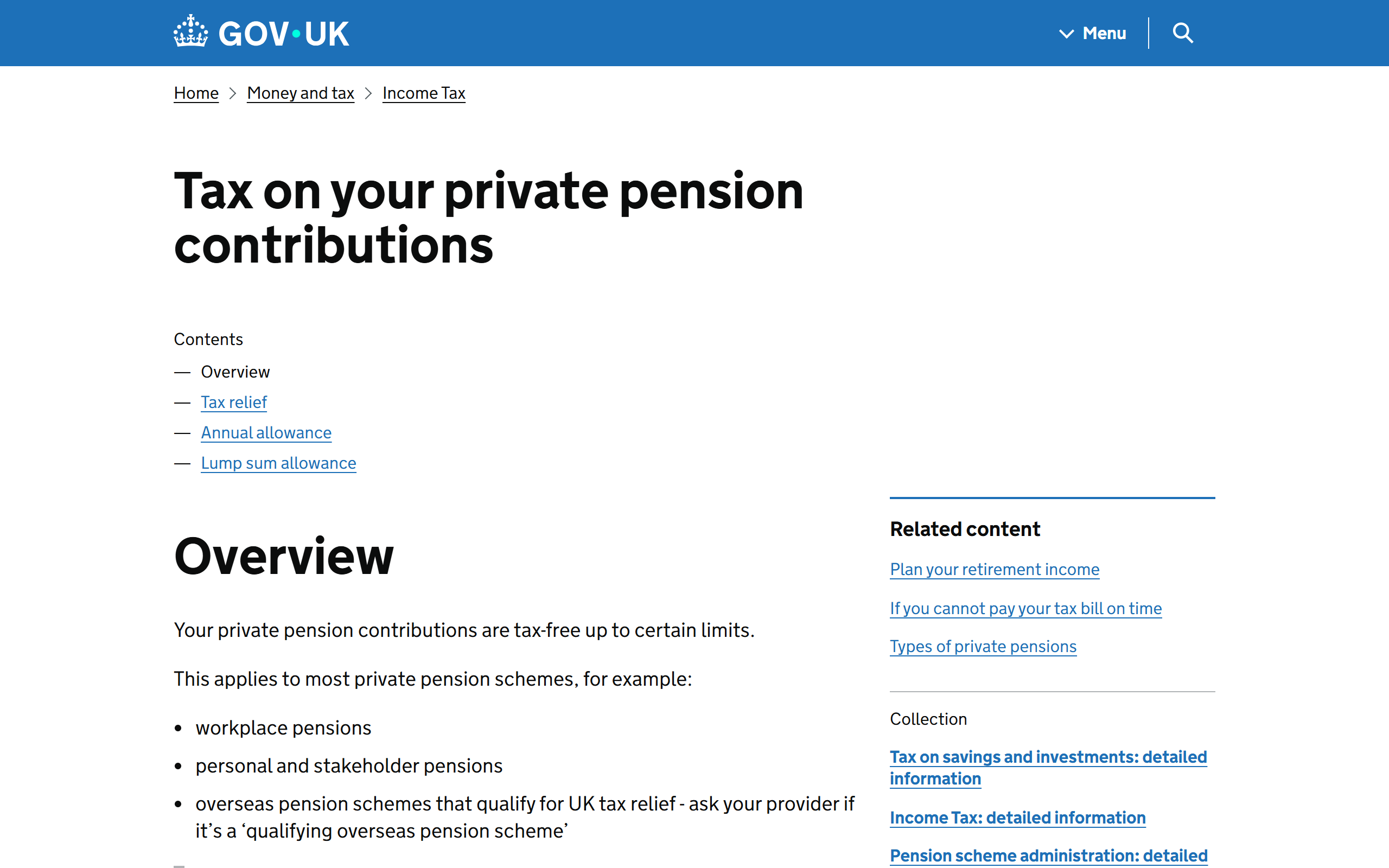
The remaining 75% is drawn as taxable income - either as an annuity, through drawdown, or a combination of the two.
The tax-free lump sum is one of the most valuable benefits in the UK pension system. It is money that has already benefited from tax relief on the way in and pays no tax on the way out. Used wisely, it can significantly improve your financial position at retirement.
Why Using It to Pay Down a Mortgage Makes Sense
Consider what a mortgage costs you. If your outstanding balance is £100,000 at an interest rate of 4.5%, you are paying £4,500 per year in interest. That interest is paid from post-tax income - meaning you need to earn considerably more than £4,500 to actually pay it.
Now consider your pension lump sum. Because it is tax-free, every pound you take is a full pound. You do not need to gross it up.
Using a tax-free lump sum to eliminate a mortgage therefore delivers a guaranteed, post-tax return equal to your mortgage interest rate. In the current environment, that is typically 4-6% - comparable to or better than the expected real return on a cautious investment portfolio, with no risk and no volatility.
For someone with a relatively modest pension, using the lump sum to clear the mortgage also dramatically reduces their monthly outgoings in retirement, which in turn means they need to draw down less from their remaining pension each year.
The Age 55 and 57 Transition
Currently, the minimum age at which you can access your pension is 55. This is due to increase to 57 in April 2028, under legislation passed in the Finance Act 2022.
If you were born before 6 April 1971, you may be able to access your pension at 55 before the change takes effect. If you were born after that date, you will generally need to wait until 57.
There are some complications - certain older pension schemes have protected minimum ages, and some schemes will retain 55 as their minimum access age even after the change. If you are in any doubt, check with your pension provider.
The practical implication is straightforward: if you are approaching 55 or 57 and you still have a mortgage, the question of whether to take the lump sum and use it against the mortgage is worth exploring now, before the moment arrives.
Running the Numbers
Here is a simplified example to illustrate the logic.
Suppose you have a pension pot of £200,000 and a mortgage with £40,000 remaining at 5% interest.
Your maximum tax-free lump sum is 25% of £200,000, which is £50,000. You could use £40,000 of that to clear the mortgage entirely, keeping £10,000 as a cash buffer, and leave £150,000 in the pension to continue growing.
The outcome:
- Mortgage is cleared. Monthly outgoings fall by whatever the payment was.
- You no longer pay £2,000 per year in mortgage interest.
- Your pension remains broadly intact - you have taken 20% of the pot, not all of it.
- The £40,000 you used was tax-free. To achieve the same result by drawing taxable income and paying off the mortgage from savings would have cost considerably more.
The numbers will look different in every case. You can use our mortgage calculator to model what clearing or reducing your balance would save. The key principle is that tax-free cash used to eliminate debt with a known interest rate is a guaranteed, tax-efficient return.
What to Consider Before You Decide
This strategy is not right for everyone. Before making any decision, think through the following:
Your mortgage rate versus your pension growth rate
If your mortgage interest rate is low (say, 1.5% on a fixed deal locked in a few years ago) and your pension is invested in equities with a long expected return, it may make more sense to let the pension grow and service the mortgage normally. The higher your mortgage rate, the more compelling the lump sum strategy becomes.
How much of your lump sum you would use
Using all 25% to clear a small mortgage means less flexibility elsewhere. The lump sum is a one-time opportunity - once taken, that portion of your pension is gone. Make sure the mortgage balance is large enough to make it worthwhile, and that you are not leaving yourself without a cash buffer.
Your overall retirement income picture
Paying off the mortgage reduces your monthly outgoings in retirement, but you still need income to live on. Think about how much you will draw from the remaining pension, whether you have other income (State Pension, rental income, part-time work), and whether clearing the mortgage now or holding the capital in the pension serves your long-term income needs better.
The State Pension and tax planning
If you take a large lump sum at the same time as other income, you may push yourself into a higher tax bracket for that year. The lump sum itself is tax-free, but you should be mindful of how much taxable income you are also drawing in the same tax year.
Seek professional advice
This is a significant financial decision that interacts with pension legislation, mortgage terms, tax, and your wider retirement planning. A regulated financial adviser can model the options for your specific situation. The Money and Pensions Service (MoneyHelper) also offers free, impartial guidance.
For FIRE Investors: An Early Retirement Angle
If you are pursuing financial independence and considering early retirement in your mid-to-late fifties, the pension access age is a key planning milestone.
Many FIRE strategies involve bridging the gap between leaving work and being able to draw your pension - using ISAs, general investment accounts, or other savings to cover expenses in the years before pension access. Once you hit the minimum access age, the tax-free lump sum can meaningfully accelerate the transition.
Using that lump sum to clear or reduce a mortgage at the point of retirement reduces your essential monthly costs, lowers the drawdown rate needed from remaining investments, and may bring your financial independence number down significantly.
If your mortgage is one of the main remaining barriers to retiring early, and you are within a few years of pension access age, this interaction is worth modelling carefully.
Summary
Taking your 25% tax-free pension lump sum to pay down or pay off a mortgage is a strategy that deserves serious consideration for anyone approaching pension access age with meaningful mortgage debt remaining.
The logic is straightforward: tax-free cash used to eliminate debt with a known interest rate delivers a guaranteed, after-tax return with no investment risk. For many people, that beats the expected return on cautious investments over the same period.
The decision depends on your mortgage rate, your pension size, your other income sources, and your broader retirement plan. Run the numbers for your own situation, and consider taking regulated financial advice before making a decision of this size.
This article is for informational and educational purposes only. It does not constitute financial advice. Tax rules and pension regulations can change and depend on individual circumstances. Please consult a qualified financial adviser before making decisions about your pension or mortgage.
Contents
- The Basics: Your Tax-Free Lump Sum
- Why Using It to Pay Down a Mortgage Makes Sense
- The Age 55 and 57 Transition
- Running the Numbers
- What to Consider Before You Decide
- For FIRE Investors: An Early Retirement Angle
- Frequently Asked Questions
Frequently Asked Questions
How much tax-free cash can I take from my pension?
You can take up to 25% of your defined contribution pension as a tax-free lump sum, subject to the lump sum allowance of £268,275 (2026/27). The remaining 75% is drawn as taxable income. If your pension is large enough that 25% exceeds £268,275, only that threshold amount is tax-free.
What is the minimum age to access my pension?
Currently 55, rising to 57 in April 2028. If you were born before 6 April 1971 you may be able to access at 55 before the change takes effect. Certain older pension schemes have protected minimum access ages - check with your pension provider if you are unsure.
Is using the lump sum to pay off a mortgage always the right decision?
Not always. It depends on your mortgage interest rate versus your pension's expected growth rate, how much of your lump sum you would need to use, your other income sources in retirement, and your overall tax position. If your mortgage rate is very low and your pension is invested in equities with strong long-run return expectations, keeping the pension invested and paying the mortgage normally may produce better outcomes. Run the numbers for your specific situation.
Does taking the lump sum affect my State Pension?
No. The State Pension is based on your National Insurance record, not your pension savings. Taking a tax-free lump sum from your defined contribution pension has no effect on your State Pension entitlement.
Should I take professional advice before making this decision?
Yes. A decision of this size - touching pension legislation, mortgage terms, tax planning, and long-term income strategy simultaneously - warrants regulated financial advice. The Money and Pensions Service (MoneyHelper) also offers free, impartial guidance as a starting point.
Further Reading:
Beyond the 4% Rule - Abraham Okusanya - The definitive UK-focused guide to retirement income strategy, covering how to sequence ISA and pension drawdown tax-efficiently - directly relevant to the decision about when and how to use your lump sum. (Affiliate link - we may earn a small commission at no extra cost to you.)
Related Reading:
Prefer to watch?
We turn these money breakdowns into short videos
A few a week, plain-English UK money. If you would sooner watch than read, follow along:
Enjoying the content?
If this site has been useful, a coffee goes a long way.
Browse more articles
Browse all