






House Deposit Savings UK: Cash or Invest?
Saving for a house but unsure when you'll buy? Cash hurts in slow motion. Stocks hurt fast. Most advice picks a side. There's a hedge for the maybe-buyer nobody mentions.
Cite this article
Freedom Isn't Free (2026) House Deposit Savings UK: Cash or Invest?. Available at: https://freedomisntfree.co.uk/articles/house-deposit-savings-uk (Accessed: 10 October 2026).
Italicise the article title in your bibliography. Accessed date set to today.
TLDR
- If you might need the money in under two years, conventional wisdom is right: keep it in cash. Equity drawdowns over short horizons are too steep to risk a deposit.
- The cost of pure cash is real. Years of "maybe next year" can quietly compound away into six figures of foregone gains, and most people end up renting longer than they planned.
- A glide path hedges both regrets. Keep the bulk in a high-yield savings account, and drip a small fixed amount each month into a global index fund so your equity weight ratchets up the longer the buy decision drifts.
- If the house plan dies, accelerate the drip. If it lives, the cash is intact and the modest equity exposure can either stay invested or sell down to top up the deposit.
House Deposit Savings UK: Cash or Invest?
House deposit savings UK questions are some of the most agonising in personal finance. You have a meaningful sum, often six figures. You might buy a house in 12 to 24 months. You might not. Cash feels safe but watching it sit there at 4% while the FTSE All-World does 18% in a year is its own kind of pain. Investing it feels productive until a 30% drawdown lands the month before you exchange.
Most articles tell you to pick a side. Cash if the timeline is short, equities if it is long. That advice is fine when you actually know your timeline. It is useless when you do not. This guide is for the situation that almost everyone facing a house decision is actually in: a maybe, a probably, a "we will see what happens with the job and the relationship and the rates," not a hard deadline.
Contents
- Why short timeframes change the rules
- What "low-risk cash" actually means in the UK
- The hidden cost of staying in cash
- The glide path: a hedge for the maybe-buyer
- A worked £100,000 example
- What if you decide not to buy after all?
- Frequently Asked Questions
Why short timeframes change the rules
Equities reward patience. Over 20 years a globally diversified index fund has historically returned around 7-10% annually after inflation, and the probability of a real loss approaches zero as your horizon lengthens. Over 18 months that probability is uncomfortably high.
Look at the numbers. The S&P 500 has had calendar drawdowns of 37% (2008), 19% (2022), 23% (2002), and double-digit dips in dozens of other rolling 18-month windows. Markets recover, but recovery times have ranged from a few months to a decade. If your house decision lands during the early part of a recovery, the loss is locked in. There is no "I will just wait it out" when the seller wants completion in eight weeks.
The rule of thumb most planners use is simple: any money you cannot afford to lose 30% of, you cannot afford to put in equities. A house deposit fits that test almost perfectly. The cost of being wrong is not a delayed retirement at 67. It is no house, broken plans, and possibly a serious relationship strain.
So conventional wisdom holds for the core: if there is a real chance you need this money in 12-24 months, it does not belong in stocks.
What "low-risk cash" actually means in the UK
"Cash" is doing a lot of work in that sentence. The UK has at least six different homes for short-term money, and the right blend depends on tax, access, and how certain your timing is.
Easy access savings accounts. The default. Top rates in 2026 sit around 4-5% for instant access deals, but the headline rate often expires after 12 months and resets to something underwhelming. Use a comparison site, set a calendar reminder for the rate-reset date, and be prepared to switch.
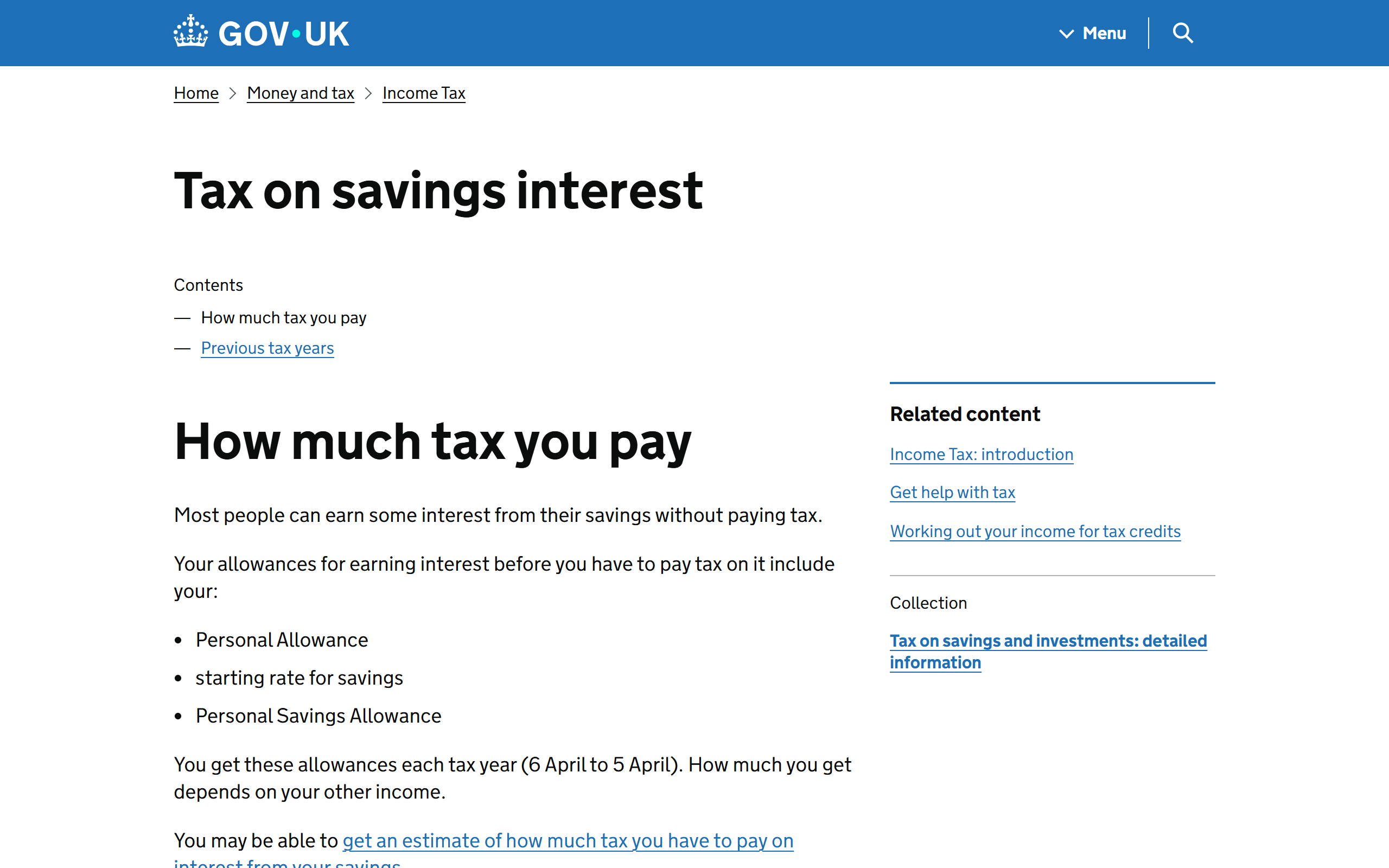
Cash ISAs. Same product, but the interest is tax-free. If you are a higher-rate taxpayer, your Personal Savings Allowance is only £500, so cash ISAs become much more attractive once your savings cross around £10,000. The 2026/27 ISA allowance is £20,000 per year.
Fixed-rate savings bonds. Lock the money up for 6, 12, or 24 months in exchange for a slightly higher rate. Useful only if you are confident you will not need the cash before the term ends. Early withdrawal usually costs you most or all of the interest. For a maybe-buyer, fixed-term bonds for the full sum is exactly the wrong move.
Premium Bonds. £50,000 maximum per person. The prize fund rate sits around 3.6% in early 2026, paid out as tax-free random prizes. The expected return is below the best easy access rates, but the tax-free element and the lottery upside appeal to some. Worth knowing about, not worth optimising for.
Money market funds (cash funds in an ISA or GIA). Funds that invest in very short-dated government bills and bank deposits. They typically yield close to the Bank of England base rate, settle T+0 or T+1, and behave like cash. Held inside a Stocks and Shares ISA, the yield is fully tax-free. Useful if you have already used your Cash ISA allowance for the year but still want tax-free yield.
Short-dated UK gilts (under 2 years to maturity). Yields move with the Bank of England base rate. Capital gains on gilts are exempt from CGT, and a deeply discounted gilt held to maturity gives a known return with almost no credit risk. More work to set up, more interesting once you are in the higher-rate band.
The single most important rule: stay below the FSCS protection limit per banking licence. £120,000 per person per licence is protected if the bank fails (raised from £85,000 on 1 December 2025). Two banks under the same licence (e.g. First Direct and HSBC) count as one, so spread accordingly. The FSCS bank and building society checker shows which licence each brand sits under.
The hidden cost of staying in cash
The argument for parking everything in cash is straightforward. The argument against it is just as real and gets less airtime.
Most people who say they "might buy in 18 months" do not buy in 18 months. They buy in three years, or five, or never. Life happens. Rates shift. Couples decide they prefer a different city. The relationship that was meant to be the trigger ends or evolves. Surveys of UK first-time buyers consistently show actual time-to-purchase running 1.5 to 2 times the original estimate.
If your £100,000 sits in cash earning 4% gross while you wait three years longer than expected, you have given up roughly £15,000-£20,000 of equity returns above what cash would have paid, depending on what global stocks did over that period. Over five years, the gap can be £40,000 or more. That is real money. It is the deposit on a different house, or a year off work, or a major chunk of a pension.
This is the regret that the "100% cash" advice ignores. You are not just hedging the house decision. You are hedging the assumption that there even is a house decision.
The glide path: a hedge for the maybe-buyer
The clean solution is not to pick a side. It is to slowly tilt the mix as time passes.
Here is the framework. Start with the entire sum in cash, in the highest-yielding safe vehicle you can find. Then set up a fixed monthly direct debit from that cash account into a globally diversified index fund inside a Stocks and Shares ISA. Keep the monthly drip small relative to the total. The point is not to time the market. The point is to slowly lift your equity weight as time passes and the buy decision firms up or fades.
The maths handles itself:
- If you buy in 12 months, the equity exposure is small. A 20% drawdown on 5% of your money is a 1% hit to the deposit. Survivable.
- If you buy in 36 months, the equity exposure has grown to maybe 15-20%. Still small enough that a bad market does not derail completion, but big enough to capture a meaningful share of the upside.
- If you decide not to buy and stay renting, you accelerate the drip and end up fully invested in 12-24 months. The cash that was earmarked for a deposit becomes a long-term portfolio without the pain of a single all-in lump sum decision.
The reason this works is psychological as much as mathematical. The single hardest thing about investing a windfall is the fear of buying right before a crash. Drip-feeding sidesteps that fear. You are committed to a process, not a timing call. Combined with a written investment thesis, you stop second-guessing every market headline.
This is not a clever new idea. Pension lifestyling, target-date funds, and bond glide paths in retirement use the same logic in reverse: start risky, end safe. The house-deposit version is the same principle inverted: start safe, end risky as the optionality expires.
A worked £100,000 example
Suppose you have £100,000 today, you might buy in 18 months, and you might not.
Month 0:
- £85,000 in a top easy-access savings account at one bank (under FSCS limit)
- £15,000 in a Cash ISA at a second bank
- Open a Stocks and Shares ISA at a low-cost platform like InvestEngine, Trading 212, or Vanguard
Months 1-18:
- Standing order of £500 per month from the cash account into a global tracker (a fund tracking the FTSE All-World, MSCI ACWI, or similar)
- Total drip over 18 months: £9,000
- Keep £91,000+ in cash growing at the prevailing rate
Scenarios at month 18:
| Scenario | Cash | Equities (after gain/loss) | Total | Action |
|---|---|---|---|---|
| Markets up 15% | £93,500 | £10,350 | £103,850 | Buy: sell equities, top up deposit |
| Markets flat | £93,500 | £9,000 | £102,500 | Buy: sell equities or keep them in ISA |
| Markets down 25% | £93,500 | £6,750 | £100,250 | Buy: deposit covered by cash alone |
In the worst case, the equity portion is down £2,250. In the best, it is up £1,350. The deposit is intact in all three. This is the entire point of the hedge: you have moved a small slice of money into something that grows over the long run without putting the deposit itself at risk.
If you do not buy at month 18, the maths gets more interesting. You now have £100k+ that does not need to be liquid for the deposit. Bump the standing order to £2,000 a month and you are 50% in equities by month 36. Continue to fully invested by month 48. You have transitioned a deposit fund into a long-term portfolio without ever making a single all-in decision.
What if you decide not to buy after all?
Plenty of people ask this question and end up renting indefinitely. That is not a failure. It is a different financial path with its own rent-vs-buy maths, and it can produce more wealth over a lifetime than buying at the wrong time.
If you reach the point where you are confident you will not buy in the next five years:
- Increase the drip aggressively. Aim to be fully invested within 12-18 months. Lump sum is statistically the better choice over long horizons, but if drip-feeding helps you actually do it, the behavioural win matters more than the few basis points.
- Use your Stocks and Shares ISA allowance fully. £20,000 a year goes a long way when you have £100,000 sitting in cash.
- Consider topping up your pension. Higher-rate taxpayers get the steepest tax relief, and a SIPP contribution can restore the personal allowance if you happen to be in the 60% trap.
- Build a proper emergency fund. Three to six months of expenses, separate from the investment pot, in instant-access cash.
The framework works either way. If you buy, the deposit is intact and you have small but real equity gains. If you do not, you have already started the transition into a long-term portfolio without the regret of "I sat on £100k in cash for five years."
Frequently Asked Questions
Is 18 months too short to invest in stocks?
For a sum you genuinely need at the end, yes. The probability of a 20%+ drawdown over any given 18-month window is meaningful, and there is no time to recover before you need the money. For a sum you might or might not need, a small drip into equities is reasonable because the worst case is contained.
Where should I put my house deposit savings in the UK?
A combination of high-yield easy access savings, a Cash ISA, and (if you are a first-time buyer aged 18-39) a Lifetime ISA. Premium Bonds work for some of the cash. Spread across banking licences to stay under the £120,000 FSCS limit per institution (raised from £85,000 on 1 December 2025). Avoid locking everything into a fixed-term bond if your timing is uncertain.
Should I use a Lifetime ISA for my house deposit?
If you are 18-39, buying your first home for under £450,000, and willing to wait at least 12 months from opening before buying, the LISA is a near-automatic yes. The 25% government bonus is worth up to £1,000 a year on £4,000 contributed. It eats into your annual ISA allowance but is otherwise free money. See our Lifetime ISA guide for the rules.
Can I lose money in a Cash ISA or savings account?
You can lose purchasing power if inflation runs above your interest rate, which has happened often in recent years. You cannot lose nominal capital below the FSCS limit if your bank fails. The risk of cash is silent erosion, not sudden collapse.
How much of a £100k house deposit fund could I safely invest?
There is no universal answer, but a useful rule of thumb is no more than 10-15% if your buying horizon is firm at 12-18 months, ramping up to 25-30% if your horizon stretches past two years. The drip-feed glide path produces this ratio naturally without you having to decide a number upfront.
What happens if the market crashes right before I buy?
If your equity slice is small (under 15% of the total fund), even a 30% drop knocks under 5% off the deposit. Inconvenient but not catastrophic. If your equity slice is large because you got greedy or stretched the horizon assumption, you may need to delay the purchase, find a smaller property, or borrow more. This is exactly the scenario the glide path is designed to limit.
Further Reading:
The Psychology of Money - Morgan Housel - The deposit decision is at heart a behavioural problem: regret, FOMO, and the inability to live with uncertainty. This is the best book on why your money decisions are not really about the maths. (Affiliate link - we may earn a small commission at no extra cost to you.)
Smarter Investing - Tim Hale - Evidence-based UK investing for long-horizon wealth, including the case for global trackers and the realities of short-horizon equity risk. The benchmark text for the long-term portfolio your deposit fund eventually becomes. (Affiliate link - we may earn a small commission at no extra cost to you.)
Prefer to watch?
We turn these money breakdowns into short videos
A few a week, plain-English UK money. If you would sooner watch than read, follow along:
Enjoying the content?
If this site has been useful, a coffee goes a long way.
Browse more articles
Browse all