



The 60% Tax Trap: Earnings Between £100k and £125,140
Earn between £100k and £125,140 and HMRC takes 60p of every extra pound you make. Higher than the 45% additional rate. Almost nobody spots it on a payslip.
Cite this article
Freedom Isn't Free (2026) The 60% Tax Trap: Earnings Between £100k and £125,140. Available at: https://freedomisntfree.co.uk/articles/60-percent-tax-trap-uk (Accessed: 10 October 2026).
Italicise the article title in your bibliography. Accessed date set to today.
TLDR
- Between £100,000 and £125,140 of Adjusted Net Income, every £2 earned removes £1 of personal allowance, creating a 60% effective marginal rate
- The trap is invisible on payslips: most earners do not realise they are losing tax-free income
- Salary sacrifice into a pension reduces ANI directly and can claw back the full personal allowance, often for under 40p net cost per pound
- Charitable Gift Aid donations and self-employed pension contributions also restore allowance at lower marginal rates
UK marginal income tax rates, 2026/27
The taper of the £12,570 personal allowance creates a stealth 60% marginal rate inside the £25,140 trap band.
The 60% Tax Trap: Earnings Between £100k and £125,140
For UK earners between £100,000 and £125,140, the 60% tax trap is one of the most punishing rate bands in the entire tax code - higher than the 45% additional rate that kicks in at £125,140, higher than basic rate, higher than the rates almost any retiree pays. And almost no one talks about it on their payslip.
This guide explains how the trap works, why HMRC charges 60% on a band that does not formally exist, and the legitimate moves to escape it - some of which are among the most tax-advantaged forms of saving available in the UK.
Contents
- How the 60% rate appears
- The Adjusted Net Income trick
- Salary sacrifice: the most powerful escape
- Personal pension contributions and Gift Aid
- The wider 62% rate (with NI)
- Worked examples at £110k and £120k
- Frequently asked questions
How the 60% Rate Appears
UK income tax has explicit rates: 20% (basic), 40% (higher), 45% (additional), confirmed on HMRC's income tax rates and personal allowance page. There is no formal 60% rate. The 60% trap comes from a stealthy interaction of two rules:
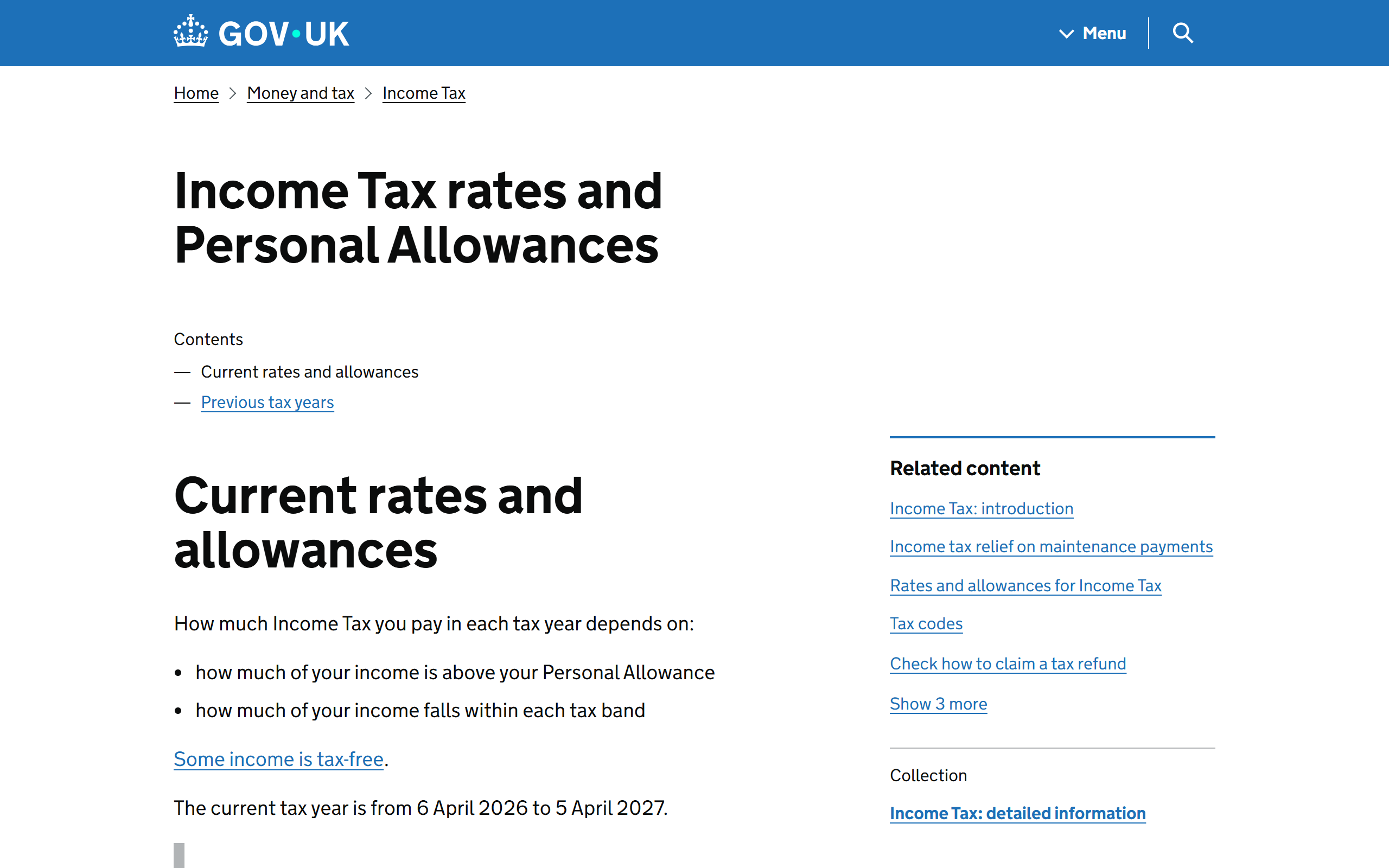
- The personal allowance (£12,570 for 2026/27) tapers away above £100,000 of Adjusted Net Income, at a rate of £1 of allowance lost for every £2 of income above the threshold.
- The personal allowance is fully gone by £125,140.
For each £1 earned in the £100,000-£125,140 band:
- 40p is paid as higher-rate income tax on the £1 itself
- 20p of additional tax becomes due on a previously-tax-free pound (because £0.50 of personal allowance is now lost, and that £0.50 is now taxed at 40%)
- Total: 60p of tax on every £1 of income across the £25,140 band
UK marginal tax rate by gross income, 2026/27
England, Wales and NI. Combined income tax + employee NI.
Source: HMRC income tax rates 2026/27. NI primary threshold £12,570, upper earnings limit £50,270.
The taper was introduced in 2010 and the band has not been updated since, despite frozen tax thresholds and substantial wage inflation. This makes the trap progressively worse with every passing year of stealth tax via fiscal drag.
The Adjusted Net Income Trick
The taper is calculated on Adjusted Net Income (ANI), not gross salary. ANI is your total taxable income minus certain deductions.
How to reduce ANI (and therefore claw back the personal allowance):
- Personal pension contributions (gross amount)
- Gift Aid donations (grossed up at 25%)
- Trading or property losses
Crucially, salary sacrifice into a workplace pension reduces gross salary directly, which is even better than reducing ANI - the contribution never appears as taxable income at all.
A £110,000 earner contributing £10,000 gross into a personal pension reduces their ANI to £100,000, fully restoring the personal allowance. The maths on that single move:
- Contribution of £10,000 gross
- Net cost after basic rate relief at source: £8,000
- Higher rate relief reclaimed via Self Assessment: £2,000
- Personal allowance restored: £2,000 of tax saved (40% × £5,000 of allowance recovered)
- True net cost of £10,000 in pension: ~£4,000
- That is a 60% effective rate of relief on the contribution
Few other UK tax moves come close.
Salary Sacrifice: the Most Powerful Escape
For workplace pension contributions specifically, salary sacrifice is more efficient than personal contributions. Salary sacrifice replaces gross salary with a direct employer pension contribution. Because the salary is never paid, you save:
- Income tax at marginal rate (60% effective for the trap band)
- 2% employee National Insurance
- Often the 15% employer NI (if the employer passes back their saving via the pension contribution)
For a worker at £115,000 sacrificing £15,000 to get back to £100,000 ANI:
- Income tax saved: 60% × £15,000 = £9,000
- Employee NI saved: 2% × £15,000 = £300
- Employer NI passback (if applicable): 15% × £15,000 = £2,250 added to pension
- Net cost to take-home pay: £15,000 - £9,000 - £300 = £5,700
- Pension contribution received: £15,000 + £2,250 employer passback = £17,250
- Effective relief: 67% of every pound contributed (£17,250 added for £5,700 of foregone net pay)
This is the highest-leverage form of saving available to PAYE earners in the UK. A salary-sacrifice pension at the £100k-£125k band is the closest thing to a free lunch in the UK tax code.
Personal Pension Contributions and Gift Aid
If salary sacrifice is not available (employer does not offer it, or you are self-employed), the second-best option is personal pension contributions to a SIPP or personal pension. Relief at source applies basic-rate tax automatically, and higher-rate relief comes back via Self Assessment - HMRC's check pension tax relief eligibility guide explains who can claim and how.
For Gift Aid, the same mechanic works in reverse. A £8,000 charitable donation grossed up to £10,000 reduces ANI by £10,000. For an earner in the trap, this returns up to 60p per pound through allowance restoration on top of the standard charitable relief.
The combined effect: a £100 donation in cash from someone in the trap can have a true cost of £40, with the charity receiving £125 (after Gift Aid grossing up).
The Wider 62% Rate (With NI)
For PAYE earners, employee National Insurance applies to earnings above the threshold. From April 2024, employee NI on earnings above £50,270 is 2%. Adding this to the 60% income tax effect:
- Income tax effective rate in the trap: 60%
- Employee NI: 2%
- Total effective marginal rate: 62%
An additional-rate taxpayer above £125,140 pays only 47% (45% + 2% NI). The trap band is 15 percentage points more punishing than the formal additional rate.
For self-employed earners, Class 4 NI applies similarly above £50,270, currently at 6%. The picture there is even worse.
Worked Examples at £110k and £120k
£110,000 earner with no pension contributions
- ANI: £110,000
- Personal allowance lost: £5,000 (half of the £10k over £100k)
- Personal allowance available: £7,570
- Tax on the income above £100k: 40% × £10,000 = £4,000
- Extra tax from lost allowance: 40% × £5,000 = £2,000
- Total marginal rate effect on the £10,000 above £100k: 60%
£110,000 earner contributing £10,000 to pension
- ANI after pension contribution: £100,000
- Personal allowance restored: full £12,570
- Higher rate relief on contribution: £2,000
- Personal allowance recovery saving: £2,000 (40% × £5,000)
- Net cost of £10,000 pension contribution: roughly £4,000
£120,000 earner contributing £20,000 to pension via salary sacrifice (with employer NI passback)
- Gross salary cut by £20,000 (now reported as £100,000)
- Net pay reduction: ~£7,600 (60% income tax + 2% NI saved)
- Pension contribution: £20,000 + £3,000 employer NI passback = £23,000
- Effective relief on the £23,000 added to pension: ~67%
Frequently Asked Questions
Why is the marginal tax rate 60% between £100,000 and £125,140?
Because the personal allowance tapers away above £100,000 at £1 lost for every £2 earned. Each pound earned in the band is taxed at 40% directly, plus another 20% effectively as previously tax-free income becomes taxable. The combined rate is 60% on the £25,140 band.
How can I avoid the 60% tax trap?
The most effective method is reducing your Adjusted Net Income to £100,000 or below, usually by paying into a pension. Salary sacrifice into a workplace pension is most efficient (also saves NI). Personal SIPP contributions and Gift Aid donations work too, with relief reclaimed via Self Assessment.
Does the 60% trap apply to dividend or rental income?
Yes. The personal allowance taper is based on total Adjusted Net Income, including salary, self-employed profit, dividends, rental income, and taxable interest. A landlord with £80,000 of salary plus £30,000 of rental profit is firmly in the trap.
Is the 60% trap the same as the 62% trap?
The 62% figure includes 2% employee National Insurance on top of the 60% income tax effect. PAYE workers face 62%; self-employed workers paying Class 4 NI at 6% on profits above £50,270 face an even higher combined rate.
Should I just earn less than £100,000 to avoid the trap?
That is one strategy, but the better answer is usually to earn the full salary and divert the trap-band slice into a pension. The pension contribution is taxed favourably on the way out (most retirees pay 20% basic rate or zero), and grows tax-free in the meantime. Working the same hours for less salary loses you the underlying earning power; redirecting earnings into a pension keeps the income but moves it to a more tax-efficient form.
Prefer to watch?
We turn these money breakdowns into short videos
A few a week, plain-English UK money. If you would sooner watch than read, follow along:
Enjoying the content?
If this site has been useful, a coffee goes a long way.
Browse more articles
Browse all