Bogle's Enough: A Review for UK Investors
Vonnegut told Heller the host earned more in a day than Heller made from Catch-22. Heller's reply is Bogle's whole thesis.
Cite this article
Freedom Isn't Free (2026) Bogle's Enough: A Review for UK Investors. Available at: https://freedomisntfree.co.uk/articles/enough-a-deep-dive-into-bogles-critique-of-modern-finance-and-the-quest-for-financial-independence (Accessed: 21 September 2026).
Italicise the article title in your bibliography. Accessed date set to today.
TLDR
- John C. Bogle argues that the financial industry often takes too much from investors' returns through high fees and charges.
- UK investors should consider low-cost index funds to maximise their returns and avoid underperformance by actively managed funds.
- Bogle highlights the issue of misaligned incentives in the financial industry where fund managers are paid based on asset size, not performance.
- UK regulations have taken steps to address these issues by banning commission-based advice, but investors should still be cautious of fees and over-trading.
Bogle's Enough: A Review for UK Investors
John C. Bogle, the founder of Vanguard and the person who did more than anyone to bring index investing to ordinary people, wrote Enough: True Measures of Money, Business, and Life as a kind of final statement. Published in 2009, the book is part industry critique, part personal philosophy, and part warning. Bogle argues that the financial industry has lost sight of its purpose - serving investors - and that individuals need to define what "enough" means for them before the industry defines it for them. For UK readers pursuing financial independence, this message lands hard.
How the Financial Industry Profits at Your Expense
Bogle's central argument is straightforward: the financial industry takes too large a share of investors' returns. Fund managers charge fees for active management that, on average, fails to beat a simple index. Trading costs, advisory fees, and hidden charges compound over decades to consume a staggering proportion of your wealth.
The Cost Problem in UK Terms
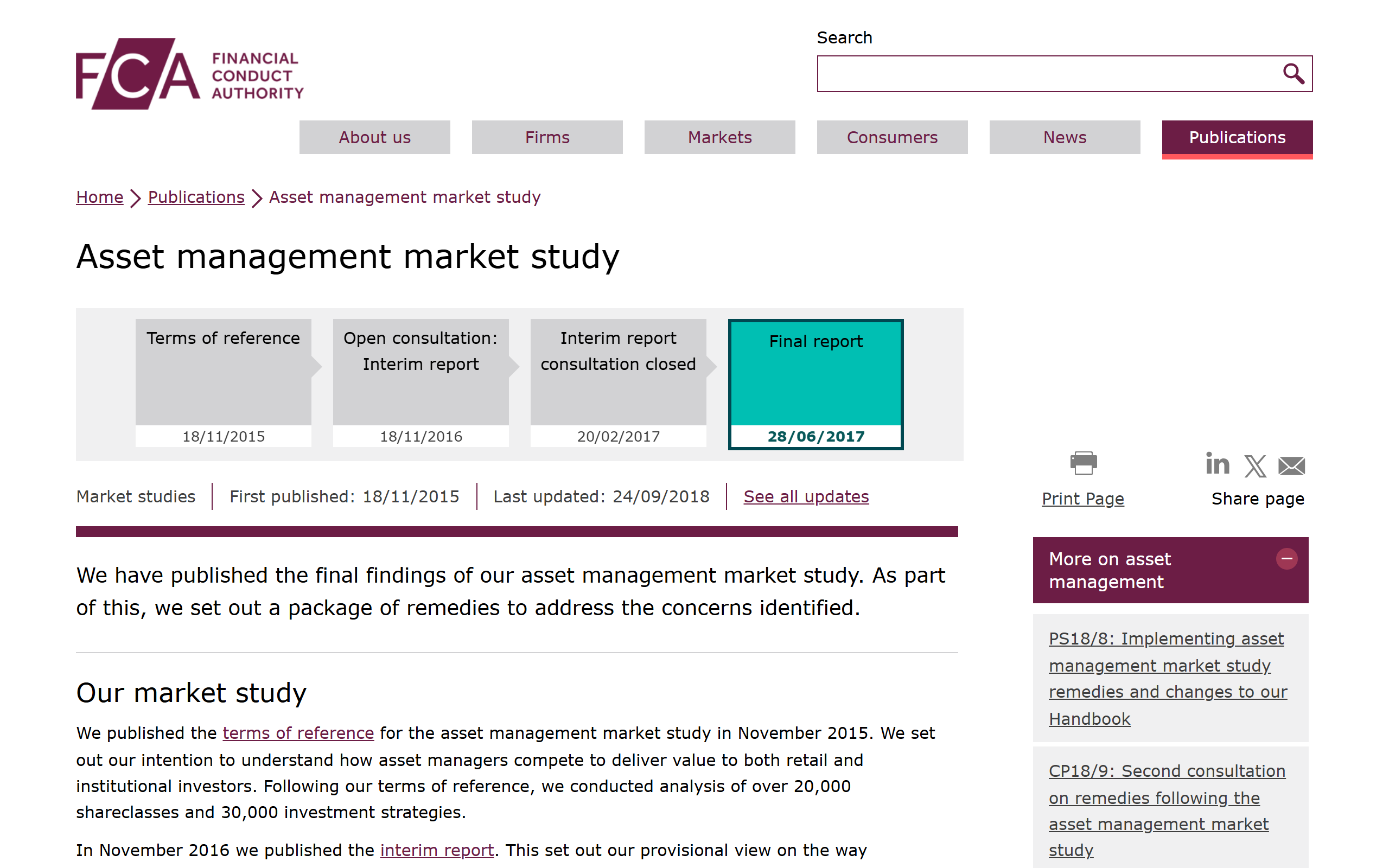
The numbers translate directly to the UK. The FCA's Asset Management Market Study found that many UK investors pay fees that significantly drag on their long-term returns. A UK investor paying 1.5% in total annual charges on a 200,000 pound portfolio loses roughly 3,000 pounds per year to fees alone. Over 30 years, compound fees can consume a third of your total returns.
Bogle's solution is the same one he championed throughout his career: low-cost index funds. In the UK, options like Vanguard's FTSE Global All Cap Index Fund (0.23% annual charge) or HSBC's FTSE All-World Index Fund (0.13%) offer broad global diversification at minimal cost. For a detailed look at building a portfolio this way, see our guide to low-cost index funds.
£200,000 invested for 30 years - the fee gap Bogle made his career arguing about
HSBC at 0.13%, Vanguard at 0.23%, a typical UK active fund at 0.85%, and a wealth manager stack at 1.5%.
Source: Compound at 7% gross minus fee, single lump sum, no further contributions.
Why Fund Managers Underperform
Bogle cites decades of data showing that the majority of actively managed funds underperform their benchmark index over periods of 10 years or more. The reason is simple: after fees, the average active fund must underperform the average passive fund. This is arithmetic, not opinion. The few managers who do outperform in one period rarely repeat in the next. For UK investors choosing funds within an ISA or SIPP, this makes index funds the rational default choice.
Misaligned Incentives and the Trust Problem
Beyond fees, Bogle identifies a deeper structural problem: the people managing your money are incentivised to maximise their own income, not yours. Fund managers earn fees on assets under management regardless of performance. Financial advisors may earn commissions for recommending particular products. The entire system is designed to keep you trading, switching, and paying.
How UK Regulation Addresses This
The UK has moved further than the US on this front. The Retail Distribution Review (RDR) banned commission-based financial advice in the UK from 2013, forcing advisors to charge transparent fees instead. This was a step in the direction Bogle advocated. However, platform fees, fund charges, and the temptation to over-trade remain risks for UK investors. Bogle's advice to buy and hold a low-cost index fund sidesteps most of these problems entirely.
What Does "Enough" Actually Mean?
The most personal part of the book is Bogle's reflection on sufficiency. He tells the story of Kurt Vonnegut and Joseph Heller at a party hosted by a billionaire. Vonnegut notes that their host earned more money in a single day than Heller ever earned from his novel Catch-22. Heller replies: "Yes, but I have something he will never have - enough."
This anecdote captures the book's thesis. The relentless pursuit of more - more returns, more assets, more status - comes at the cost of what actually makes life worthwhile: relationships, purpose, integrity, and peace of mind.
Connecting "Enough" to Your FIRE Number
For UK FIRE practitioners, Bogle's question is directly practical. Your FIRE number - the portfolio size that lets you stop working - is your personal answer to "how much is enough." Bogle would argue that many people set this number too high because they have not honestly examined what they need versus what they want.
A household spending 30,000 pounds per year needs roughly 750,000 pounds at a 4% withdrawal rate. But if that spending includes 5,000 pounds of subscription services, eating out, and purchases driven by habit rather than happiness, then the real number might be 625,000 pounds - representing years less of working. Our FIRE number calculator lets you model these scenarios directly.
The article How Much Is "Enough"? on this site explores the philosophical side of this question in more depth.
Bogle's Investment Philosophy in Practice
Bogle's prescription for individual investors is deliberately simple:
Own the entire market through a broad index fund. Do not try to pick winning stocks or time the market. The data overwhelmingly shows that neither approach works consistently.
Keep costs as low as possible. Every pound paid in fees is a pound that does not compound. Over a 30-year investing horizon, the difference between a 0.2% fee and a 1.5% fee on a 300,000 pound portfolio is roughly 200,000 pounds. You can see the exact impact using the compound interest calculator.
Stay the course. The biggest risk to your returns is your own behaviour. Selling during downturns and buying during euphoria destroys wealth more reliably than any fee structure. Bogle's index fund approach removes the temptation to tinker, which is exactly the point. The Bogleheads investment philosophy builds on these principles with a community-driven approach.
Ignore the noise. Financial media, market predictions, and hot stock tips exist to generate engagement, not to make you money. Bogle was famously dismissive of market forecasts and advised investors to tune them out entirely.
Who Should Read Enough
This book is best suited for investors who have already grasped the basics of investing and want to think more deeply about the system they are investing within. If you are new to investing, start with Bogle's The Little Book of Common Sense Investing for the practical mechanics, then read Enough for the philosophy behind them.
It is also worth reading for anyone feeling the pull to chase higher returns through complex strategies. Bogle makes a data-backed case that simplicity beats complexity and that the financial industry's sophistication mostly benefits the industry, not you.
Frequently Asked Questions
What is Bogle's book Enough about?
Enough is John Bogle's reflection on the financial industry's shift from serving investors to serving itself. The book covers excessive fees, misaligned incentives, and the erosion of professional values, while arguing that individuals should define their own standard of "enough" rather than chasing ever-higher returns.
Is Enough relevant to UK investors?
Yes. While Bogle writes from a US perspective, his critiques of high fees, active management underperformance, and misaligned incentives apply equally to the UK market. Many UK investors pay more in fees than they need to, and Bogle's index fund solution is readily available through UK platforms.
What investment approach does Bogle recommend?
Bogle recommends buying a broadly diversified, low-cost index fund and holding it for the long term. He argues against stock picking, market timing, and paying for active management. In UK terms, this means holding a global index tracker inside an ISA or SIPP and ignoring short-term market movements.
How does Enough relate to the FIRE movement?
Bogle's concept of "enough" aligns closely with the FIRE principle of defining a target portfolio size based on your actual spending needs. Both philosophies reject the idea that more money always equals more happiness, and both emphasise frugality, simplicity, and long-term thinking as the path to financial independence.
What is the difference between Enough and The Little Book of Common Sense Investing?
The Little Book of Common Sense Investing is a practical guide to index fund investing - the what and how. Enough is more philosophical - it asks why the financial industry works the way it does and what investors should value beyond returns. The two books complement each other well.
Conclusion
Bogle's Enough is less a finance book and more a values book that happens to be about money. For UK investors - especially those pursuing financial independence - its lessons are clear: keep costs low, ignore the industry's noise, invest in index funds, and decide what "enough" means to you before the market decides for you. In a financial world designed to make you feel like you never have quite enough, Bogle's counterargument is both refreshing and practically useful.
Purchase Enough by John Bogle on Amazon to read his full case for simplicity and sufficiency in investing.
Further Reading:
The Little Book of Common Sense Investing - John Bogle - Bogle's practical companion to Enough, laying out the case for index funds with data and clarity. (Affiliate link - we may earn a small commission at no extra cost to you.)
The Psychology of Money - Morgan Housel - Picks up where Bogle leaves off, exploring how our emotions and biases shape financial decisions in ways that data alone cannot explain. (Affiliate link - we may earn a small commission at no extra cost to you.)
Read Next:
Prefer to watch?
We turn these money breakdowns into short videos
A few a week, plain-English UK money. If you would sooner watch than read, follow along:
Enjoying the content?
If this site has been useful, a coffee goes a long way.
Browse more articles
Browse all