







Safe Withdrawal Rate UK: Beyond the 4% Rule
The 4% rule is American. The maths was built on the S&P 500. Run the same numbers on UK data and the safe withdrawal rate is closer to 3.2%. That's 20% less retirement income.
Cite this article
Freedom Isn't Free (2026) Safe Withdrawal Rate UK: Beyond the 4% Rule. Available at: https://freedomisntfree.co.uk/articles/beyond-the-4-rule-a-tailored-retirement-guide-for-uk-retirees (Accessed: 21 September 2026).
Italicise the article title in your bibliography. Accessed date set to today.
TLDR
- The 4% rule, popularised for US retirees, does not apply to UK retirees due to differences in market returns, tax treatments, and inflation patterns.
- UK equities have historically delivered lower returns compared to US equities, making a 4% withdrawal rate risky for UK retirees.
- UK tax structures differ significantly from US tax systems, affecting how long retirement funds last.
- A safe withdrawal rate for UK retirees is estimated to be between 3% and 3.5% based on Okusanya's analysis using UK and global market data.
Annual income from a £500,000 pot at different SWRs
UK long-run equity returns trail the US, so the same pot supports less income.
Safe Withdrawal Rate UK: Beyond the 4% Rule
The 4% rule is the most widely cited guideline in retirement planning, but it was built on American data and American tax rules. Abraham Okusanya's "Beyond the 4% Rule" is the only decumulation book written specifically for UK retirees, and it makes a convincing case that British investors need a different approach.
This review covers why the 4% rule falls short in a UK context, what the evidence says about safe withdrawal rates using UK and global market data, how dynamic strategies can improve outcomes, and how to sequence ISA and pension withdrawals to keep your tax bill as low as possible.
Contents
- Why the 4% Rule Does Not Work for UK Retirees
- What Is a Safe Withdrawal Rate for UK Investors?
- Dynamic Withdrawal Strategies
- How to Sequence ISA and Pension Withdrawals
- Frequently Asked Questions
Why the 4% Rule Does Not Work for UK Retirees
The 4% rule was popularised by American financial planner Bill Bengen in 1994. His research showed that a retiree who withdrew 4% of their portfolio in year one and adjusted for inflation each year after that would not have run out of money over any 30-year period in US market history. The rule is simple and memorable, which is why it spread so widely.
The problem is that Bengen's data was entirely US-based. The S&P 500 delivered some of the best equity returns in the world during the 20th century. UK equities, measured by the FTSE All-Share, have delivered lower real returns with different patterns of volatility. Okusanya shows that applying the same 4% rule to UK historical data produces a meaningful risk of running out of money.
UK Market Returns Are Lower
According to the Barclays Equity Gilt Study, UK equities have returned roughly 5% per year in real terms over the long run, compared with about 7% for US equities. That 2-percentage-point gap compounds dramatically over a 30-year retirement. A withdrawal rate that was safe in the US may not survive the same period in the UK.
The Tax Wrapper Difference
American retirees draw primarily from 401(k)s and IRAs, which have uniform tax treatment. UK retirees typically hold a mix of ISAs (tax-free), SIPPs (taxed on withdrawal), and the State Pension (taxed as income). The order in which you draw from these pots affects how much tax you pay and, by extension, how long your money lasts. Bengen's model does not account for this at all.
Currency and Inflation
UK retirees face sterling-denominated expenses but often hold global investments priced in dollars, euros, and other currencies. Exchange rate fluctuations add another layer of uncertainty that the original 4% research did not model. UK inflation has also behaved differently from US inflation, particularly during the 1970s and the post-2020 period.
What Is a Safe Withdrawal Rate for UK Investors?
Okusanya analyses UK and global market data using both historical back-testing and Monte Carlo simulations. His findings suggest that a safe withdrawal rate for UK retirees sits between 3% and 3.5%, depending on asset allocation and retirement length.
Historical Back-Testing
Using data from UK indices and blended global portfolios, Okusanya tests what withdrawal rate would have survived every historical 30-year period. The results consistently show that 4% was too high in the worst UK periods - particularly for retirees who started withdrawing in the mid-1960s or early 2000s, when equity valuations were high and subsequent returns were poor.
Monte Carlo Simulations
Monte Carlo simulations run thousands of randomised return scenarios to estimate the probability of a portfolio surviving. Okusanya uses these to show that a 3.5% initial withdrawal rate gives UK retirees roughly a 90-95% success probability over 30 years with a balanced portfolio. Dropping to 3% pushes success rates above 95%.
For readers interested in running their own projections, the FI number calculator can help you see how different withdrawal rates affect the portfolio size you need.
£500,000 pot over 30 years at three withdrawal rates
Deterministic projection at 5% annual return. Withdrawals start at the chosen rate and grow with 2% inflation each year.
Source: Central-tendency projection only. Not a Monte Carlo, not sequence-of-returns adjusted.
The Role of the State Pension
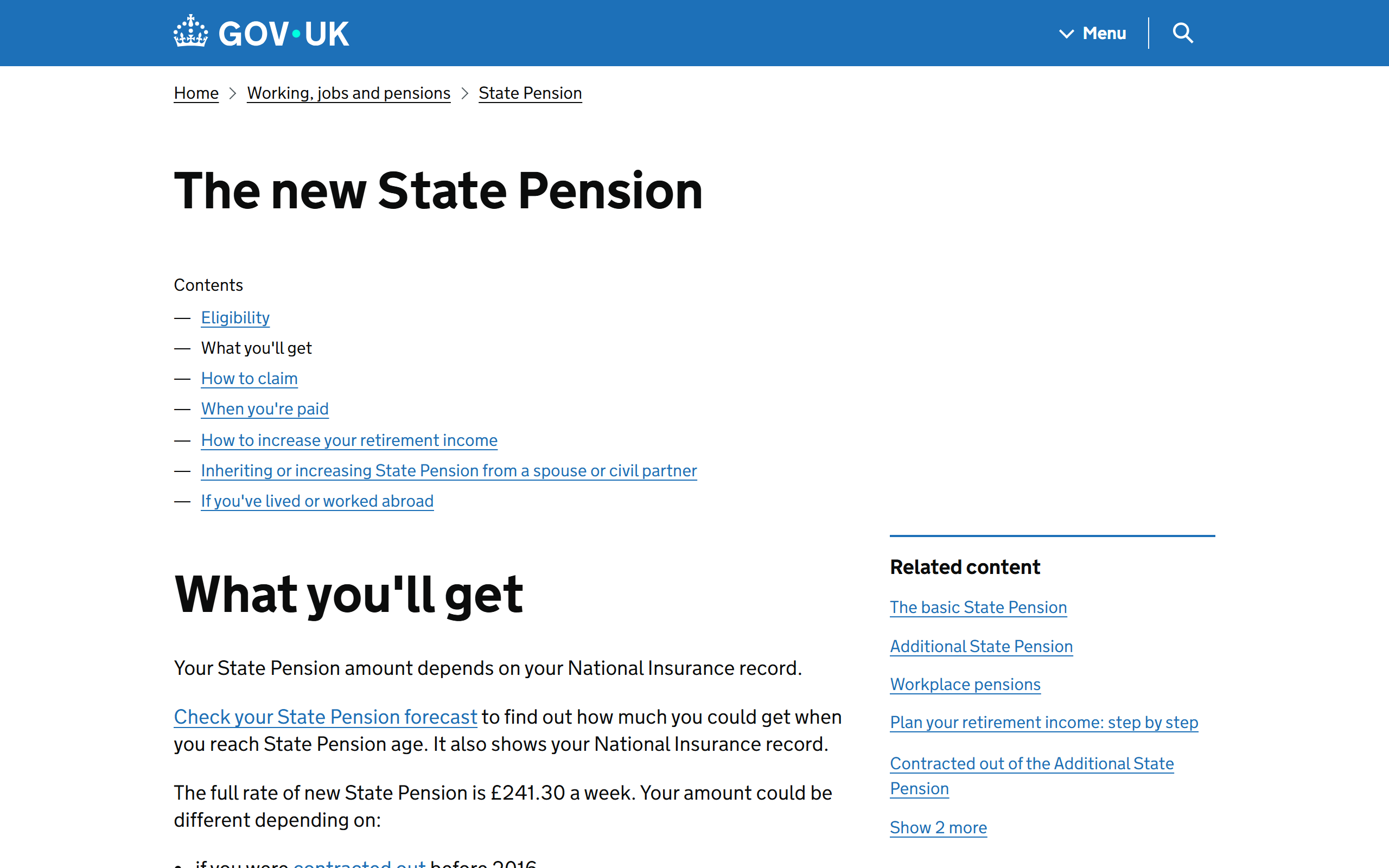
One advantage UK retirees have is the State Pension, which provides a guaranteed, inflation-linked income floor. In 2026/27, the full new State Pension is £241.30 per week (roughly £12,548 per year). This income reduces the amount you need to withdraw from your portfolio, effectively lowering your personal withdrawal rate and extending the life of your savings.
Dynamic Withdrawal Strategies: Adjusting as You Go
Okusanya argues that fixed withdrawal rates are a poor fit for real retirement. Markets move, spending needs change, and health evolves. Dynamic strategies that adapt to circumstances outperform static rules in almost every simulation.
Flexible Spending Rules
The simplest dynamic approach is to set a base withdrawal rate but allow it to flex within guardrails. For example, you might target 3.5% but allow yourself to spend up to 4.5% in years when your portfolio has grown significantly, and cut back to 2.5% after a major market decline. This smooths income while protecting capital during downturns.
The Bucket Strategy
Okusanya also covers the bucket strategy, which divides retirement savings into three pots:
| Bucket | Contents | Purpose |
|---|---|---|
| Safety (1-2 years) | Cash, money market funds | Cover near-term spending without selling investments |
| Medium-term (3-7 years) | Bonds, gilt funds | Provide income during equity downturns |
| Long-term (8+ years) | Global equities, property | Growth to replenish the other buckets |
You spend from the safety bucket first, topping it up from the medium-term bucket periodically. The long-term bucket is left to grow undisturbed. This structure means you never have to sell equities during a crash just to cover living expenses.
The risk with buckets is that they can become overly complex to manage. Okusanya acknowledges this and suggests that for many retirees, a simple balanced fund with flexible withdrawals achieves similar results with less effort.
How to Sequence ISA and Pension Withdrawals Tax-Efficiently
The order in which you draw from your ISA, SIPP, and State Pension can save - or cost - you thousands of pounds over a retirement. Okusanya devotes significant attention to this topic, and it is one of the most practically useful parts of the book.
Draw From Your Pension First (Up to the Personal Allowance)
Before the State Pension kicks in (currently age 66, rising to 67 by 2028), you can withdraw from your SIPP and use your personal allowance (£12,570 in 2025-26) to take income tax-free. The 25% tax-free lump sum provides additional flexibility. This pension and tax-free lump sum strategy can be particularly valuable for retirees who stop work before State Pension age.
Preserve Your ISA for Later
ISA withdrawals are completely tax-free and do not count towards your income for tax purposes. By drawing down your pension first and leaving your ISA to grow, you preserve a tax-free pot for later in retirement when you may have less flexibility. Once the State Pension starts, your personal allowance is largely consumed, making ISA income even more valuable.
Use Flexi-Access Drawdown
Okusanya recommends flexi-access drawdown (FAD) over annuity purchase for most retirees. FAD lets you take income from your pension while keeping the remainder invested. You control how much you withdraw each year, which allows you to manage your tax position carefully. The trade-off is that you bear the investment risk yourself, whereas an annuity guarantees income for life.
For a deeper look at the decumulation trap and how retirees can avoid common mistakes when spending down their portfolios, see our dedicated article.
Frequently Asked Questions
Is the 4% rule safe for UK retirees?
Not without adjustment. The 4% rule was derived from US market data, where equity returns have historically been higher than in the UK. Okusanya's research suggests that a withdrawal rate of 3-3.5% is more appropriate for UK retirees investing in UK or global markets. The State Pension helps by providing a guaranteed income floor that reduces the amount you need to draw from your portfolio.
What is decumulation and why does it matter?
Decumulation is the process of converting your accumulated retirement savings into a sustainable income stream. It matters because the risks in retirement are different from those during your working years. Sequence-of-returns risk - the danger of experiencing poor market returns early in retirement - can permanently damage a portfolio even if average returns are acceptable over the full period.
Should I buy an annuity or use drawdown?
For most UK retirees with moderate to large pension pots, flexi-access drawdown offers more flexibility and potentially higher income than an annuity. However, annuities provide guaranteed income regardless of market conditions, which suits retirees who want certainty. A common compromise is to use drawdown for the bulk of your pension and buy a small annuity to cover essential spending.
Should I draw from my ISA or pension first?
In most cases, drawing from your pension first - particularly before the State Pension starts - is more tax-efficient. This uses your personal allowance and the 25% tax-free lump sum while leaving your ISA to grow tax-free. Once the State Pension consumes most of your personal allowance, ISA withdrawals become especially valuable because they are not taxed.
How does the State Pension affect my withdrawal rate?
The State Pension acts as a guaranteed income floor, reducing the amount you need to withdraw from your investment portfolio. If your annual spending is £25,000 and the State Pension provides £12,000, you only need to generate £13,000 from your portfolio. This effectively halves your required withdrawal rate, significantly improving the sustainability of your savings.
Further Reading:
Die With Zero - Bill Perkins - Perkins challenges the instinct to hoard savings in retirement and argues for spending more intentionally while you are healthy enough to enjoy it. (Affiliate link - we may earn a small commission at no extra cost to you.)
Quit Like a Millionaire - Kristy Shen - Shen retired at 31 and explains her approach to safe withdrawal rates and portfolio construction for early retirees, with useful comparisons to the 4% rule. (Affiliate link - we may earn a small commission at no extra cost to you.)
Read Next:
Prefer to watch?
We turn these money breakdowns into short videos
A few a week, plain-English UK money. If you would sooner watch than read, follow along:
Enjoying the content?
If this site has been useful, a coffee goes a long way.
Browse more articles
Browse all