






Personal Finance on a Low Income UK: The 2026 Survival Guide
Most low-income personal finance advice assumes you already have spare money. The starting point for the rest of us is not budgeting. It is the £20bn the system already owes you.
Cite this article
Freedom Isn't Free (2026) Personal Finance on a Low Income UK: The 2026 Survival Guide. Available at: https://freedomisntfree.co.uk/articles/personal-finance-low-income-uk (Accessed: 21 September 2026).
Italicise the article title in your bibliography. Accessed date set to today.
TLDR
- Most personal finance content assumes a middle-class baseline of disposable income that millions of UK households simply do not have. The starting point for low-income finance is unclaimed benefits, not budget apps.
- Run a free benefits check at entitledto.co.uk or turn2us.org.uk. UK families leave billions of pounds in unclaimed Universal Credit, Pension Credit, and Council Tax Reduction every year.
- Help to Save is a government scheme that pays a 50% bonus on what you save, up to a maximum £1,200 over four years, for people on Universal Credit or Working Tax Credit. It is one of the highest-return savings products in the world.
- Building wealth from zero is structurally hard, but it is not impossible. The order of operations is: claim everything, stabilise, build a small emergency fund, then automate small monthly investments.
UK low-income support worth claiming
| Support | Who qualifies | Value | Apply via |
|---|---|---|---|
| Help to Save 50% bonus | UC + earnings or WTC | Up to £1,200 | GOV.UK / NS&I |
| Pension Credit | Over State Pension age | £218/wk single | GOV.UK |
| Free school meals | UC under £7,400/yr | ~£450 per child | Local council |
| Warm Home Discount | Qualifying benefits | £150 off bill | Energy supplier |
| Healthy Start | Pregnant or under-4s | £4.25/wk per child | GOV.UK |
UK households leave over £20bn unclaimed each year. Run a check at entitledto.co.uk.
Personal Finance on a Low Income UK: The 2026 Survival Guide
Personal finance on a low income in the UK starts with claiming what you are already owed, not budgeting what you do not have. UK households leave more than £20 billion in unclaimed benefits, Help to Save bonuses, and Council Tax Reduction on the table every year. Free benefits calculators at entitledto.co.uk and turn2us.org.uk will tell you in 15 minutes what you are missing.
Most personal finance writing assumes you have spare money. Pay off your credit card. Max your ISA. Start a SIPP. Invest in a global tracker. The whole stack of advice silently assumes a baseline of disposable income that millions of UK households simply do not have. If your salary or benefits cover essentials with nothing left over, the standard advice can feel like being told to do yoga while drowning.
This article is for people on the actual bottom rungs of UK income: low-paid work, single parents, carers, people on Universal Credit, retirees on Pension Credit. The structural reality is that the personal-finance ladder is hard to climb from the bottom and that some of the people writing about it have forgotten what the bottom looks like. The practical reality is that there are still genuine moves that change the picture, and the order in which you make them matters more than which brand of ETF you eventually pick.
Contents
- Start with the unclaimed money
- UK benefits worth checking on a low income
- Help to Save: the highest-return UK savings account
- How to apply for Council Tax Reduction
- Free school meals, Healthy Start and Pension Credit gateway benefits
- UK energy and water hardship schemes
- Low-income money order of operations
- How to build wealth from zero on a low income
- What not to do on a low income
- Frequently Asked Questions
Start with the unclaimed money
The single biggest move available to most low-income UK households is also the most invisible: claiming the benefits and reductions you are already entitled to. Estimates from Policy in Practice and from the DWP itself put unclaimed benefits in the UK at over £20 billion per year. That is real money sitting in the system unclaimed, often by exactly the people who need it most.
There are two excellent free benefits calculators that will give you a comprehensive picture in 10-15 minutes:
- entitledto.co.uk - covers Universal Credit, legacy benefits, council tax reduction, healthcare costs, and more
- turn2us.org.uk - similar coverage, with an additional grants search for charitable funds
Both are free, anonymous (you do not have to sign up to use them), and updated whenever rules change. Run both. They sometimes find different things because the rules are complex.
If you find you are entitled to anything, follow up immediately. Backdating is limited (usually one month for Universal Credit), so every week you delay is money lost.
UK benefits worth checking on a low income
A non-exhaustive list of UK benefits and supports that low-income households often miss:
- Universal Credit (UC) - the main working-age benefit, includes elements for housing, children, disability, and caring. You can claim while in work; the work allowance and taper rate make it worthwhile up to certain income levels.
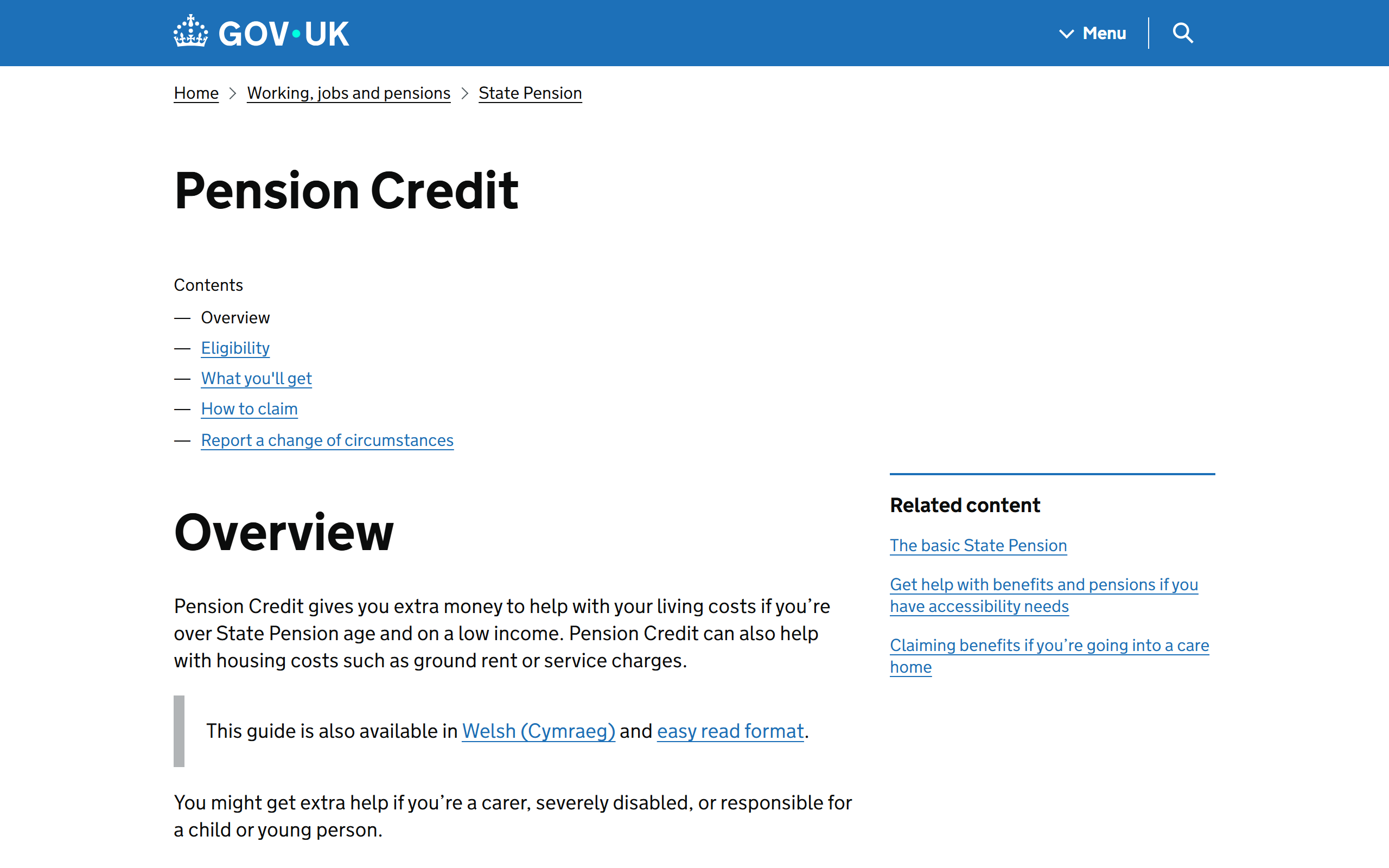
- Pension Credit - guarantees a minimum income for over-State-Pension-age households (around £218 single, £332 couple per week in 2026). Claiming Pension Credit unlocks free TV licence (over 75), Cold Weather Payments, and Council Tax Reduction. Around 850,000 eligible UK pensioners do not claim it.
- Personal Independence Payment (PIP) / Adult Disability Payment (Scotland) - support for adults with long-term health conditions or disabilities. Not income-tested. Frequently underclaimed because the application process is genuinely brutal; Citizens Advice and welfare rights advisers can help.
- Carer's Allowance / Carer Support Payment (Scotland) - for people providing 35+ hours of unpaid care per week.
- Council Tax Reduction (CTR) - run by your local council, can reduce or eliminate the council tax bill for low-income households. Rules vary by council; this is the most postcode-dependent benefit in the UK.
- Housing Benefit / UC housing element - support with rent for working-age and pension-age renters.
- Cold Weather Payments and Winter Fuel Payment - automatic payments triggered by qualifying benefits.
If your situation is unusual (self-employed with variable income, recently bereaved, recently disabled, recently a carer), book a free appointment with Citizens Advice or call the National Debtline. A 30-minute conversation with someone trained in this often surfaces multiple things you did not know existed.
Help to Save: the highest-return UK savings account
This one deserves its own section because it is genuinely extraordinary and almost no one knows about it.
Help to Save is a UK government scheme for people receiving Universal Credit (with at least £1 of earnings in the previous month) or Working Tax Credit. You can save up to £50 a month for four years. At the end of years two and four, you get a 50% bonus on what you have saved.
The maximum total bonus is £1,200 over four years, on contributions of up to £2,400. There is no risk: it is a government-backed cash account paying a 50% top-up. Find me a private investment that pays 50% guaranteed in two years.
Eligibility as of 2026:
- Receiving Universal Credit with at least £1 earnings in the assessment period before applying, or
- Receiving Working Tax Credit (or Child Tax Credit and entitled to Working Tax Credit)
You apply through the official Help to Save scheme on GOV.UK. The account is run by NS&I, so the money is fully government-backed.
If you qualify, this is the single highest-priority financial move available to you. Start at any monthly amount, even £5 or £10. The bonus is paid on the highest balance achieved, so even sporadic saving counts.
How to apply for Council Tax Reduction
Council tax is the most regressive major UK tax: it is broadly the same amount whether you earn £15k or £50k, and it is one of the easiest ways for a low-income household to fall into enforcement.
Two things to know:
- Council Tax Reduction (CTR) can reduce your bill by up to 100% depending on your council's scheme and your income. Apply through your local council's website. Working-age schemes vary widely; pension-age schemes are more standardised.
- Discretionary Housing Payment (DHP) is a one-off or short-term grant from your council to help with rent shortfalls. Useful when your housing benefit does not cover all your rent.
If you are already in council tax arrears, contact the council before the bailiffs arrive. Most councils will agree a payment plan rather than enforce. They cannot legally remove you from a payment plan retroactively if you stick to it.
Free school meals, Healthy Start and Pension Credit gateway benefits
Several support schemes are means-tested but vastly under-claimed:
- Free school meals - in England, available to households on Universal Credit with earnings under £7,400 per year. Worth around £450 per child per year.
- Healthy Start - for pregnant women and families with under-4s on qualifying low-income benefits. Provides a prepaid card for fruit, vegetables and milk worth £4.25 per week per qualifying child.
- Pension Credit gateway benefits - claiming Pension Credit (even £1) automatically opens up Cold Weather Payments, Council Tax Reduction (in many areas), free TV licence over 75, NHS dental and optical support, and a host of charitable schemes.
The pattern across all of these: small individual amounts that compound into meaningful real money over a year, and many of them act as gateways that unlock other support automatically.
UK energy and water hardship schemes
UK utility companies are required to operate hardship schemes. The big ones:
- Warm Home Discount - £150 off your winter electricity bill. Automatic for many on qualifying benefits.
- Priority Services Register - free service from your energy and water suppliers giving you priority for outages, free gas safety checks, accessible bills, etc.
- WaterSure / Water social tariffs - if you are on Universal Credit and have a metered water supply, you may be eligible for capped bills.
- Energy supplier hardship funds - British Gas Energy Trust, EDF Energy Customers Support Fund, EON Next Energy Fund and similar all run grant schemes for customers in difficulty. These are genuine grants (not loans) and can write off arrears entirely in some cases.
Apply directly through your supplier or via stepchange.org/debt-info/grants-for-people-in-debt.htm.
Low-income money order of operations
Standard FIRE-style advice talks about an order of priority: emergency fund, high-interest debt, employer pension match, ISA, taxable. On a genuinely low income, the order is different:
- Run a benefits check. If the calculator finds entitlements, claim them before doing anything else.
- Get free debt advice if there are arrears. StepChange or Citizens Advice. Apply for Breathing Space if creditors are pressing.
- Sort essentials. Make sure rent, council tax, energy and food are all in payable arrangements. Use the hardship schemes above if needed.
- Open Help to Save if eligible. Even £5 a month locks in a 50% return.
- Build a minimal emergency fund. £500 in an instant-access account, separate from your current account. Enough to absorb a single car repair, energy bill, or appliance failure without going into debt.
- Then, and only then, start thinking about pension contributions and small monthly ISA investments.
The reason the order matters is that step 6 is wasted if step 1 leaves £200 a month of unclaimed benefits on the table. Personal finance is downstream of income.
How to build wealth from zero on a low income
Once the unclaimed-money work is done and the essentials are stable, the long-term wealth-building advice is the same as for anyone else, just applied at a smaller scale.
A workplace pension auto-enrolment minimum (5% employee, 3% employer plus tax relief) is mathematically a 90%+ instant return on your contribution. If you are working, do not opt out unless the household budget literally cannot survive it. Even on minimum wage, a few decades of auto-enrolment contributions compound into a meaningful pot at retirement.
After that, investing small amounts monthly into a global tracker ETF inside an ISA is the standard playbook. £25 a month into a global tracker over 30 years at 7% real returns becomes around £30,000. £50 a month becomes £61,000. The numbers feel small at the start. They compound.
The piece of advice that matters most on a low income is also the simplest: do not let a year pass without a benefits check. Rules change. Income changes. New schemes appear. The 30-minute habit of running entitledto.co.uk every January often turns up new entitlements as your circumstances shift.
What not to do on a low income
A few common traps:
- Do not pay for debt advice. Free, FCA-regulated advice is available from StepChange, Citizens Advice, PayPlan and National Debtline.
- Do not use buy-now-pay-later for groceries or essentials. It is debt with all the same risks and fewer protections.
- Do not use loyalty cards as a finance strategy. Tesco Clubcard and Nectar are nice supplements; they are not income.
- Do not invest in a Lifetime ISA if you might need the money before age 60 (or before buying a first home). The 25% withdrawal penalty wipes out the bonus and then some.
- Do not chase high-yield investments to "catch up." Crypto, FX, individual stocks marketed on social media. The downside risk on a small pot is total. Boring index funds, even at small amounts, do the job.
Frequently Asked Questions
What benefits am I entitled to in the UK?
It depends on your income, your household composition, your housing situation, and your health. The fastest answer is to run a free benefits check at entitledto.co.uk or turn2us.org.uk. The calculators ask about 30-50 questions and produce a personalised list of entitlements, including the amounts and how to claim. Most people are entitled to at least one thing they did not know about.
How does Help to Save actually work?
You open a Help to Save account through GOV.UK if you are on Universal Credit (with earnings) or Working Tax Credit. You can pay in up to £50 a month for four years. At the end of year two, you get a 50% bonus on the highest balance you have reached. At the end of year four, you get another 50% bonus on any further savings above the year-two peak. Maximum total bonus £1,200. The account is government-backed through NS&I.
Can I invest if I am on Universal Credit?
Yes. Universal Credit has a savings rule: under £6,000 in capital has no effect on your award; £6,000 to £16,000 reduces it on a sliding scale; over £16,000 cancels eligibility. Investments inside an ISA count as capital. For most low-income households starting with small monthly contributions, you are nowhere near the £6,000 threshold and there is no impact. Once you approach £6,000, get a benefits check before contributing more.
Should I pay into a workplace pension if I cannot afford it?
Almost always yes, if you are auto-enrolled. The combined employer contribution and tax relief mean every £1 you contribute typically becomes £1.80-£2.00 in your pension pot immediately. Opting out throws away that match. The exception is if your household budget genuinely cannot cover essentials with the contribution deducted, in which case opt out only as a temporary measure and re-enrol the moment your income improves.
What is the difference between Universal Credit and Pension Credit?
Universal Credit is the main working-age benefit, replacing six older benefits including JSA, ESA, and tax credits. Pension Credit is the equivalent for people over State Pension age, designed to top up income to a guaranteed minimum. You can only claim one or the other, depending on your age. Pension Credit is widely under-claimed; an estimated 850,000 eligible UK pensioners are missing out.
Read Next
- UK Debt Help Guide - free debt advice options, Breathing Space, and how to talk to creditors.
- Emergency Fund UK - how big yours should be and where to keep it.
- Workplace Pension Auto-Enrolment - why opting out is almost always a mistake.
- What is PovertyFIRE? - the radical-frugality flavour of financial independence and what it gets right and wrong.
- Investing Small Amounts Monthly - the long game once the essentials are stable.
Further Reading:
The Psychology of Money - Morgan Housel - A short, accessible read on the mindset side of money. Especially useful when income is tight and the temptation to chase a quick fix is strongest. (Affiliate link - we may earn a small commission at no extra cost to you.)
Prefer to watch?
We turn these money breakdowns into short videos
A few a week, plain-English UK money. If you would sooner watch than read, follow along:
Enjoying the content?
If this site has been useful, a coffee goes a long way.
Browse more articles
Browse all