






How Much Do I Need to Retire UK? Age 55, 60, 65 Guide
Retiring at 55 nearly doubles the pot you need versus retiring at 65. Same income, same lifestyle. The decade between them is more expensive than anyone tells you up front.
Cite this article
Freedom Isn't Free (2026) How Much Do I Need to Retire UK? Age 55, 60, 65 Guide. Available at: https://freedomisntfree.co.uk/articles/how-much-to-retire-uk (Accessed: 10 October 2026).
Italicise the article title in your bibliography. Accessed date set to today.
TLDR
- For a £30k/year retirement, expect to need roughly £900k at age 55, £780k at 60, or £450k at 65 (single person, no DB pension).
- The earlier you retire, the bigger the pot, because you have more years before the State Pension and a longer horizon to fund.
- The full new State Pension in 2026/27 is £241.30/week, around £12,548/year, payable from age 66 (rising to 67 from 2026 to 2028).
- The PLSA Retirement Living Standards put a "Moderate" single retirement at £31,300/year and "Comfortable" at £43,100/year.
- Use the [FI Number Calculator](/tools/fi-number-calculator) to plug in your own spend and timeline rather than relying on a single rule of thumb.
UK retirement pot by age (single person, £30k/year target)
| Retire at | Bridge years | Withdrawal rate | Pot needed |
|---|---|---|---|
| 55 | 12 years to State Pension | 3.5% | £900,000 |
| 60 | 7 years to State Pension | 3.8% | £780,000 |
| 65 | 2 years to State Pension | 4.0% | £450,000 |
Assumes full new State Pension (£12,548/yr) from 67. PLSA Moderate is £31,300/yr.
How Much Do I Need to Retire UK? Age 55, 60, 65 Guide
The question every UK saver eventually asks is the same: how much do I need to retire UK-side, and at what age can I actually pull the trigger?
The short answer for a single person targeting a £30,000/year retirement income (the PLSA "Moderate" standard) is roughly £900,000 at 55, £780,000 at 60, or £450,000 at 65, assuming a full new State Pension from 67 and no defined benefit pension. The earlier you stop, the bigger the pot, because your bridge to the State Pension is longer and your retirement horizon is longer too.
There is no single magic number though. Your target depends on three things: how much you plan to spend each year, the age you want to stop working, and how long you expect retirement to last. Retiring at 55 is a very different problem from retiring at 65, even if your annual spend is identical. This guide walks you through age-targeted pot sizes, the State Pension top-up, and the worked numbers behind each scenario for the 2026/27 UK tax year.
Contents
- The Three Big Retirement Numbers in the UK
- How Much Do You Need to Retire at 55 in the UK?
- How Much Do You Need to Retire at 60 in the UK?
- How Much Do You Need to Retire at 65 in the UK?
- The State Pension: How Much It Adds
- The PLSA Retirement Living Standards
- Worked Examples for Each Age
- The Two Big Variables: Spending and Returns
- Frequently Asked Questions
The Three Big Retirement Numbers in the UK
Before we get to the worked examples, fix three numbers in your head. They drive every retirement calculation in this country.
- State Pension age: currently 66, rising to 67 in phases between 2026 and 2028 for those born after 6 April 1960. Plan for 67 unless you are already drawing it.
- Minimum pension access age: 55 today, rising to 57 from April 2028. This is the earliest you can touch a SIPP or workplace pension.
- Full new State Pension: £241.30/week in 2026/27, which works out at roughly £12,548/year if you have 35 qualifying National Insurance years.
Together these set the boundaries of any UK retirement plan. The earlier you stop, the more years your private pot has to cover entirely on its own before the State Pension kicks in. That gap is what FIRE planners call the bridge, and it is where most retirement maths goes wrong.
How Much Do You Need to Retire at 55 in the UK?
Retiring at 55 is the hardest version of the problem. You have a 12-year bridge to the State Pension at 67, no top-up income for over a decade, and potentially 35 to 40 years of retirement ahead of you.
The classic 4% rule (multiply your annual spend by 25) was calibrated on a 30-year US retirement. For a 55-year-old planning for 35+ years, most planners drop the safe withdrawal rate to around 3.5%, which means multiplying your spend by closer to 28 or 29 rather than 25.
A reasonable rule of thumb: if you want £30,000 a year and you are stopping at 55, target a pot of around £900,000.
You also need to think about the shape of that pot. Pension money is locked until 55 (57 from 2028), so if you want to stop right at the access age you typically need an ISA-heavy stack to cover the early years and avoid burning through your tax-free cash too quickly. If you are not familiar with how to structure that, our ISA-to-pension bridging guide covers the mechanics.
How Much Do You Need to Retire at 60 in the UK?
At 60 the maths gets noticeably kinder. Your bridge to the State Pension is only 7 years. Your retirement horizon is shorter, perhaps 30 years, which is closer to the original Trinity Study territory where the 4% rule held up.
For a £30,000/year spend, a pot of around £780,000 is a defensible target. That is roughly 26 times your annual spend, sitting between the 25x rule of thumb for a 30-year retirement and the 28x figure for a 35-year one.
You also have more flexibility on the tax side. Because you can access pensions immediately, you can pull the 25% tax-free cash strategically, draw the rest within the personal allowance and lower bands, and let your ISA wrapper carry on growing untouched. Read the UK pensions guide if you want a refresher on how the wrappers stack.
How Much Do You Need to Retire at 65 in the UK?
By 65 the State Pension is just 2 years away. That single fact rewires the calculation completely.
Once the State Pension starts, it covers around £12,500 of your £30,000 spend. So from 67 onwards your portfolio only needs to deliver £17,500 a year, not the full £30,000. You can roughly think of it as funding £30k for 2 years from the pot, then £17.5k for the rest of life.
If you simplify with the 25x rule applied to the post-State-Pension shortfall, £17,500 x 25 = £437,500, plus a couple of years of full spend on top. Round it to around £450,000 as a starting target for a £30k/year lifestyle.
This is why retiring at 65 is the easiest pot size to hit on a normal salary, even without a defined benefit pension. The State Pension does an enormous amount of the heavy lifting once it arrives.
The State Pension: How Much It Adds
The full new State Pension is worth roughly £12,548/year in 2026/27. To get the full amount you need 35 qualifying National Insurance years. Fewer years means a proportionally smaller payment.
Two practical points most people miss:
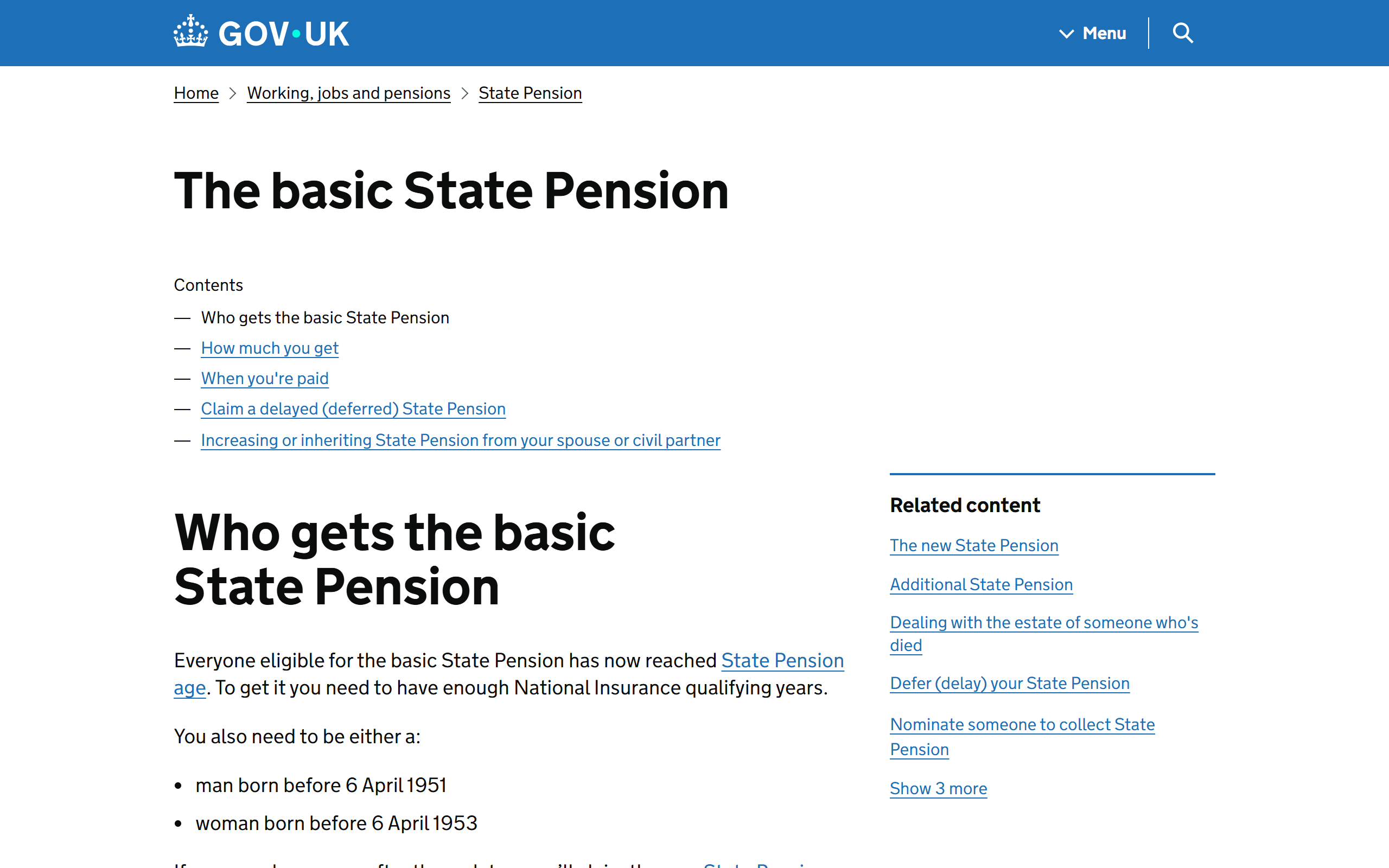
- Check your forecast. Log into gov.uk's State Pension forecast before you build any retirement plan. If you have gaps, voluntary Class 3 contributions are usually the best-value top-up you can buy, especially in the years close to retirement.
- The State Pension is taxable. It uses up part of your £12,570 personal allowance, which means any private pension income on top is taxed almost from the first pound. Plan your drawdown around that, not in spite of it.
For couples, two full State Pensions equal about £25,096/year. That alone is enough to cover the PLSA "Minimum" couple standard with a little to spare.
The PLSA Retirement Living Standards (Minimum, Moderate, Comfortable)
The Pensions and Lifetime Savings Association publishes annual Retirement Living Standards, which are the closest thing the UK has to an official benchmark for "what does a decent retirement actually cost". The most recent figures (2024 update) for a single person are:
- Minimum: £14,400/year. Covers basics, no car, one UK holiday.
- Moderate: £31,300/year. Modest car, two weeks abroad, more flexibility on food and clothes.
- Comfortable: £43,100/year. Newer car every five years, three weeks in Europe, regular leisure spending.
For couples the figures are £22,400, £43,100 and £59,000 respectively.
Use these as a sanity check on your own budget, not as a target. If you have actually tracked your spending for a year, your real number is more useful than any sector average. If you have not tracked it, the PLSA standards are a reasonable starting point.
Worked Examples for Each Age
Let's run the numbers properly for a single person with no defined benefit pension, targeting a £30,000/year retirement income (roughly the PLSA Moderate level).
Retire at 55, £30k/year
- Bridge years (55 to 67): 12 years funding the full £30,000 from the portfolio.
- Post-State-Pension years (67+): portfolio only needs to cover £17,500/year.
- Using a 3.5% safe withdrawal rate to reflect the long horizon: target around £900,000.
- Practical structure: a chunky ISA to fund years 1 to 6, SIPP drawdown from 55 onwards, with the State Pension covering a third of spend from 67.
Retire at 60, £30k/year
- Bridge years (60 to 67): 7 years funding the full £30,000.
- Using roughly a 3.8% safe withdrawal rate (26x spend): target around £780,000.
- You can lean more heavily on the SIPP from day one, which often makes the tax planning simpler than the age-55 version.
Retire at 65, £30k/year
- Bridge years (65 to 67): just 2 years funding the full £30,000.
- From 67 the State Pension covers £12,500, so the portfolio only funds £17,500/year.
- Target around £450,000, give or take, depending on how you model the first 2 years.
These numbers ignore a few real-world frictions, which we will cover in the next section.
The Two Big Variables: Spending and Returns
Two things move the goalposts more than anything else: your actual spending and the returns you assume.
Spending isn't flat. Most retirees follow a "smile" pattern: heavier spending in the active early years, less in the middle, then rising again towards the end as care costs creep in. A flat £30k/year line is a planning convenience, not a forecast. Build in a margin for one-off costs (cars, roof, dental work) and a separate line for potential care costs in your late 80s.
Returns aren't guaranteed. The 4% rule is not a law of physics. It is a statistical observation from historical US data, and even the original Trinity Study had failure cases at the edges. UK retirees often face slightly lower equity returns and higher inflation, which is why a 3.3% to 3.5% rate is the sensible default for an early retiree planning over 35+ years. Wade Pfau's research on safe withdrawal rates is worth reading if you want the underlying numbers, and our decumulation trap article covers the behavioural side.
A few other costs that catch people out:
- Tax on drawdown. The 25% tax-free lump sum is genuinely tax-free, but everything else is taxed at your marginal rate. Plan your drawdown to use the personal allowance and basic rate band efficiently. How you turn the pot into income matters as much as its size, so weigh up annuity versus drawdown before you commit.
- Inflation. All the pot sizes above are in 2026 money. If you are 35 today and planning to retire at 60, your real target in nominal pounds will look much bigger by then.
- Healthcare and care. The NHS is free at point of use. Care homes are not. Average residential care fees are over £45,000/year and rising. A reserve of £100,000+ ring-fenced for late-life care is a sensible contingency for any retiree planning past 80.
If you want to model your own version of these numbers, the FI Number Calculator lets you plug in spend, retirement age and withdrawal rate, and the drawdown calculator shows how a pot depletes year by year.
Frequently Asked Questions
Can I retire at 55 with £500k?
On a £500,000 pot at age 55, a 3.5% withdrawal rate gives you around £17,500/year before tax. That is below the PLSA Moderate single standard (£31,300) but well above Minimum (£14,400). It is achievable as a frugal retirement, especially once the State Pension kicks in at 67 and adds another £12,500. If your spending genuinely sits around £18k to £20k a year, £500k at 55 is workable. If you want £30k+, you are short and need to either keep working, lower your spend, or have a partner contributing too.
How much do I need to retire at 60 UK?
For a single person targeting around £30,000/year (the PLSA Moderate standard), roughly £780,000 is a reasonable target at age 60. For a couple wanting the same combined £30k, you need less per person because of the second State Pension and shared costs, often closer to £550,000 to £650,000 in total. Always cross-check against your own real spending rather than the average.
Is the 4% rule safe in the UK?
The 4% rule comes from US data and assumes a 30-year retirement. For a UK retiree retiring at 65 with a 25 to 30 year horizon, it is a reasonable starting point, though slightly more conservative than US studies imply. For early retirees with a 35 to 40 year horizon, dropping to 3.3% or 3.5% is the more defensible choice. It also assumes a globally diversified portfolio, not a UK home-bias one.
What is a comfortable retirement income in the UK?
The PLSA puts "Comfortable" at £43,100/year for a single person and £59,000 for a couple in their 2024 update. That covers a newer car every few years, three weeks abroad, regular eating out and a generous clothing and gifts budget. To fund this from 65 onwards you would need roughly £775,000 as a single person, after accounting for the State Pension. From 60 the figure is closer to £1.1 million.
Do I need to pay off my mortgage before I retire?
Not necessarily, but it usually helps. A mortgage is a fixed monthly cost that erodes your flexibility in retirement and forces you to draw down more income (and pay more tax). If you can clear it before you stop working, your required pot size drops sharply because your annual spend drops. If you cannot clear it, factor the remaining payments into your retirement budget honestly rather than assuming you will refinance your way out of it.
Read Next
- Beyond the 4% Rule: A Tailored Retirement Guide for UK Retirees - why a UK retiree needs a different withdrawal rate.
- Hidden Costs of Early Retirement UK - the real-world line items most pot calculations miss.
- The Decumulation Trap - the behavioural side of spending the money you spent decades saving.
- ISA vs Pension UK - which wrapper to lean on for your bridge years.
Further Reading:
Quit Like a Millionaire - Kristy Shen - a practical playbook for early retirement maths and the bridge years between stopping work and the State Pension. (Affiliate link - we may earn a small commission at no extra cost to you.)
Smarter Investing - Tim Hale - the UK-specific evidence on equity returns and withdrawal rates that should anchor any retirement pot calculation. (Affiliate link - we may earn a small commission at no extra cost to you.)
The headline answer to "how much do I need to retire UK" is somewhere between £450k and £900k for a £30k/year single retirement, depending on whether you are stopping at 65 or 55. But the only number that matters is the one built on your real spending, your real timeline, and your real State Pension forecast. Run the calculator, check your forecast, and stress-test the plan against a bad sequence of returns. The maths is forgiving if you do it once; it is brutal if you skip it entirely.
Prefer to watch?
We turn these money breakdowns into short videos
A few a week, plain-English UK money. If you would sooner watch than read, follow along:
Enjoying the content?
If this site has been useful, a coffee goes a long way.
Browse more articles
Browse all