



VWRP vs VWRL: Which Vanguard All-World ETF Wins in 2026
Same Vanguard fund. Same index. Same 0.22% fee. The two tickers look interchangeable, but inside a UK GIA one of them quietly costs you a tax headache the other doesn't.
Cite this article
Freedom Isn't Free (2026) VWRP vs VWRL: Which Vanguard All-World ETF Wins in 2026. Available at: https://freedomisntfree.co.uk/articles/vwrp-vs-vwrl (Accessed: 10 October 2026).
Italicise the article title in your bibliography. Accessed date set to today.
TLDR
- VWRP and VWRL are the same Vanguard FTSE All-World ETF, both charging 0.22% and holding identical stocks
- VWRP accumulates dividends inside the fund automatically; VWRL pays them out as cash quarterly
- Inside an ISA or SIPP, pick VWRP and forget about it - the dividend reinvestment happens silently
- Inside a general investment account, VWRL is often easier because cash distributions simplify Self Assessment
FTSE All-World geographic split (both ETFs)
Roughly 3,700 stocks across 49 countries. Market-cap weighted so the giants dominate.
VWRP vs VWRL: which wins, by account
| Situation | Better choice | Why |
|---|---|---|
| ISA accumulating | VWRP | Silent reinvestment, no admin |
| SIPP accumulating | VWRP | Same logic, fully tax-sheltered |
| GIA tax-efficiency | VWRL | Cash distributions simplify Self Assessment |
| Retirement income | VWRL | Natural cashflow without selling units |
Same FTSE All-World index, same 0.22% OCF, same ~1.7% yield. Only the wrapper changes the answer.
VWRP vs VWRL: Which Vanguard All-World ETF Wins in 2026
VWRP vs VWRL is a choice between two share classes of the same Vanguard FTSE All-World ETF. Same index, same 3,700 stocks, same 0.22% ongoing charge. The only real difference is that VWRP accumulates dividends inside the fund and VWRL pays them out as cash quarterly. Inside an ISA or SIPP, VWRP is the cleaner default. Inside a general investment account, VWRL is usually easier on your Self Assessment.
That is the answer. The rest of this article is the working, including the one trap most UK investors fall into when they hold the accumulating share class outside a tax wrapper.
VWRP vs VWRL at a Glance
| VWRP | VWRL | |
|---|---|---|
| Type | Accumulating | Distributing |
| Dividends | Reinvested inside fund | Paid as cash quarterly |
| Underlying index | FTSE All-World | FTSE All-World |
| Holdings | ~3,700 stocks | ~3,700 stocks |
| Ongoing charge (OCF) | 0.22% | 0.22% |
| Dividend yield | ~1.7% (retained) | ~1.7% (paid out) |
| UK Reporting Fund Status | Yes | Yes |
| Best in ISA / SIPP | Yes | No (unless drawing income) |
| Best in GIA | No (notional dividend tax) | Yes (simpler tax return) |
VWRP and VWRL: The Same Index, Two Share Classes
VWRP and VWRL are not competing funds. They are two share classes of the same Vanguard product, the FTSE All-World UCITS ETF. Same manager, same index, same Ireland domicile, same UCITS wrapper, same ongoing charges figure of 0.22%.
When Vanguard launched the accumulating version (VWRP) in 2019, it was a direct response to UK and European investors who wanted automatic dividend reinvestment without the hassle of buying a fractional share every quarter. The distributing version (VWRL) had been around since 2012.
So when you compare VWRP vs VWRL, you are not comparing strategies. You are choosing between getting your dividends in cash or getting them silently reinvested inside the fund.
What VWRP and VWRL Hold (FTSE All-World Index)
Both ETFs replicate the FTSE All-World index, which contains roughly 3,700 large and mid-cap stocks spanning developed and emerging markets. That is global equity exposure in a single trade.
The geographic split sits roughly at:
- 60% United States
- 15% Europe (ex-UK)
- 4% United Kingdom
- 6% Japan
- 10% Emerging markets
- 5% Asia-Pacific developed (Australia, Singapore, Hong Kong)
The top holdings are the names you'd expect: Apple, Microsoft, Nvidia, Amazon, Alphabet, Meta. The fund is market-cap weighted, so the giants dominate. If you want a single ticker that gives you "the world stock market," this is it.
If you are still working out how to read these allocations on a fund factsheet, our guide on how to read an ETF factsheet walks through every line item in plain English.
The One Real Difference: Accumulation vs Distribution
VWRP is the accumulating share class. Dividends paid by the underlying companies get reinvested inside the fund automatically. You will never see cash hit your broker account. The fund's price absorbs the dividend and grinds slightly higher than its distributing twin over time.
VWRL is the distributing share class. Every quarter, Vanguard pays out the dividend yield (currently around 1.7%) as cash into your broker account. You can spend it, withdraw it, or reinvest it manually.
That is the only meaningful difference. Same index, same costs, same risk, same total return before tax. For a deeper look at the philosophy behind this choice, our piece on accumulation vs income ETFs for UK investors covers the trade-offs in more depth.
Performance and Total Return Comparison
Total return on these two ETFs is identical by construction. They hold the same stocks in the same proportions. If VWRL pays a 1.7% dividend and the share price rises 8%, your total return is 9.7%. If VWRP retains that same 1.7% inside the fund and the share price rises 9.7%, your total return is also 9.7%.
In practice, VWRP tends to edge VWRL by a few basis points per year inside a tax wrapper for one boring reason: when Vanguard reinvests the dividend internally, they do it at the fund's net asset value without paying a bid-ask spread. If you receive a cash dividend from VWRL and manually reinvest it, you cross the spread and pay a broker commission (unless your investment platform offers free dealing on Vanguard ETFs, which most do these days).
Both ETFs are highly liquid, with tight spreads and minimal premium or discount to NAV. They trade on the London Stock Exchange in GBP, USD, and EUR variants, but the underlying is the same global portfolio.
Tax Treatment Inside an ISA or SIPP
This is where the answer becomes obvious. Inside a Stocks and Shares ISA or a SIPP, all gains and dividends are sheltered from UK tax. It does not matter whether dividends are reinvested automatically or paid out as cash. There is no tax to pay either way.
So inside a tax wrapper, the question is purely behavioural. Do you want the fund to handle reinvestment for you, or do you want cash hitting your account every quarter?
For most investors building wealth, VWRP wins this round. You buy it, you forget about it, and the dividend reinvestment happens silently in the background. No fractional shares, no quarterly admin, no temptation to spend the dividend rather than reinvest it.
VWRL makes more sense in a tax wrapper if you are in or near retirement and want to use the dividend as drawdown income without selling shares. That is a real and reasonable use case, and it is why the distributing version still has a loyal following.
Tax Treatment Outside a Tax Wrapper (GIA)
In a general investment account, things get more interesting. Once you exhaust your ISA and SIPP allowances and start investing in a GIA, the tax treatment of these two ETFs starts to diverge in a practical (if not strictly economic) way.
Both funds have UK Reporting Fund Status, which is the single most important box to tick when buying an offshore ETF. This means gains on disposal are taxed as capital gains, not income. Without reporting status, your gains would be taxed at your marginal income tax rate, which can be brutal. Always check reporting status before buying any Ireland-domiciled or US-domiciled ETF in a GIA.
Now the wrinkle. With VWRL, dividends arrive as cash and you declare them on your Self Assessment return. Simple.
With VWRP, dividends are reinvested inside the fund and you never see them. But HMRC still treats them as taxable income in the year they were earned. These are called "notional distributions" or "reportable income," and Vanguard publishes the figures each year on their fund pages. You have to dig out the report, work out your share of the notional dividend, and declare it on your tax return as if you had received the cash.
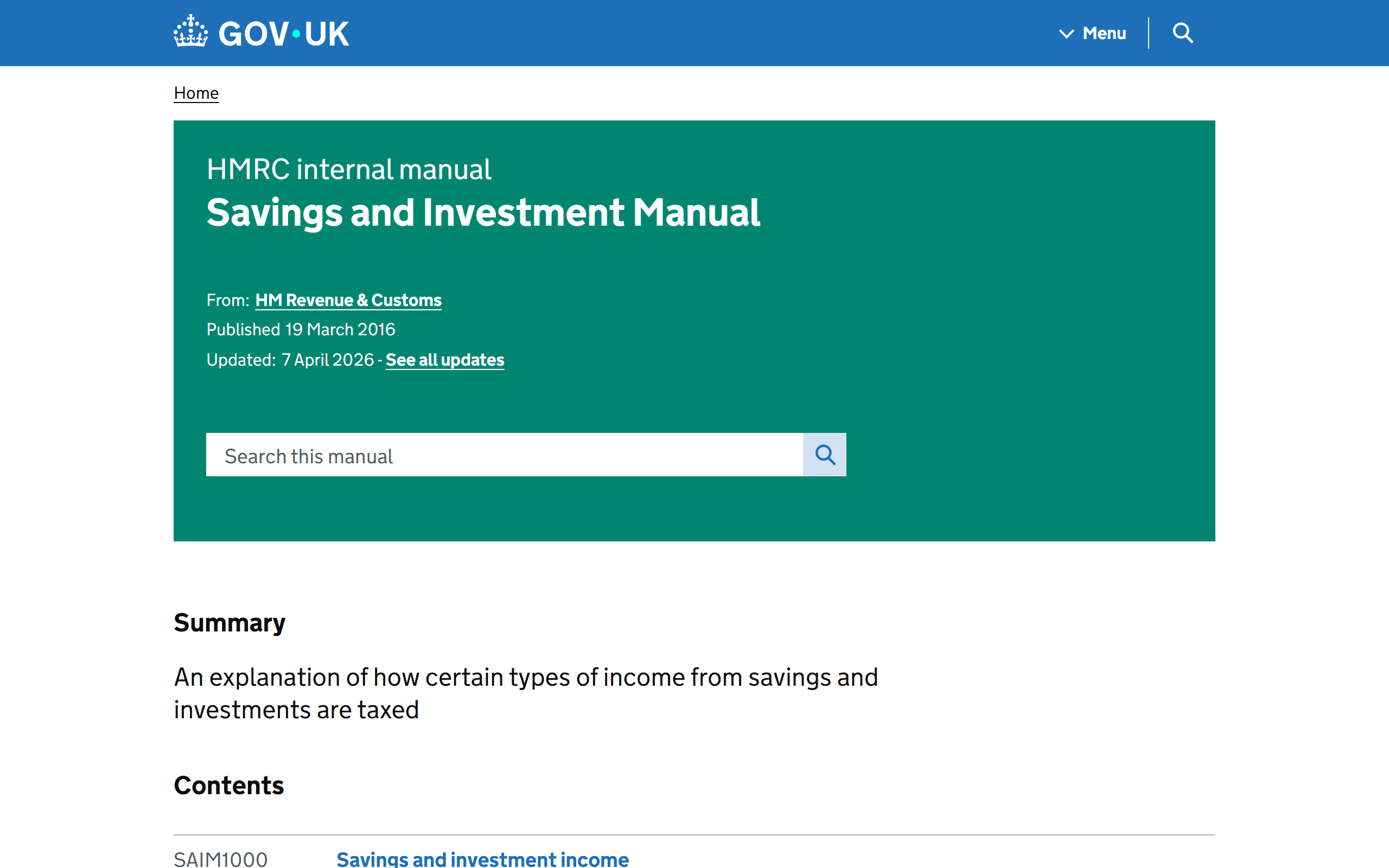
This is the trap. Many DIY investors hold VWRP in a GIA and never realise they owe dividend tax annually on income they never received. HMRC's Savings and Investment Manual sets out the rules in unflinching detail.
When you finally sell, you can deduct accumulated notional distributions from your sale proceeds to avoid being taxed twice. But only if you've kept records.
Which Should You Choose?
Here is the simple decision tree:
If you are investing inside an ISA or SIPP: Buy VWRP. It is the cleaner default. Set up a monthly direct debit, buy VWRP, and stop thinking about it for the next thirty years. This is the single most powerful boring action a UK investor can take, and we cover the philosophy behind it in our passive investing UK guide. Where you hold it matters as much as which share class: a zero-fee platform like Trading 212 means both the monthly top-up and the dividend reinvestment cost you nothing. Our best investment platforms and Stocks and Shares ISA comparisons show the cost-by-platform picture.
If you are investing inside a GIA: VWRL is often the more sensible choice for the admin alone. The cash distributions make Self Assessment trivial, and you avoid the notional distribution trap. The cost is a slightly more manual reinvestment process if you want to compound the dividends.
If you are drawing income in retirement: VWRL gives you natural cashflow without selling shares. Useful for sequence-of-returns risk and for psychological comfort.
The same logic applies to other Vanguard pairs. VUAG vs VUSA (S&P 500), SWLD vs SWDA from iShares (developed world), and CSP1 vs CSP1's distributing siblings (S&P 500 again) all follow the same pattern. Acc inside a tax wrapper, dist often easier in a GIA. For a wider tour of the available options, see our roundup of popular UCITS ETFs for UK investors.
If you want a higher dividend yield and are happy to give up some market exposure, the VHYL vs VWRL comparison covers Vanguard's high-dividend alternative.
Frequently Asked Questions
What is the difference between VWRP and VWRL?
VWRP and VWRL are two share classes of the same Vanguard FTSE All-World UCITS ETF. VWRP accumulates dividends inside the fund automatically. VWRL pays them out as cash every quarter. Same index, same 3,700 stocks, same 0.22% ongoing charge. The only difference is what happens to the dividend.
Is VWRP a good investment for the long term?
Yes, for most UK investors holding inside an ISA or SIPP. VWRP gives you market-cap-weighted exposure to roughly 3,700 large and mid-cap stocks across developed and emerging markets at a 0.22% fee, which is competitive for that breadth. The accumulating structure removes one layer of admin and one behavioural risk (spending the dividend instead of reinvesting it). It is the cleaner default for buy-and-hold investors.
Is VWRP better than VWRL for long-term investing?
Inside an ISA or SIPP, yes, marginally. VWRP avoids the small frictional cost of manually reinvesting cash dividends and removes the temptation to spend them. Outside a tax wrapper, VWRL is often easier because the cash distributions simplify your tax return.
What is the difference between FTSE Global All Cap and VWRL?
VWRL tracks the FTSE All-World index, roughly 3,700 large and mid-cap stocks. The Vanguard FTSE Global All Cap index fund (a mutual fund, not an ETF) tracks the FTSE Global All Cap index, which adds around 3,000 small-cap stocks for a total of ~7,000 holdings. Small caps add a thin slice of extra diversification and historically a small return premium, at the cost of a slightly higher OCF (around 0.23%) and slightly higher volatility. For most UK investors the difference in long-term returns is small.
What is the best performing all-world ETF?
Performance is near-identical across the main all-world ETFs because they track similar global indexes. VWRP, VWRL (Vanguard FTSE All-World), SSAC (iShares MSCI ACWI), and HMWO (HSBC MSCI World, developed only) deliver returns within a fraction of a percent of each other after fees. The differentiator is cost, tax treatment, and whether the index includes emerging markets and small caps. For a fuller comparison see our best UCITS ETFs for UK investors and cheapest UK index funds roundups.
Which UK ETF pays the highest dividend?
Neither VWRP nor VWRL is a high-yield play. The FTSE All-World yields around 1.7%. UK investors looking for higher yield typically use Vanguard's VHYL FTSE All-World High Dividend Yield ETF, which yields closer to 3.5% by overweighting high-payout sectors like financials and energy. Higher yield comes with a trade-off: lower exposure to growth stocks and the index, slightly higher OCF (0.29%), and more sector concentration.
Do VWRP and VWRL pay the same dividend?
The underlying dividend yield is identical because both funds hold the same stocks. The difference is delivery. VWRL pays roughly 1.7% per year as cash distributed quarterly. VWRP retains the same 1.7% inside the fund, where it is reinvested automatically and shows up as a higher share price.
Can I switch from VWRL to VWRP without paying tax?
Inside an ISA or SIPP, yes. Sell one and buy the other inside the wrapper and there is no tax event. Inside a GIA, switching is a disposal and triggers capital gains tax on any gain above your annual CGT allowance. Most platforms do not offer a tax-free conversion between the two share classes.
Are VWRP and VWRL safe to hold long term?
As safe as any global equity ETF gets. Vanguard is one of the largest and most reputable asset managers in the world, the funds are Ireland-domiciled UCITS structures with strong investor protections, and the FTSE All-World index has tracked the global stock market for decades. The risk you face is market risk, not fund risk.
Is the 0.22% OCF the only fee I'll pay?
The OCF covers Vanguard's running costs. On top of that, you'll pay your broker's platform fee or dealing commissions, and you'll cross a small bid-ask spread when you buy and sell. There is also a tiny tracking difference between fund performance and index performance, usually a few basis points.
Prefer to watch?
We turn these money breakdowns into short videos
A few a week, plain-English UK money. If you would sooner watch than read, follow along:
Enjoying the content?
If this site has been useful, a coffee goes a long way.
Browse more articles
Browse all