



New UK Tax Year: Your 2026/27 Allowance Checklist
Every UK tax allowance just reset to zero. You have twelve months to fill four of them. The one most savers skip is worth more than the other three combined.
Cite this article
Freedom Isn't Free (2026) New UK Tax Year: Your 2026/27 Allowance Checklist. Available at: https://freedomisntfree.co.uk/articles/new-tax-year-uk-investor-checklist (Accessed: 10 October 2026).
Italicise the article title in your bibliography. Accessed date set to today.
TLDR
- The 2026/27 tax year started on 6 April. Every allowance has reset to zero usage, giving you a full 12 months to fill them.
- ISA allowance is £20,000. Pension annual allowance is £60,000. Both shelter your investments from income tax, capital gains tax, and dividend tax.
- The capital gains tax annual exempt amount is just £3,000 and the dividend allowance is £500 - use your ISA and pension wrappers to avoid these limits entirely.
- The Personal Savings Allowance lets basic-rate taxpayers earn £1,000 of interest tax-free (£500 for higher-rate). Cash above that threshold is better moved into an ISA.
2026/27 UK tax-free allowances
Use it or lose it: every allowance reset to zero on 6 April 2026.
New UK Tax Year: Your 2026/27 Allowance Checklist
Contents
- Why 6 April Matters
- ISA Allowance: £20,000
- Pension Annual Allowance: £60,000
- Capital Gains Tax: £3,000 Annual Exempt Amount
- Dividend Allowance: £500
- Personal Savings Allowance
- Where to Move Your Money First
- Frequently Asked Questions
The clock has reset. On 6 April 2026, every tax-free allowance the UK government gives investors went back to zero usage. Whether you maxed out your ISA last year or barely touched it, you now have a fresh set of allowances for the 2026/27 tax year - and a full 12 months to make the most of them.
This is not just housekeeping. The difference between someone who fills these allowances and someone who ignores them compounds into tens of thousands of pounds over a decade. Every pound sitting in a taxable wrapper that could be sheltered is a pound that is working less hard than it should be.
Here is everything that has reset, what the limits are, and how to use them.
Why 6 April Matters
The UK tax year runs from 6 April to 5 April the following year. This quirk dates back to 1752 when Britain switched from the Julian to the Gregorian calendar, but the practical effect today is simple: every spring, your tax-free investment and savings allowances reset.
Most of these allowances are "use it or lose it." You cannot carry over unused ISA allowance from last year. If you did not use your £20,000 ISA allowance in 2025/26, it is gone. The only exception is the pension, which has a carry-forward rule (more on that below).
The best time to act is now, at the start of the tax year. The earlier your money is sheltered, the longer it compounds tax-free.
ISA Allowance: £20,000
The Individual Savings Account allowance remains at £20,000 for 2026/27. It has been frozen at this level since 2017, and there is no sign of it changing any time soon.
You can split this across the different ISA types however you like, as long as the total does not exceed £20,000:
| ISA Type | What It Holds | Key Benefit |
|---|---|---|
| Stocks & Shares ISA | Funds, shares, bonds, ETFs | No capital gains tax, no dividend tax, no income tax on growth |
| Cash ISA | Cash savings | Interest earned is completely tax-free |
| Lifetime ISA | Cash or investments (max £4,000/year, counts within the £20,000) | 25% government bonus on contributions up to age 50 |
| Innovative Finance ISA | Peer-to-peer lending | Interest earned is tax-free |
Why Your ISA Should Be Priority One
Inside an ISA, you pay:
- 0% capital gains tax on any growth
- 0% dividend tax on any dividends
- 0% income tax on any interest
Outside an ISA, you are subject to the CGT annual exempt amount (£3,000), the dividend allowance (£500), and the Personal Savings Allowance. Exceed any of those and HMRC takes a cut.
If you have money sitting in a General Investment Account (GIA) or a standard savings account, the first thing to do at the start of a new tax year is move what you can into an ISA. This is sometimes called "Bed and ISA" - you sell holdings in your GIA and rebuy them inside your ISA wrapper.
For most investors pursuing financial independence, a Stocks & Shares ISA filled with low-cost index funds is the single most tax-efficient vehicle available.
Note: Since April 2024, you can pay into multiple ISAs of the same type in a single tax year. The £4,000 Lifetime ISA limit sits within (not on top of) your £20,000 total.
Pension Annual Allowance: £60,000
Your pension annual allowance has also reset to £60,000 for the 2026/27 tax year. This is the maximum you (and your employer combined) can contribute to pensions in a single tax year while still receiving tax relief.
If you earn less than £60,000, your allowance is capped at 100% of your earnings.
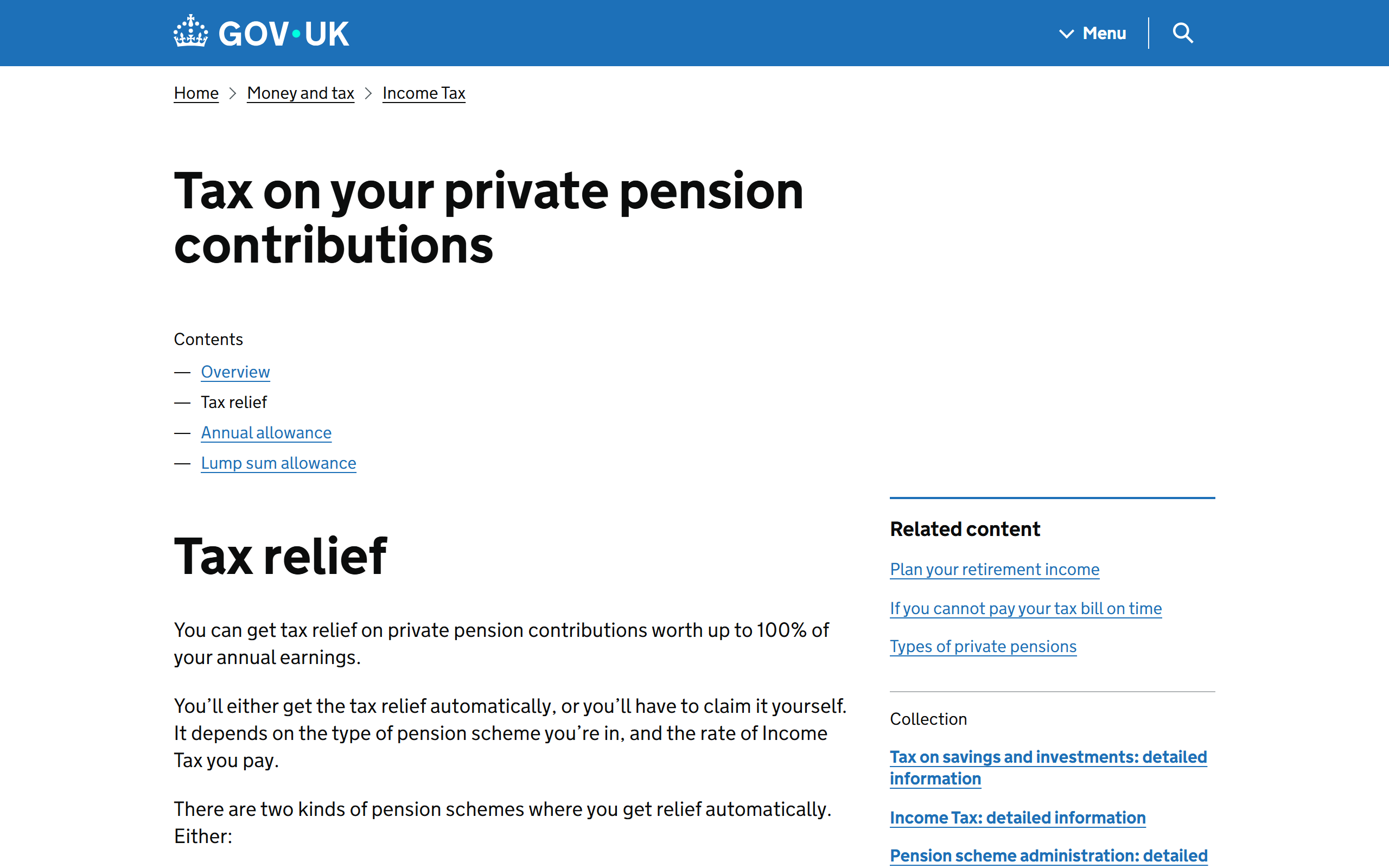
Tax Relief on Pension Contributions
Pension contributions receive tax relief at your marginal rate, making them the most tax-efficient wrapper in the UK:
| Tax Band | Rate | What £1,000 Gross Costs You |
|---|---|---|
| Basic rate (20%) | Automatic via your provider | £800 |
| Higher rate (40%) | Claim via Self Assessment | £600 |
| Additional rate (45%) | Claim via Self Assessment | £550 |
If your employer offers salary sacrifice, pension contributions also save you National Insurance - making the effective cost even lower. This is particularly powerful for those caught in the 60% tax trap between £100,000 and £125,140.
Carry Forward
Unlike ISAs, unused pension allowance can be carried forward from the previous three tax years, provided you were a member of a pension scheme in those years. If you under-contributed in 2023/24, 2024/25, or 2025/26, you could contribute well above £60,000 this year.
You must use your current year's allowance first before dipping into carry-forward.
Tapered Annual Allowance
High earners beware: if your "adjusted income" exceeds £260,000, your annual allowance is tapered down. For every £2 of adjusted income above £260,000, you lose £1 of allowance, down to a minimum of £10,000.
Money Purchase Annual Allowance
If you have already accessed your pension flexibly (taken more than your tax-free lump sum), your annual allowance drops to £10,000. This is the Money Purchase Annual Allowance (MPAA), and it cannot be carried forward.
Looking for a low-cost SIPP to take advantage of this? We recently reviewed the Trading 212 SIPP, which has some of the lowest fees in the UK.
Capital Gains Tax: £3,000 Annual Exempt Amount
The capital gains tax (CGT) annual exempt amount is £3,000 for 2026/27. This is the total profit you can realise from selling assets outside a tax-free wrapper before CGT kicks in.
This was £12,300 as recently as 2022/23 before being slashed to £6,000, then £3,000. A 75% cut in three years.
CGT Rates for 2026/27
| Your Tax Band | CGT Rate |
|---|---|
| Basic rate | 18% |
| Higher rate | 24% |
These rates apply to most assets including shares, funds, and property (excluding your main home). Whether you pay the basic or higher rate depends on your total taxable income plus the gain. If adding the gain pushes you across the higher-rate threshold, the portion above is taxed at 24%.
What This Means in Practice
If your GIA has grown by more than £3,000 in unrealised gains, selling everything at once means paying CGT on everything above £3,000. The smart move is to:
- Use your ISA wrapper - investments inside an ISA are completely exempt from CGT, no matter how large the gain.
- Harvest gains annually - sell enough each year to realise up to £3,000 in gains, then rebuy. This resets your cost basis and uses the exempt amount.
- Transfer to a spouse - transfers between spouses are CGT-free. If your partner has unused exempt amount, transfer assets to them before selling.
The £3,000 allowance resets every 6 April. If you did not use it last year, it is gone.
Dividend Allowance: £500
The dividend allowance for 2026/27 is £500. Any dividends you receive outside a tax-free wrapper above this amount are taxed at your marginal dividend rate.
Dividend Tax Rates for 2026/27
| Tax Band | Dividend Tax Rate |
|---|---|
| Basic rate | 10.75% |
| Higher rate | 35.75% |
| Additional rate | 39.35% |
This was £2,000 as recently as 2022/23. At £500, a portfolio yielding 4% only needs to be worth about £12,500 in a GIA before you start paying dividend tax.
The Fix
Hold dividend-paying investments inside your ISA or pension. Inside these wrappers, dividends are completely tax-free regardless of the amount. If you hold income funds or dividend stocks in a GIA, consider selling and rebuying inside your ISA ("Bed and ISA") at the start of the tax year.
For accumulation-focused investors, this is another reason why index funds held in an ISA are the default recommendation. Dividends are automatically reinvested within the fund and never trigger a personal tax liability.
Personal Savings Allowance
The Personal Savings Allowance (PSA) sets how much interest you can earn on cash savings outside an ISA before it becomes taxable.
| Tax Band | Tax-Free Interest Allowance |
|---|---|
| Basic rate (20%) | £1,000 |
| Higher rate (40%) | £500 |
| Additional rate (45%) | £0 |
With savings rates still above 4% at many banks, it does not take a huge balance to breach these limits:
- A basic-rate taxpayer with £25,000 in a savings account at 4% earns £1,000 in interest - right at the limit.
- A higher-rate taxpayer only needs £12,500 at 4% to hit their £500 ceiling.
- Additional-rate taxpayers pay tax on every penny of savings interest outside an ISA.
What Happens When You Exceed It?
HMRC collects the tax automatically by adjusting your tax code the following year. You do not need to do anything, but you will see a smaller take-home pay as HMRC collects what you owe.
The interest is taxed at your marginal income tax rate: 20%, 40%, or 45%.
The Move
If your cash savings are large enough to exceed the PSA, move the excess into a Cash ISA. Interest inside a Cash ISA does not count towards your Personal Savings Allowance and is completely tax-free.
With the ISA allowance at £20,000, you can shelter a substantial amount of cash. A higher-rate taxpayer with £50,000 in savings could move £20,000 into a Cash ISA immediately, reducing their taxable interest by around £800 per year.
If you do not need the cash in the short term, a Stocks & Shares ISA will likely deliver better long-term returns - but a Cash ISA is the right tool for emergency funds or money you need within the next few years.
Where to Move Your Money First
With all these allowances freshly reset, here is a priority order for making the most of the 2026/27 tax year. If you track your finances with a net worth tracker, now is a good time to log your starting position for the year.
1. Employer Pension Match
If your employer matches pension contributions, this is free money. Increase your contributions to at least the level your employer will match. A pension match calculator can help you see what you are leaving on the table.
2. Fill Your ISA
Move cash from savings accounts and investments from GIAs into your ISA. For long-term investors, a Stocks & Shares ISA with low-cost global index funds is the default choice. For cash you need in the short term, a Cash ISA protects you from the PSA limit.
3. Pension Contributions (Especially via Salary Sacrifice)
If you are in the higher-rate band, pension contributions save you 40% in income tax plus 2% in National Insurance (via salary sacrifice). If you are in the 60% trap between £100,000 and £125,140, pension contributions are essential.
Use carry-forward if you under-contributed in previous years.
4. Harvest Capital Gains
If you have unrealised gains in a GIA, consider selling enough to use your £3,000 exempt amount, then rebuying. This resets the cost basis and ensures you are not building up a larger tax bill for later.
5. Review Dividend Exposure
If you hold dividend-paying shares or funds outside an ISA, check whether your annual dividends exceed £500. If they do, those holdings are prime candidates for a Bed and ISA transfer.
The Full Allowance Cheat Sheet
| Allowance | 2026/27 Limit | Use It Or Lose It? |
|---|---|---|
| ISA | £20,000 | Yes |
| Lifetime ISA | £4,000 (within ISA limit) | Yes |
| Junior ISA | £9,000 | Yes |
| Pension Annual Allowance | £60,000 | No (3-year carry forward) |
| Capital Gains Tax Exempt Amount | £3,000 | Yes |
| Dividend Allowance | £500 | Yes |
| Personal Savings Allowance (basic rate) | £1,000 | N/A (annual threshold) |
| Personal Savings Allowance (higher rate) | £500 | N/A (annual threshold) |
Frequently Asked Questions
Can I pay into more than one ISA in the same tax year?
Yes. Since April 2024 you can pay into multiple ISAs of the same type in a single tax year. The only rule is that your total contributions across all ISAs must not exceed £20,000.
What happens if I exceed my ISA allowance?
HMRC will ask your provider to return the excess. You may also lose the tax-free status on the over-contributed amount. Stick to £20,000 across all ISAs.
Can I transfer my existing ISA to a new provider without it counting as a new contribution?
Yes. ISA transfers do not use your annual allowance. You can move an old ISA to a new provider without affecting your current year's £20,000 limit.
Do employer pension contributions count towards my £60,000 allowance?
Yes. The £60,000 limit includes everything: your personal contributions, employer contributions, and any tax relief added by your provider.
I accessed my pension last year. Can I still contribute £60,000?
If you took income flexibly (beyond the 25% tax-free lump sum), your annual allowance is reduced to £10,000 under the Money Purchase Annual Allowance rules. If you only took tax-free cash, the full £60,000 still applies.
Is there any point opening a Cash ISA when savings rates are decent?
Absolutely. Cash ISA interest is entirely tax-free. If you are a higher-rate taxpayer, you only get £500 of tax-free savings interest outside an ISA. A Cash ISA protects any amount above that. With rates above 4%, a £20,000 Cash ISA saves a higher-rate taxpayer around £320 in tax per year.
Do capital gains and dividends inside my ISA need to be reported?
No. You do not need to declare any gains, dividends, or interest earned within an ISA on your Self Assessment tax return. They are completely invisible to HMRC.
Further Reading
Tax-Free Wealth - Tom Wheelwright - A practical guide to understanding how the tax system works and using legal strategies to reduce your tax bill permanently. (Affiliate link - we may earn a small commission at no extra cost to you.)
Smarter Investing - Tim Hale - The definitive UK guide to evidence-based index investing, covering ISAs, pensions, and portfolio construction. (Affiliate link - we may earn a small commission at no extra cost to you.)
Read Next
Prefer to watch?
We turn these money breakdowns into short videos
A few a week, plain-English UK money. If you would sooner watch than read, follow along:
Enjoying the content?
If this site has been useful, a coffee goes a long way.
Browse more articles
Browse all