





Why Bonds for De-Risking? An Honest UK Answer
Bonds dropped 20% in 2022 and a money market fund quietly did the same job for two years afterwards. So why is the textbook still 60/40? The candid UK answer near retirement.
Cite this article
Freedom Isn't Free (2026) Why Bonds for De-Risking? An Honest UK Answer. Available at: https://freedomisntfree.co.uk/articles/why-bonds-for-de-risking-portfolio (Accessed: 21 September 2026).
Italicise the article title in your bibliography. Accessed date set to today.
TLDR
- Bonds do three jobs in a portfolio: pay a yield above cash, gain value when interest rates fall (typically during recessions, when equities suffer), and lock in a known return over a known duration.
- Money market funds and cash savings accounts deliver job 1 well but cannot do jobs 2 or 3. They float with overnight rates, so when rates get cut to zero you earn nothing.
- The 2022 bond crash was a duration shock - rates rose fast and long-dated bonds re-priced down. That is a known feature of bonds, not a sign they are broken.
- The textbook answer (60/40 with bonds) is defensible but not gospel. Short-duration bonds or a gilt ladder do most of the same work with less volatility, and are a fair UK substitute.
Bonds vs money market funds: the three jobs
| Job | Bonds | Money market funds |
|---|---|---|
| Yield above cash | Yes (term premium) | Roughly equal at SONIA |
| Gain when rates fall | Yes (capital appreciation) | No (yield collapses instead) |
| Lock in known return | Yes (to maturity) | No (floats with overnight rate) |
| Negative correlation with equities | In deflationary recessions | Negligible |
2022 bonds fell ~20% in a rate shock. The three jobs still work in deflationary recessions.
Why Bonds for De-Risking? An Honest UK Answer
Why bonds for de-risking a portfolio? It is a fair question, especially when global bonds lost roughly 20% between November 2021 and September 2022 and a Vanguard LifeStrategy 60% Equity Fund has spent the last decade volatile and returning around 100% while a portfolio of ACWI plus a money market fund (or a high-interest savings account) returned closer to 150% over the same period.
The straight answer has two parts. Bonds do three specific jobs in a portfolio that cash and money market funds cannot fully replicate - and the textbook 60/40 is the conventional implementation of those jobs rather than the only one. Reasonable people have started questioning whether the textbook is the right answer in 2026 conditions. This article walks through what bonds actually do, why money market funds are not a clean substitute, what happened in 2022, and the more thoughtful UK de-risking approach when you are 5-10 years from drawing on a portfolio.
Contents
- The Three Jobs Bonds Do
- Why Money Market Funds Are Not a Perfect Substitute
- What Happened to Bonds in 2022
- Sequence of Returns Risk: What De-Risking Is Actually Trying to Solve
- The Case For (and Against) Bonds
- A Thoughtful UK De-Risking Approach
- Frequently Asked Questions
The Three Jobs Bonds Do
In a portfolio, bonds are not one thing. They are three things at once, and the case for owning them rests on all three:
Job 1: Yield above cash. A bond pays a coupon that has historically run 1-2 percentage points above the prevailing short-term cash rate over multi-decade periods. This is the term premium - the extra return investors demand for locking up money for longer. It is real but small, and it disappears in some environments (the 2010s flat yield curve being the most recent example).
Job 2: Negative correlation with equities (usually). When the economy weakens and central banks cut interest rates, bond prices rise (because new bonds will be issued at lower rates, making existing higher-yielding bonds more valuable). Equities tend to fall in those same recessionary moments. Bonds therefore act as a partial hedge: when the equity side of your portfolio is hurting, the bond side is gaining. The 2008-09 crash is the canonical example - the FTSE All-Share fell 30% over 18 months while UK gilts gained roughly 15%.
Job 3: Duration matching. If you know you will need £100,000 in ten years' time, you can buy a ten-year UK gilt today at a known yield and lock in exactly what you will receive at maturity. Cash cannot do this. The rate you earn on cash next year is whatever the rate is next year, not what it is today. For pension drawdown, where the liability is a series of future cash payments, matching bond maturities to those payments removes interest rate risk on each tranche.
The 60/40 portfolio works because bonds do all three jobs simultaneously. Strip any one of them out and the case weakens.
Why Money Market Funds Are Not a Perfect Substitute
CSH2 (the Amundi Smart Overnight Return ETF) and similar money market funds track an overnight rate like SONIA. They are excellent at one thing and limited at others.
What they do well:
- Yield: SONIA tracks the Bank of England base rate closely. With base at 4-5%, money market funds yield around the same. That is competitive with short-dated gilts and beats cash savings accounts at most high-street banks.
- Volatility: extremely low. The price barely moves day to day because the underlying is just overnight lending to creditworthy counterparties.
- Liquidity: trades like a stock during market hours, settles fast.
What they do not do:
- No capital gain when rates fall. When the Bank of England cuts the base rate from 5% to 0.5% (as happened between 2008 and 2009), a 10-year gilt holder watches the capital value of that gilt rise by 20-30%. A money market fund holder watches their yield collapse from 5% to 0.5% while the price barely moves. The bond holder is materially better off; the cash holder has missed the move.
- No lock-in of yield. Buying a 10-year gilt at 4.5% gives you 4.5% per year for ten years (nominal). Putting £10,000 in a money market fund at 4.5% gives you 4.5% this year and whatever the rate is next year, and the year after, and so on. If rates collapse, your future income collapses with them. This is reinvestment risk and it is the mirror image of the duration risk that hurt bonds in 2022.
- No diversification beyond cash. Cash and equities are not negatively correlated in any meaningful way. When equities crash because of a recession, cash yields fall in the same period because the central bank cuts. You earn less just as you would most want the buffer.
If your only concern about your portfolio is today's volatility, money market funds win. If your concern is what you will be able to draw in twenty years across many different rate environments, bonds still earn their place.
What Happened to Bonds in 2022
The 2022 bond crash gets cited as evidence that bonds are broken. It is more accurate to say 2022 was bonds doing what bonds are designed to do, just unusually badly because rates moved unusually fast.
The mechanism: long-dated bonds are extremely sensitive to interest rate changes. A 10-year bond's price moves roughly 10 times harder than a 1-year bond for the same rate change. When the Bank of England raised the base rate from 0.1% in December 2021 to 5.25% by August 2023, every existing long-dated gilt re-priced downward because nobody wanted to hold a 1% yielding bond when new ones were paying 5%.
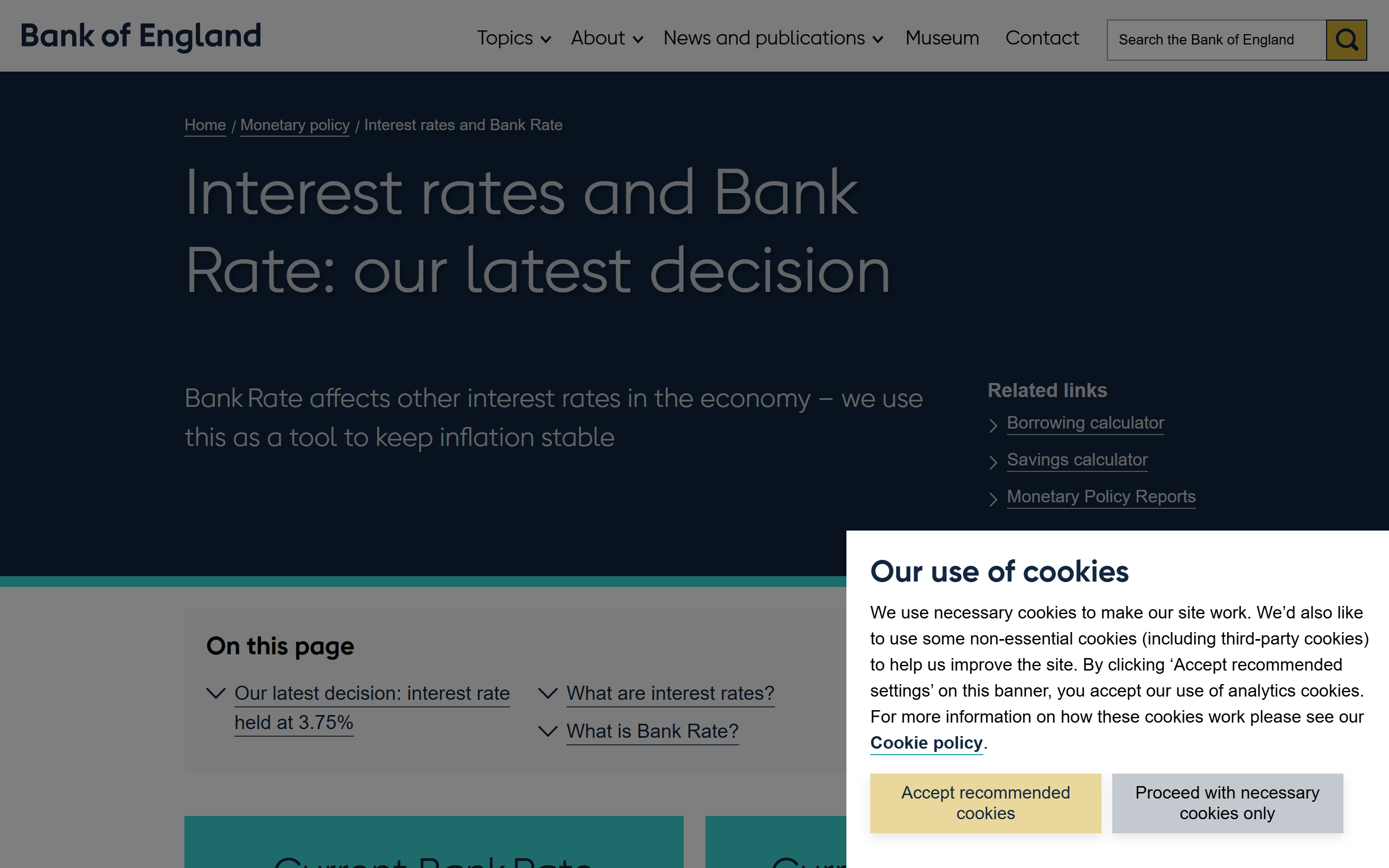
This is duration risk and it is a known, defined feature of bonds. The 2022 drawdown was severe because:
- Rates rose from near-zero to 5%+ inside two years - the fastest tightening cycle in 40 years.
- Yields started so low that the buffer of coupon income was negligible.
- Long-duration global bond indices have effective durations around 7-8 years, which compounds the price moves.
The mistake of the 2010s was not that bonds were chosen for de-risking. The mistake was holding long-duration bonds at near-zero yields, when the asymmetry was obvious: rates had no further to fall and a lot of room to rise. Short-duration bond funds, gilt ladders ending in 1-5 years, and money market funds avoided most of the damage.
Bonds did the job they were designed to do in 2022. They paid the agreed coupons, repaid principal at maturity, and re-priced because the discount rate changed. The "20% loss" is a paper loss on long-duration funds marked to market, not a structural failure of the asset class. Holders who could match duration to liabilities (or hold to maturity) received exactly the cash flows the bonds promised.
Sequence of Returns Risk: What De-Risking Is Actually Trying to Solve
The textbook reason to de-risk a portfolio approaching retirement is sequence of returns risk. Sequence risk is the risk that a market crash in the early years of drawdown permanently impairs the portfolio in a way that a crash in the later years would not.
Two retirees with the same average return over thirty years can end up with wildly different outcomes depending on when the bad years arrive. The retiree who hits a 40% crash in year 1 of drawdown, selling units to fund living expenses at a depressed price, is permanently poorer than the retiree who hits the same crash in year 25. The compounding works against you when you are spending down, not just adding up.
De-risking the five or ten years either side of retirement is a way to reduce this specific risk. The portfolio carries less equity, so the drawdown in a crash is smaller, and the retiree can draw from the bond / cash side of the portfolio for two or three years while equities recover.
The textbook 60/40 implements this with bonds. It works whether you use traditional bonds, short-duration bonds, gilts, money market funds, cash savings, or a mix - so long as the de-risked sleeve is large enough and stable enough to cover spending through a bad equity stretch.
Where the 60/40 specifically wins is in the deflationary recession scenario: equities fall 30%, central bank cuts rates 4pp to stimulate the economy, bonds gain 25%. The retiree's portfolio fall is materially smaller than equities alone. A cash sleeve gives no such uplift - cash just sits there.
Where the 60/40 specifically loses is the 2022 scenario: inflation shock, equities fall, rates rise, bonds also fall. Both sides of the portfolio drop together. The diversification benefit disappears.
The Case For (and Against) Bonds
The case for bonds in 2026:
- They still pay a yield. UK 10-year gilts have been yielding 4-5% over the last couple of years - genuine real returns after inflation, for the first time in a decade.
- They will rise in value if the next recession is deflationary and rates get cut. This is the scenario equities most fear, so the negative correlation matters.
- They can be duration-matched to retirement liabilities. A laddered gilt portfolio drawing down each year locks in known cash flows.
The case against:
- The 2010s convinced an entire generation of advisers that 60/40 was the natural state of investing. The same generation will retire having lived through one bond regime (falling rates 1981-2021) and project it forward, which would be a mistake.
- Inflation-shock scenarios break the equity-bond correlation. If 2022 turns out to be the dress rehearsal for a longer-term higher-inflation regime, bonds and equities may move together more often than the textbook predicts.
- A laddered gilt portfolio, individual short-duration gilts, and money market funds collectively offer many of bonds' benefits without the long-duration sensitivity that hurt LifeStrategy 60% holders in 2022.
Researchers like Wade Pfau and Michael Kitces have published work suggesting that a rising equity glide path - holding LESS equity at retirement and slowly increasing the equity allocation across retirement - may actually outperform the traditional declining glide path. The intuition: the worst sequence-risk years are right at the start, so de-risking for that specific period and then gradually re-risking captures more long-term equity return.
None of this means "do not hold bonds." It means the textbook 60/40 is one valid implementation of de-risking, not the only valid one. A UK retiree with a 5-year horizon could reasonably hold a mix of short-duration gilts, money market funds, premium bonds, and cash savings and still be sensibly de-risked.
A Thoughtful UK De-Risking Approach
Five to ten years from drawdown, the question is not "bonds or no bonds" but "what mix of low-volatility assets matches my specific liability profile."
A reasonable UK de-risking mix:
- Two years of spending in instant-access cash or money market funds (like CSH2). This is the buffer that absorbs the first two years of any equity crash without forcing you to sell at the bottom.
- Three to five years of spending in short-duration UK gilts (1-3 year maturity). Locks in yield, low duration risk, much less sensitive to rate moves than 10-year gilts or global aggregate funds. If you specifically want inflation protection, short-duration index-linked gilts ("linkers") offer the same de-risking with the coupon and principal tied to RPI.
- The rest in global equities. Cap-weighted tracker, value-tilted, whatever fits your existing strategy.
This is not 60/40. For a household with a £40,000/year drawdown, it is roughly £80,000 in cash + £160,000 in short gilts + whatever else is in equities. As a fraction of total portfolio, the de-risked sleeve at a £1m portfolio is 24% - much less than the textbook 40%.
If you would rather not run a ladder yourself, short-duration gilt funds (Vanguard U.K. Short-Term Investment Grade Bond Index, iShares UK Gilts 0-5 ETF) do the same job at a few basis points of fee. Money market funds (CSH2, XEON) handle the cash sleeve.
The Vanguard LifeStrategy range is the simple-button version of this for those who want a single-fund solution. LifeStrategy 60 holds a global aggregate bond fund (long duration) for the 40% bond sleeve, which is precisely the part that hurt in 2022. If you choose a one-fund solution, accept that the bond sleeve carries duration risk you cannot tune. If you cannot accept that, do the ladder yourself.
Frequently Asked Questions
Are bonds still low risk after the 2022 crash?
Short-duration bonds and money market funds are low risk. Long-duration bonds (10+ year maturities, or global aggregate bond funds with 7-8 year average duration) are not low risk - they carry meaningful interest rate exposure. The label "low risk" was always shorthand for "low credit risk on a government bond" and never meant "low price volatility." 2022 just made the duration risk visible to people who had not noticed it during the falling-rate era.
Why not just hold a money market fund instead of bonds for de-risking?
For horizons under 2 years, a money market fund is a fine substitute. For longer horizons, money market funds carry reinvestment risk: the rate you earn floats with overnight rates and falls when central banks cut. Bonds let you lock in a known yield for a known duration, and they rise in value during the deflationary recessions that hurt equities most. Cash does not.
What is sequence of returns risk?
The risk that a market crash early in your drawdown years permanently impairs your portfolio in a way the same crash later would not. Selling units to fund living expenses at depressed prices in years 1-3 of retirement compounds against you for decades. De-risking the years either side of retirement reduces this specific risk.
Is the 60/40 portfolio still a sensible default in 2026?
Yes, with the caveat that the bond sleeve should be diversified across durations rather than concentrated in long-dated global aggregate funds. 60% global equities + 40% short-duration gilts and money market funds is arguably more resilient than the textbook 60/40 with global aggregate bonds.
Why is the 10-year comparison so flattering for cash vs bonds?
Sample bias. The last 10 years contain a near-zero-rate decade when bonds offered little yield, the fastest rate-tightening cycle in 40 years which crushed long-dated bonds, and a strong equity bull market making the bond sleeve look needlessly cautious. A 30-year comparison would include the 2008 deflationary recession where bonds saved 60/40 portfolios from the worst of the equity crash. Single 10-year windows tell you what just happened, not what will happen next.
Read Next
- UK Bonds Explained: Gilts and Premium Bonds - the primer on the bond instruments most relevant to UK investors
- Sequence of Returns Risk - the specific risk de-risking is designed to address
- Safe Withdrawal Rate: Wade Pfau Review - the academic case for rising-equity glide paths
- Optimise Pension Drawdown UK - how the de-risking decision fits into the wider drawdown strategy
Further Reading:
Smarter Investing - Tim Hale - The UK-focused investing book most relevant to this question. Hale covers asset allocation, the role of bonds, and the case for keeping portfolios simple. The standard text behind most evidence-based UK portfolio construction. (Affiliate link.)
Prefer to watch?
We turn these money breakdowns into short videos
A few a week, plain-English UK money. If you would sooner watch than read, follow along:
Enjoying the content?
If this site has been useful, a coffee goes a long way.
Browse more articles
Browse all