




Sole Trader Cash Management: Earn Interest on Tax Money (UK)
Self-employed? The cash you set aside for HMRC sits idle for up to 18 months. Most sole traders leave the interest with the bank instead of themselves. The fix takes one afternoon.
Cite this article
Freedom Isn't Free (2026) Sole Trader Cash Management: Earn Interest on Tax Money (UK). Available at: https://freedomisntfree.co.uk/articles/sole-trader-cash-management-uk (Accessed: 23 August 2026).
Italicise the article title in your bibliography. Accessed date set to today.
TLDR
- Self-employed people set aside 25 to 30 percent of net profit for tax and National Insurance, but that money sits in an account for months between earning it and paying it. That is interest you are leaving on the table if it is in a current account.
- Park the tax float in a separate easy-access savings account. The interest earned is yours to keep; only the original tax owed goes to HMRC.
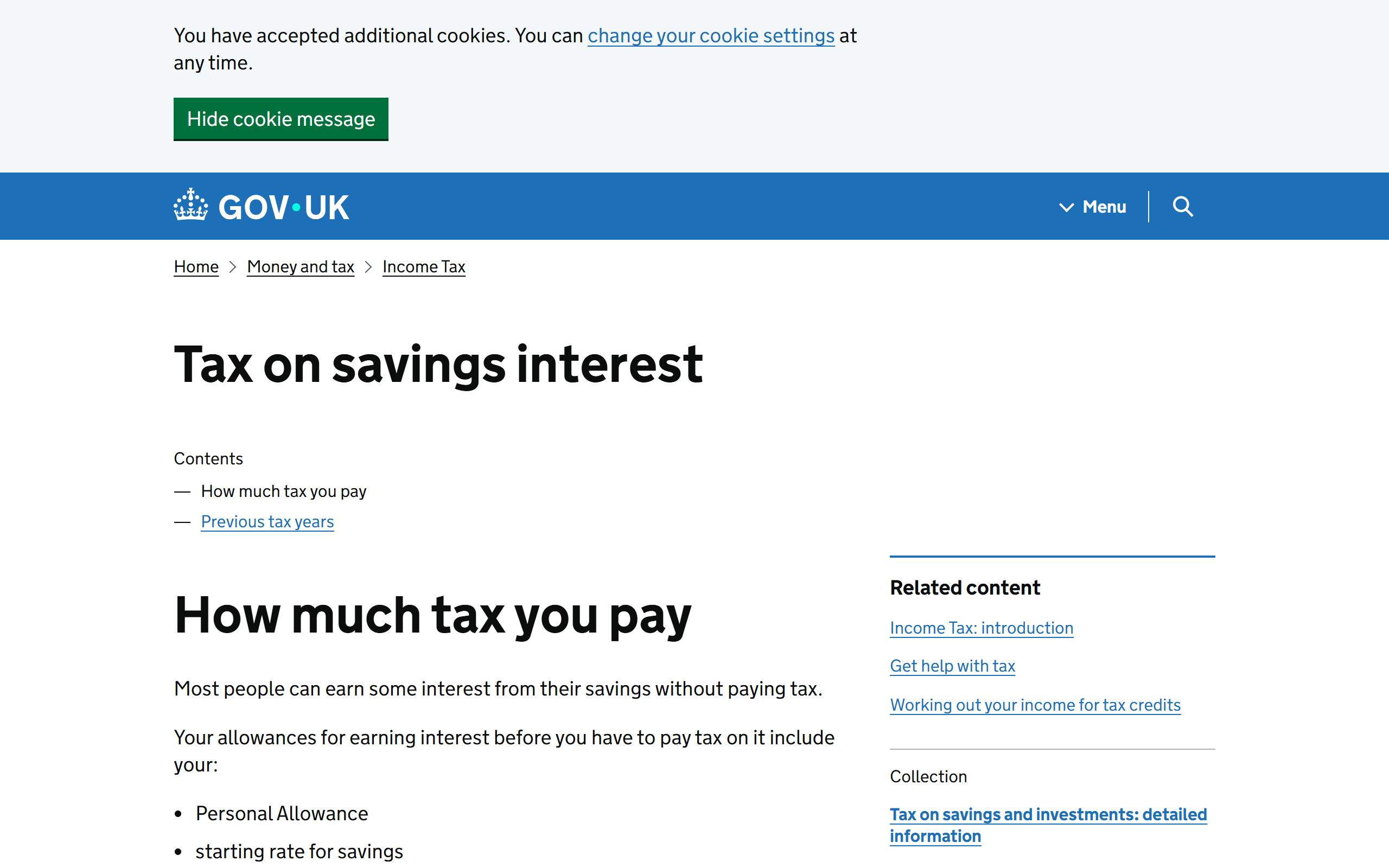
- Watch the Personal Savings Allowance: £1,000 of savings interest tax-free if you are basic-rate, £500 at higher rate, £0 at additional rate. Above the allowance you owe income tax on the interest itself.
- Treat working capital, tax float and emergency fund as three separate buckets, in three separate accounts, with three different time horizons.
Personal Savings Allowance by tax band, 2026/27
Interest above the PSA is taxed at your marginal rate. Additional-rate earners should consider a Cash ISA.
Sole trader cash buckets: where each pound belongs
| Bucket | Time horizon | Where to hold it |
|---|---|---|
| Working capital | Weeks | Business current account |
| Tax float (25-40%) | 1-13 months | Easy-access or notice savings |
| VAT (if registered) | Quarterly | Separate easy-access account |
| Emergency fund | 3-6 months | Easy-access savings or Cash ISA |
Three accounts, three jobs. The tax float is HMRC's money - keep it earning interest until they ask for it.
Sole Trader Cash Management: Earn Interest on Tax Money (UK)
Sole traders and freelancers in the UK have a quiet financial superpower that most never take advantage of. Money you owe HMRC for tax and National Insurance is collected long after you have earned it, sometimes more than a year later. In the meantime, that money is yours to do something useful with. If it is sitting in your business current account earning nothing, you are giving away a free 4 to 5 percent every year you stay self-employed.
This guide is for UK sole traders, freelancers and self-employed contractors who want to stop leaving that money on the table without doing anything risky with it.
Contents
- Why HMRC money sits in your account for months
- The 25 to 30 percent rule
- Where to park the tax float
- Tax on the interest itself: the Personal Savings Allowance
- Three buckets: tax, working capital, emergency
- The mechanical setup that takes ten minutes
- Frequently asked questions
Why HMRC Money Sits in Your Account for Months
Self Assessment is a back-loaded system. You earn income through the tax year (6 April to 5 April), then file the return and pay the bill many months after the income arrived in your account. The exact timing depends on which payments you owe, but the structure looks roughly like this:
- Income earned April 2026 to March 2027.
- Self Assessment return filed by 31 January 2028.
- Balancing payment for the year, plus first Payment on Account toward 2027/28, due 31 January 2028.
- Second Payment on Account due 31 July 2028.
A pound earned in May 2026 might not leave your account for HMRC until January 2028. That is twenty months. Even a pound earned in February 2027, just before the year-end, sits with you for around eleven months. The average pound earmarked for tax sits idle for roughly a year.
In a 4 percent savings environment, leaving £10,000 of tax-money in a 0 percent business current account costs you about £400 a year in foregone interest. For a freelancer earning £60,000 net, the typical 25 to 30 percent set-aside is £15,000 to £18,000 sitting around for an average of a year. That is real money.
The 25 to 30 Percent Rule
The first piece of self-employed financial hygiene is to siphon a fixed percentage of every payment received into a separate account the moment it lands. The exact percentage depends on your income band, but a safe rule of thumb:
- Basic-rate (income under roughly £50,270): set aside 25 percent of net profit for income tax plus Class 4 NI.
- Higher-rate (between roughly £50,270 and £125,140): set aside 35 to 40 percent.
- Plus VAT (if registered): set aside the VAT portion separately, in a third account.
Net profit is gross income minus allowable business expenses, not gross income. If you are unsure of your actual marginal rate, err on the high side. Over-saving is fine; under-saving turns a routine tax bill into a panic.
The point is that money is now mentally and physically separated from your spending money. You stop seeing it in your current account balance, you stop accidentally treating it as available cash, and most importantly, you can put it somewhere it earns interest.
Where to Park the Tax Float
The right account depends on three things: when you will need the money, how much you can park, and your appetite for friction. Five categories worth considering, ranked by how I would use them.
Easy-access savings accounts. The default choice. Pay reasonably competitive rates, withdraw on demand, no notice period. Aldermore, Atom Bank, Chip and Cynergy Bank are usually somewhere near the top of the table. Use these for the working portion of the tax float, the money you might need on short notice if the bill comes earlier than expected. See our best UK savings account roundup for 2026 for current options and what to actually look at when comparing.
Notice accounts. Pay a slightly better rate in exchange for a 30, 60 or 90 day notice period. Useful for the bottom layer of your tax float if you have predictable Payment on Account dates and can plan the withdrawal. The 90-day notice variants typically pay 0.3 to 0.6 percent more than easy-access. Worth it if the float is large.
Cash ISA. Tax-free interest, currently a £20,000 annual allowance shared with the Stocks and Shares ISA. The catch for sole traders: if you use the ISA allowance for tax-float money, you cannot use it for long-term equity investing. For most self-employed people the ISA allowance is more valuable for long-term growth (where the tax saving compounds over decades) than for a 12-month tax float. The exception is if you are an additional-rate taxpayer with no Personal Savings Allowance, in which case a Cash ISA is the cleanest way to keep the interest entirely tax-free.
Money market funds. Available through brokerages such as Hargreaves Lansdown, AJ Bell or Interactive Investor, often as part of an "active savings" cash hub. Track Bank of England base rate closely, very low risk, T+1 access. More mechanical friction than a savings account, but worth it for larger floats.
Premium Bonds. NS&I-backed, prizes instead of interest, no tax on winnings. The expected return tracks roughly with savings rates but is variable, which makes them poorly suited to a tax-float role where you need predictability. We have a full guide to premium bonds and gilts here.
What I would NOT do for a tax float: a Stocks and Shares ISA, a stock-market account, crypto, or anything that can drop 20 percent before HMRC asks for the money. The float exists to be available on a known date in a known amount. Don't gamble it.
Tax on the Interest Itself: the Personal Savings Allowance
Earning interest creates a second tax question: do you owe tax on the interest, on top of the tax you already owe on the original profit? Usually a small amount.
The Personal Savings Allowance (PSA) is your annual tax-free interest budget:
- Basic-rate taxpayers: £1,000
- Higher-rate taxpayers: £500
- Additional-rate taxpayers: £0
A higher-rate sole trader with £15,000 of tax-float earning 4.5 percent generates £675 of interest a year. £500 of that is covered by the PSA; the remaining £175 is taxed at 40 percent, costing £70. Net interest after PSA tax: £605. Still vastly better than zero in a current account.
Two practical implications. First, an additional-rate taxpayer (above £125,140 of taxable income) gets no PSA at all and should think harder about Cash ISAs or NS&I products. Second, you do not need to declare interest separately if HMRC already receives it via the bank's annual report; it appears on your Self Assessment automatically. Verify on the HMRC PSA page which is the canonical source.
The Bank of England base rate determines what's actually achievable; our base rate explainer covers how that figure flows through to your savings.
Three Buckets: Tax, Working Capital, Emergency
Lumping all your business cash into one account muddles three distinct goals. A clean setup uses three separate accounts:
Tax float. Money set aside for the next two Self Assessment payments, plus VAT if registered. Time horizon: 1 to 13 months. Easy-access savings or notice account. This is what most of this article is about.
Working capital. Money you actually use to run the business: invoicing while you wait to be paid, kit replacement, software subscriptions, training, professional indemnity insurance renewal. Time horizon: weeks. This typically lives in your business current account, with a small easy-access savings buffer alongside for predictable lumpy outgoings (annual insurance, end-of-year accountant fees).
Emergency fund. Three to six months of personal living expenses, kept ring-fenced and untouched unless an actual emergency happens. Self-employed income is more volatile than employed income, so the case for a substantial personal emergency fund is stronger. Our emergency fund guide covers the sizing logic.
The key mistake is treating any of these as the same money. The tax float is HMRC's; the emergency fund is your future self's; only the working capital is yours to spend now.
The Mechanical Setup That Takes Ten Minutes
A practical setup most sole traders can copy:
- Keep a business current account for invoices in and operating expenses out (Starling Business, Tide, Mettle, Monzo Business and similar are all reasonable).
- Open one savings account for the tax float (a separate easy-access account at any of the rate-table providers).
- Open one savings account for working-capital buffer (could be the same provider, different pot).
- Set up a percentage rule. Every time a client invoice is paid, transfer 25 to 35 percent to the tax-float account immediately. Some business accounts (Starling, Tide) support automatic "spaces" or "pots" that do this for you on a per-payment basis.
- Diary the Self Assessment payment dates: 31 January and 31 July. Move the relevant amount back from tax-float to current account a few days before.
- Once a year, after the Self Assessment is paid, take stock. Excess tax-float (because you over-saved) becomes either drawings or an additional pension contribution.
Running this setup costs nothing, takes about ten minutes to configure, and earns several hundred pounds a year in additional interest for most freelancers earning above £40,000.
Frequently Asked Questions
Can I put my tax money into an ISA?
Technically yes, into a Cash ISA. The interest is tax-free, but the ISA allowance is shared with the Stocks and Shares ISA and the Lifetime ISA. For most self-employed people the ISA allowance is more valuable for long-term equity investing than for a 12-month tax float. Additional-rate taxpayers (above £125,140) are the exception, since they have no Personal Savings Allowance.
Do I have to pay tax on the interest I earn on my tax float?
Yes, but only above your Personal Savings Allowance (£1,000 for basic-rate, £500 for higher-rate, £0 for additional-rate). Interest above the PSA is taxed at your marginal income tax rate. The original tax owed on the profit is unaffected.
What percentage of income should a UK sole trader actually save for tax?
A safe baseline is 25 percent for basic-rate, 35 percent for higher-rate, and 40 to 45 percent for additional-rate. These figures cover income tax plus Class 4 National Insurance on net profit. VAT, if you are registered, is on top and should sit in a separate account. Your actual rate is calculated on net profit (gross income minus allowable expenses), not gross income, so over-saving slightly is fine.
Can I use a stocks and shares account for tax-float money?
Not advisable. The tax bill is due on a known date in a known amount, and equity markets can drop 20 percent or more in any given year. The float exists to be available, not to grow. Keep it in cash savings, money market funds, or short-dated gilts only.
What about Payment on Account: how does that change things?
Payment on Account is HMRC's mechanism to collect tax in two instalments through the year (31 January and 31 July) once your tax bill exceeds £1,000. It means your tax-float needs to handle two outflows a year, not one, and you may sometimes have a credit balance with HMRC that you can claim back. Plan for both dates and keep the float topped up accordingly.
What about VAT?
If you are VAT-registered, treat VAT as a third bucket separate from tax and working capital. VAT collected on sales is not yours, it is HMRC's, and it is paid quarterly. The same logic applies: park it in a separate account where it earns interest until the next return is due.
Prefer to watch?
We turn these money breakdowns into short videos
A few a week, plain-English UK money. If you would sooner watch than read, follow along:
Enjoying the content?
If this site has been useful, a coffee goes a long way.
Browse more articles
Browse all