








How to Calculate Your Net Worth (Step-by-Step)
Your salary lies about your wealth. The number that doesn't is the one most people are scared to actually calculate. An afternoon's work and you'll never need to wonder again.
Cite this article
Freedom Isn't Free (2026) How to Calculate Your Net Worth (Step-by-Step). Available at: https://freedomisntfree.co.uk/articles/how-to-calculate-your-net-worth (Accessed: 23 August 2026).
Italicise the article title in your bibliography. Accessed date set to today.
TLDR
- Net worth is everything you own minus everything you owe, and it is the single best measure of your financial position.
- List your assets at realistic market value, not what you paid or what you wish they were worth.
- Include your pension. For most people in their 30s and 40s it is the biggest line on the page.
- Recalculate quarterly. The number itself matters less than the direction it is moving.
How to Calculate Your Net Worth (Step-by-Step)
Knowing how to calculate your net worth is the most useful financial skill you can pick up in an afternoon. Most people have a rough sense of their salary, a vague idea of their savings, and a slightly worrying feeling about their debts. Net worth pulls all of that into a single hard number.
It is also the only number that actually tracks your progress. You can earn a fortune and have nothing to show for it. You can earn modestly and quietly become wealthy. The salary tells you almost nothing. The net worth tells you everything.
This is a step-by-step UK guide. By the end you will have a number you trust, a sensible way to keep it updated, and a clear view of which line items are doing the heavy lifting.
Contents
- What Is Net Worth?
- Step 1: List Your Assets
- Step 2: List Your Liabilities
- Step 3: Do the Maths
- Step 4: Look at the Composition
- Step 5: Track It Over Time
- What Counts as a Good Net Worth?
- Frequently Asked Questions
What Is Net Worth?
Net worth is the value of everything you own (your assets) minus everything you owe (your liabilities). That is the entire equation. There is no clever variation, no industry-standard adjustment, no trick to it. Add up one column, add up the other, subtract.
What makes it powerful is what it forces you to do. To calculate it properly, you have to look at every account, every debt, every long-forgotten pension. You cannot hide a credit card balance in a separate mental compartment. You cannot pretend the car is worth what you paid for it three years ago. The exercise itself is half the value.
A positive net worth means you would have something left over if you sold everything and paid off all your debts. A negative net worth means the opposite, and it is more common than people admit, especially in your twenties when student loans dominate the picture.
Step 1: List Your Assets
An asset is anything you own that has resale value. Not "things in your house". Not your personality. Things you could realistically convert to cash if you had to.
Open a spreadsheet, a notes app, or grab a piece of paper. Make a column called Assets and list every category that applies to you:
- Cash and current accounts: every bank balance, including joint accounts (your share)
- Cash savings accounts: easy-access savers, fixed-rate bonds, regular savers
- Cash ISA: balance as of today
- Premium Bonds: the face value of holdings, not last month's prizes
- Stocks and Shares ISA: current market value of all holdings
- General Investment Account (GIA): any taxable brokerage holdings
- Workplace pension: current transfer value
- SIPP or personal pension: current value
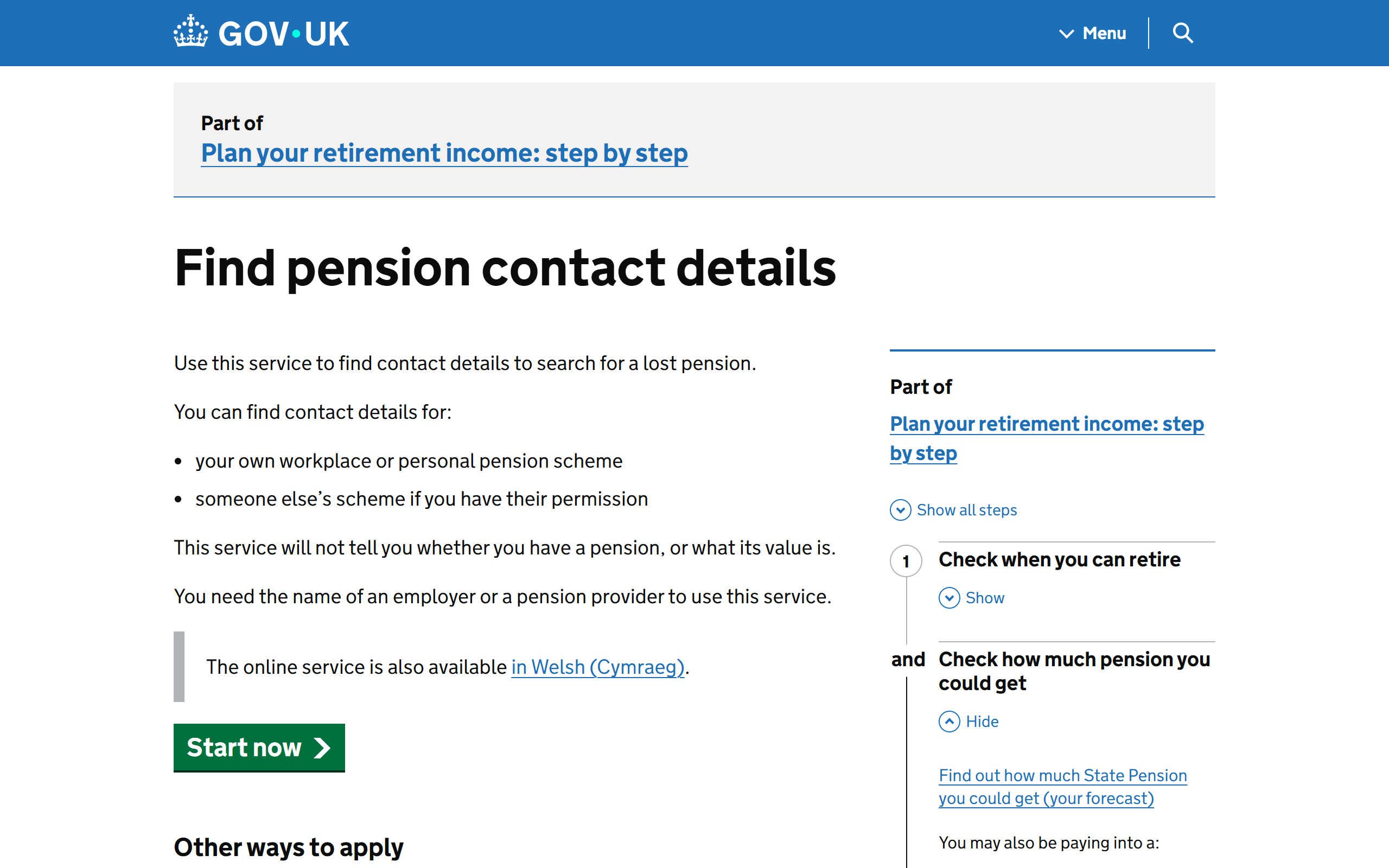
- Old or forgotten pensions: from previous employers (use the Pension Tracing Service if you have lost track)
- Property: estimated current market value of your home and any other property
- Vehicles: realistic resale value, not what you paid
- Crypto: current market value
- Business equity: your stake in any private business, valued conservatively
- Valuables: only items genuinely worth selling - art, watches, jewellery you would actually liquidate
Do not include the contents of your wardrobe. Do not include your record collection unless you genuinely have rare pressings worth selling. The rule is simple: if you would not bother to sell it, do not list it.
Valuing Awkward Assets
A few categories trip people up. Use these rules:
- Property: check Rightmove or Zoopla for recent sold prices on similar homes nearby. Take the lower end. Estate agent valuations are aspirational, sold prices are real.
- Cars: check We Buy Any Car or Auto Trader for the model, year, and mileage. Subtract a bit to stay realistic.
- Pensions: log into each provider and use the transfer value, also called the cash equivalent transfer value (CETV) for defined benefit schemes. For defined contribution pensions, just take the pot value shown on the dashboard.
If you have a defined benefit pension and getting a CETV is a faff, use 20 times the annual pension you have accrued so far as a rough proxy. It will not be perfect, but it captures the right order of magnitude.
Step 2: List Your Liabilities
A liability is anything you owe. Be ruthless here. The temptation is to soften the picture by leaving things out. Resist it.
- Mortgage: outstanding balance, not the original loan amount
- Credit cards: total balance, not the minimum payment
- Personal loans: outstanding balance
- Car finance: PCP, HP, or lease balance owed
- Buy now pay later: yes, this counts. Klarna, Clearpay, the lot
- Overdrafts: any balance you are currently in
- Student loans: see the next section, this one is different
If a debt is owed, it goes on the list. The total of all this is your liabilities figure.
Should You Include UK Student Loans?
This is the most common net worth question in the UK, and the answer is: it depends.
UK student loans are not really loans in the traditional sense. They are a graduate tax with a 30-year time limit. If you are on Plan 2, Plan 5, or the postgraduate plan, the loan is written off after 30 years (or 40 for newer plans), and most graduates will never repay the full balance. The "debt" on your statement is a number, but it is not behaving like other debt.
A reasonable approach: if you are confident you will repay the full balance because you earn well above the threshold, treat it as a normal liability. If you are clearly not going to repay it before write-off, exclude it from your net worth and treat the deductions on your payslip as a tax. Tracking it both ways for a few months is fine.
Step 3: Do the Maths
Total Assets minus Total Liabilities equals Net Worth.
That is it. The figure is your net worth as of today.
Worked example:
- Cash and savings: £8,000
- ISA: £24,000
- Pension: £62,000
- Property: £310,000
- Total assets: £404,000
- Mortgage: £215,000
- Credit card: £1,200
- Total liabilities: £216,200
- Net worth: £187,800
If the number is lower than you expected, do not panic. The whole point is to start from the truth. If it is higher, do not get cocky. The next exercise is to look at where it actually is.
Step 4: Look at the Composition
The single number is the headline. The composition is the story.
Two people with the same £200,000 net worth can have wildly different financial situations. One has £180,000 in property equity and £20,000 in liquid investments. The other has £20,000 in property equity and £180,000 in a pension. The first person is house-rich and cash-poor. The second is set up for early retirement.
Look at your own breakdown and ask:
- How much is in liquid, accessible assets? Cash, ISAs, GIA. This is what you can actually spend without selling your home or waiting until 57.
- How much is locked in pensions? Excellent for retirement. Useless for buying a kitchen.
- How much is in property equity? Fine, but you cannot eat the brickwork. Property equity is wealth that does not pay you anything until you sell or remortgage.
- What share is debt? A high gross asset figure with high debt is fragile. A lower asset figure with no debt is often more resilient.
This is where net worth becomes useful for actual decisions. If your liquid savings are thin, that is your next priority. If your pension is small for your age, that is the lever to pull. The composition tells you what to do next.
Step 5: Track It Over Time
A single net worth calculation is a snapshot. The real value comes from doing it again. And again.
Recalculate every quarter. Pick a date you will remember (the first of January, April, July, October works well) and do the whole exercise. It takes about 20 minutes once you have the spreadsheet set up. Save each snapshot.
Within a year you will see something most people never get to see: a clear, unsentimental picture of whether your wealth is actually growing. Not whether your salary went up. Not whether the markets had a good month. Whether the underlying number that captures your real financial position is moving in the right direction.
If you want to skip the spreadsheet, our free net worth tracker does the maths and saves your history automatically. The tool is fine. The habit is what matters.
What Counts as a Good Net Worth?
People love benchmarks. Here are some that are slightly less arbitrary than most.
A common rough rule, attributed to The Millionaire Next Door, is that your expected net worth is your age multiplied by your pre-tax income, divided by ten. A 35-year-old earning £50,000 has an expected net worth of £175,000 by that formula. The book argues that anyone significantly above this is doing well, and anyone significantly below has some catching up to do.
Treat this with caution. The formula was built for a different country, a different era, and a different housing market. Younger people, anyone who has had an expensive education, and anyone who entered the property market in the last five years will struggle to hit it without inheriting money. It is a starting point, not a verdict.
A more useful benchmark is your own number from a year ago. If it is moving up, you are doing the right things. If it is flat or falling without a good reason (paying off a chunk of mortgage, a market crash you have not panicked through), something needs adjusting. If you do want a national reference point, our UK net worth comparison by age shows where you sit against ONS data for your age band.
Frequently Asked Questions
How often should I calculate my net worth?
Quarterly is the sweet spot. Monthly is too often: short-term market noise will dominate, and you will start reacting to it. Annually is too rare: you lose the early signal when something is going wrong. Four times a year gives you a clear trend without making you anxious about week-to-week swings.
Should I include my partner's assets?
If your finances are genuinely combined (joint mortgage, joint accounts, you make decisions together) then a household net worth is usually more useful than two separate numbers. If your finances are kept separate, calculate your own. Couples often find it helpful to calculate both: a personal number and a joint one.
Do I include my emergency fund?
Yes. Cash savings of any kind are an asset. Just keep them in their own line so you can see what is liquid and what is not. If you do not yet have one, our UK emergency fund guide covers how much to keep and where to put it.
What about the value of my furniture and electronics?
Skip it. Unless you are planning to sell your sofa, it is not really an asset for net worth purposes. The exception is genuinely valuable items (a piano, a watch collection, art) that you would consider selling.
Is a high net worth the same as being financially independent?
No. Financial independence is when your investment income covers your expenses. You can have a high net worth and not be financially independent if most of it is locked in property or a pension you cannot access. The size of the number matters, but so does its composition. The threshold that actually matters for early retirement is your FIRE number.
What is the average net worth in the UK?
According to the Office for National Statistics' Wealth and Assets Survey, median household net wealth in Great Britain is around £293,000, but the distribution is wildly uneven. The average masks huge variation by age, region, and whether the household owns property. Your own trend matters more than where you sit on a national chart.
Further Reading:
The Millionaire Next Door - Stanley & Danko - The original source of the age-times-income net worth formula and the most quoted study of how ordinary earners actually build wealth. (Affiliate link - we may earn a small commission at no extra cost to you.)
I Will Teach You To Be Rich - Ramit Sethi - The clearest practical playbook for setting up the accounts your net worth statement will tally up: ISA, pension, current account, savings. (Affiliate link - we may earn a small commission at no extra cost to you.)
Prefer to watch?
We turn these money breakdowns into short videos
A few a week, plain-English UK money. If you would sooner watch than read, follow along:
Enjoying the content?
If this site has been useful, a coffee goes a long way.
Browse more articles
Browse all