





Credit Score UK: How to Check, Read, and Improve Yours
A few hundred points on your credit file is roughly 1% on your mortgage rate. On a £250,000 25-year loan that gap is £40,000 of real money.
Cite this article
Freedom Isn't Free (2026) Credit Score UK: How to Check, Read, and Improve Yours. Available at: https://freedomisntfree.co.uk/articles/credit-score-uk-guide (Accessed: 23 August 2026).
Italicise the article title in your bibliography. Accessed date set to today.
TLDR
- Three UK credit reference agencies score you separately: Experian, Equifax, and TransUnion. Lenders rarely use just one
- The biggest score drivers are payment history, credit utilisation, account age, and how often you apply for new credit
- You can check all three for free via Experian (direct), ClearScore (Equifax), and Credit Karma (TransUnion)
- Improving a damaged score takes 3-12 months of consistent on-time payments and lower utilisation, not one clever trick
UK credit reference agencies and where to check for free
| Agency | Score range | Excellent above | Free via |
|---|---|---|---|
| Experian | 0-999 | 881 | Experian Free |
| Equifax | 0-1000 | 811 | ClearScore |
| TransUnion | 0-710 | 628 | Credit Karma |
Each agency holds different lender data. Lenders rarely use just one. Build all three.
Credit Score UK: How to Check, Read, and Improve Yours
Your credit score UK lenders pull when you apply for a mortgage, a credit card, or even a phone contract is one of the most consequential numbers in your financial life. A few hundred points of difference can mean a 1% gap on a mortgage rate, which over 25 years on a £250,000 loan is roughly £40,000.
This guide covers what a credit score actually is, the three UK credit reference agencies, what genuinely moves the number, and the practical steps to lift a damaged score within 6-12 months.
Contents
- What is a credit score?
- The three UK credit reference agencies
- How to check your credit score for free
- What actually affects your credit score
- How to improve a UK credit score
- Credit score myths to ignore
- Frequently asked questions
What Is a Credit Score?
A credit score is a number a credit reference agency calculates from the data on your credit report. It tries to predict how likely you are to pay back what you borrow.
Your credit report is the underlying file. It lists every credit account you have or have had, your payment history on each, hard credit searches, electoral roll registration, recent court judgments, and a few other signals. The score is a summary; the report is the source of truth. Lenders look at both.
There is no universal UK credit score. Each of the three credit reference agencies (CRAs) calculates its own, on its own scale. A lender then runs their own internal scoring model on top of the agency report, which may give a completely different result.
The Three UK Credit Reference Agencies
Three CRAs hold UK credit data:
- Experian: scores 0-999. Above 881 is "excellent".
- Equifax: scores 0-1000. Above 811 is "excellent".
- TransUnion: scores 0-710. Above 628 is "excellent".
The data each agency holds about you can differ because not every lender reports to all three. A credit card might appear on your Experian file but not your TransUnion one. This is why a mortgage application that gets rejected can sometimes be approved by a different lender pulling a different agency.
When applying for credit, assume the lender uses whichever agency makes you look worst. Build all three.
How to Check Your Credit Score for Free
You can check each of the three for free, repeatedly, without any impact on your score:
- Experian: free statutory report at experian.co.uk, or a free score and basic monitoring via Experian Free
- Equifax: free score and basic report via ClearScore
- TransUnion: free score and report via Credit Karma
Checking your own credit report is a "soft search" and never affects your score, regardless of how often you do it. Only "hard searches" by lenders during credit applications affect the score.
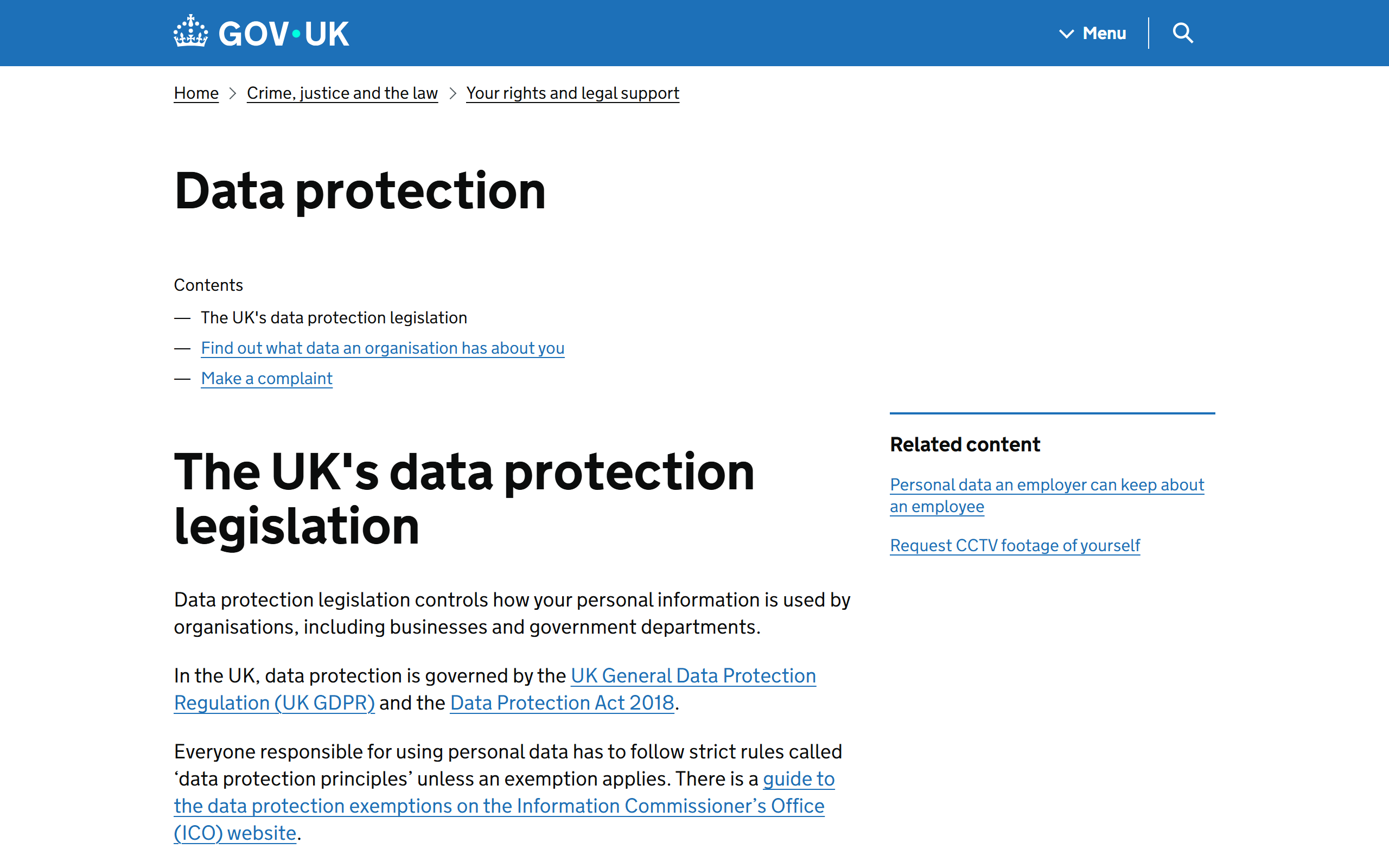
You are also legally entitled to a free statutory credit report from each agency once a year. This sits within your wider right of access to your personal data, enforced by the ICO's guidance on credit reference agency rights. Use it if you suspect errors or fraud.
What Actually Affects Your Credit Score
The agencies do not publish their exact algorithms, but the general weighting is well understood:
Payment history (~35% of the score)
Whether you pay on time, every time, on every account. One missed payment can drop a good score by 50-100 points. A County Court Judgment (CCJ) or default stays on your file for 6 years and is the single most damaging item that can appear.
Credit utilisation (~30%)
The percentage of your available credit limit that you are using. If you have £10,000 of total credit limit across cards and you owe £4,000, your utilisation is 40%. Lower is better. Above 30% utilisation drags the score; below 10% lifts it.
This is one of the fastest things to fix. Paying down credit card balances or asking for a credit limit increase (carefully) can move a score within one statement cycle.
Length of credit history (~15%)
Older accounts with clean payment records help. This is why closing your oldest credit card is often a mistake - even if you don't use it, the account age boosts your score.
Credit mix and new credit (~10% each)
A mix of credit types (credit card, mortgage, car finance) scores marginally better than just one type. Frequent applications for new credit (multiple hard searches in a short window) drag the score.
Buy now, pay later accounts have started appearing on UK credit files since 2025 and can be a useful tool for thin files - but they can also damage the score if you miss payments, the same as any other credit account.
Other signals
- Electoral roll registration: simple, free, big impact on a thin file
- Address stability: living at the same address for 3+ years helps
- Bankruptcies, IVAs, defaults, CCJs: deeply damaging, last 6 years
- "Linked" people: if you have a joint account or financial association with someone else, their credit problems can affect you
How to Improve a UK Credit Score
The order, from most-impactful to least:
- Register on the electoral roll. Free, takes 5 minutes at gov.uk. Often worth 50+ points instantly on a thin file.
- Pay down credit card balances to under 30% utilisation. The score moves at the next statement date.
- Set up direct debits for every credit account. The single most reliable way to never miss a payment.
- Don't apply for credit you don't need. Each hard search drags the score for ~6 months. Consolidate applications - if you need a card, apply once after checking eligibility tools that use soft searches.
- Keep old accounts open. Account age helps. If you don't use a card, keep it active with a small recurring payment (a £5/month subscription) and clear it monthly.
- Dispute errors on your credit file. Wrong addresses, accounts you don't recognise, missed-payment markers from when the lender's direct debit failed at their end - all of these can be challenged free of charge. Each agency has a dispute process.
- Take out a credit-builder card if you have a thin file. A small limit, low-rate card used for £20/month and paid in full builds a clean payment history fast. Tymit, Capital One, and Vanquis all have credit-builder products.
- Wait. Time fixes most credit problems. A default falls off your file 6 years after the date it was registered, regardless of whether it was paid.
A damaged score from a single missed payment can recover in 3-6 months. A score damaged by a default or CCJ takes the full 6-year run-off. There is no service that can legally remove accurate negative items from your file - companies that claim to do this either dispute everything (briefly hiding items, which then return) or charge for things you can do free.
Credit Score Myths to Ignore
- "Checking your own score lowers it". False. Soft searches by you are invisible to lenders.
- "You need to be in debt to build credit". Partially true. You need active credit accounts that report to the agencies, but using £10/month and paying it off monthly counts.
- "Closing cards improves your score". Usually false. Closing old accounts cuts your average account age and reduces total available credit (raising utilisation on remaining cards).
- "There's a UK credit blacklist". False. Each lender makes its own decisions; there is no shared "yes/no" list.
- "Paying with cash builds credit". False. The credit agencies don't see cash transactions. You build credit by using and repaying credit, not by avoiding it.
Frequently Asked Questions
Why are my credit scores different at Experian, Equifax, and TransUnion?
Because each agency uses its own scoring model and not every lender reports to all three. A card that appears on your Experian file might be missing from TransUnion's. Different scores from different agencies are normal and not a sign of error.
How long do missed payments stay on a UK credit report?
Six years from the date of the missed payment. Defaults, CCJs, and IVAs also stay for six years from the date they were registered, regardless of when (or whether) you settle them. After six years they drop off automatically.
Does paying off a credit card build credit faster than not having one?
Yes. A credit card used for small monthly amounts and cleared in full builds a positive payment record. The same money spent on a debit card builds nothing on your credit file. Credit-builder cards exist precisely for thin files where this is the gap.
Will my credit score affect my mortgage rate?
Usually yes. Lenders categorise applicants into rate tiers - "prime", "near-prime", "subprime" - and the rate offered varies by tier. The difference between the best and worst tiers on a 25-year mortgage can be 1-2% per year, which compounds to tens of thousands of pounds.
How long does it take to fix a bad credit score?
Three to six months for damage from missed payments, if you bring everything up to date and reduce utilisation. Six full years for damage from a default or CCJ - that is when the negative item drops off the file. There is no faster legitimate way.
Prefer to watch?
We turn these money breakdowns into short videos
A few a week, plain-English UK money. If you would sooner watch than read, follow along:
Enjoying the content?
If this site has been useful, a coffee goes a long way.
Browse more articles
Browse all