






Stamp Duty Calculator UK: How Much Will You Pay?
Your first-time-buyer stamp duty relief ends at £500,000. Stretch £11k over the line and the entire purchase gets repriced. The cliff edge nobody warns you about before you offer.
Cite this article
Freedom Isn't Free (2026) Stamp Duty Calculator UK: How Much Will You Pay?. Available at: https://freedomisntfree.co.uk/articles/stamp-duty-calculator-guide (Accessed: 13 June 2026).
Italicise the article title in your bibliography. Accessed date set to today.
TLDR
- Standard SDLT bands in 2026/27: 0% to £125k, 2% £125k-£250k, 5% £250k-£925k, 10% £925k-£1.5m, 12% above
- First-time buyers pay 0% up to £300,000 and 5% from £300,001-£500,000 - but only on properties up to £500,000
- Second properties carry a 5% surcharge on every band, raised from 3% in October 2024
- Use our [stamp duty calculator](/tools/stamp-duty-calculator) to model your specific purchase including the surcharge
SDLT bands for England and NI, 2026/27
| Band | Standard rate | First-time buyer | + 2nd home |
|---|---|---|---|
| £0 - £125k | 0% | 0% | 5% |
| £125k - £250k | 2% | 0% | 7% |
| £250k - £500k | 5% | 5% (£300k+) | 10% |
| £500k - £925k | 5% | No relief | 10% |
| £925k - £1.5m | 10% | No relief | 15% |
First-time buyer relief vanishes at £500,001. The £500k cliff edge costs a buyer £5,000 for £1 of extra price.
Stamp Duty Calculator UK: How Much Will You Pay?
For most UK property buyers, Stamp Duty Land Tax is the largest single transaction cost they ever pay - more than legal fees, surveyor reports, and removal costs combined. Get it wrong and you can budget tens of thousands too low for a purchase. The good news is that the calculation itself is mechanical: the stamp duty calculator does it in seconds once you have your purchase price and a few details about your situation.
This guide walks through the 2026/27 SDLT rates, the first-time buyer relief, the second-home surcharge, and worked examples for the typical purchase scenarios.
Contents
- How Stamp Duty works
- SDLT bands for 2026/27
- First-time buyer relief
- The second-home surcharge
- Worked examples
- Scotland and Wales: different systems
- Frequently asked questions
How Stamp Duty Works
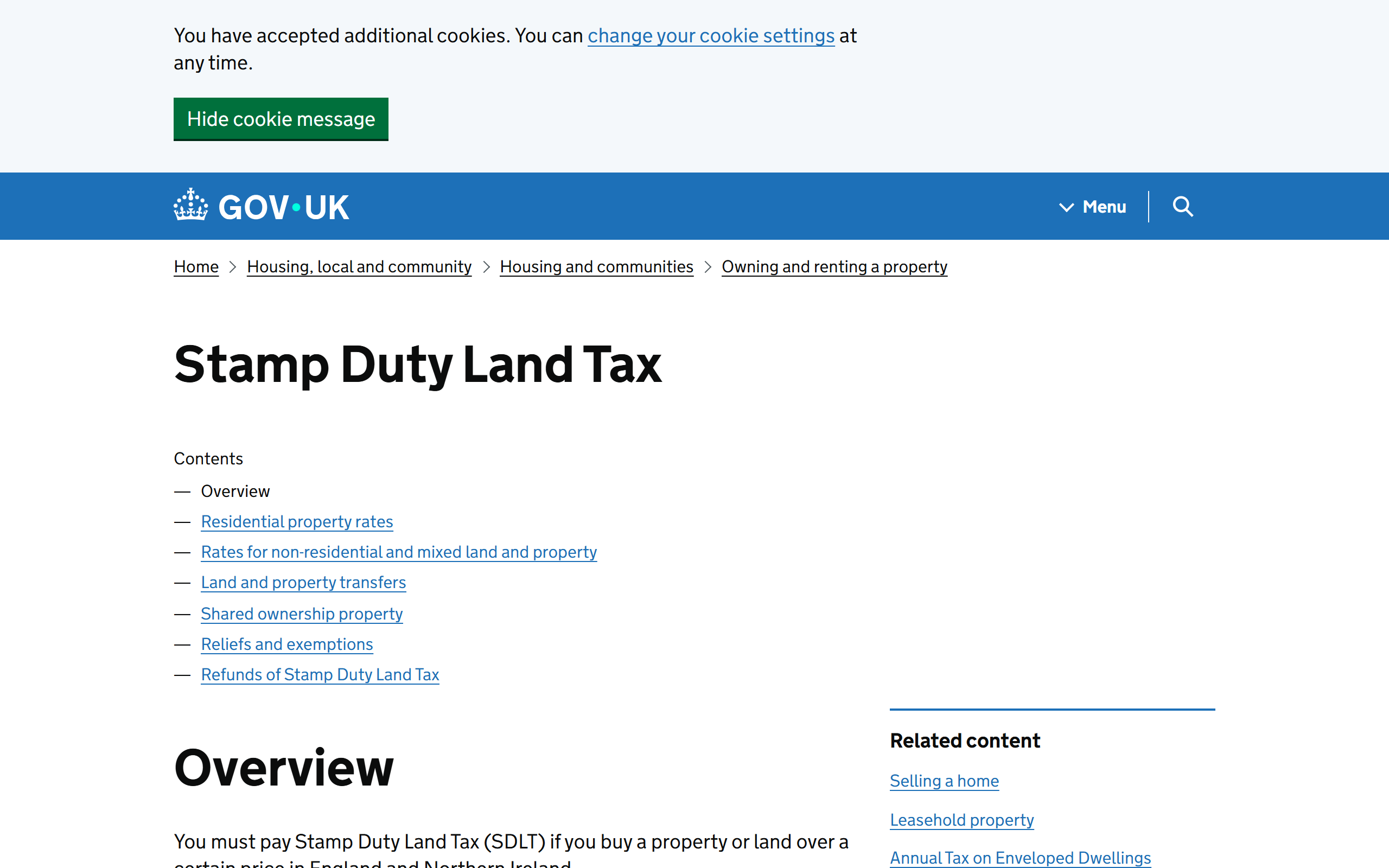
SDLT is a tax on property transactions in England and Northern Ireland. It is paid by the buyer, due 14 days after completion, and usually handled automatically by your solicitor or conveyancer. The tax applies in bands - you pay each band's rate only on the portion of the purchase price within that band, similar to income tax.
A £400,000 purchase does not get taxed at one rate on the full £400,000. The first £125,000 is taxed at 0%, the next £125,000 at 2%, and the remaining £150,000 at 5%. The total is the sum of those slices, not a single rate applied to the whole price.
SDLT Bands for 2026/27
Standard rates for a single home, no first-time buyer relief, no surcharge:
| Band | Rate |
|---|---|
| £0 - £125,000 | 0% |
| £125,001 - £250,000 | 2% |
| £250,001 - £925,000 | 5% |
| £925,001 - £1,500,000 | 10% |
| Above £1,500,000 | 12% |
The £125,000 nil-rate threshold has been at this level since 2014, with the 2022 stamp duty holiday and 2024 reform reverting the band to its long-running default. There is no current government plan to raise it.
First-Time Buyer Relief
If you have never owned a property anywhere in the world (not just the UK), and the property you are buying is for your main home, First-Time Buyer Relief applies on properties up to £500,000.
First-time buyer rates:
| Band | Rate |
|---|---|
| £0 - £300,000 | 0% |
| £300,001 - £500,000 | 5% |
| Above £500,000 | No relief - standard rates apply on the whole price |
The cliff at £500,000 is brutal. A first-time buyer purchasing for £499,999 pays £9,999 of SDLT. The same buyer purchasing for £500,001 pays £15,000 (the standard rates apply to the full price - they do not start at £125k with relief above). One pound makes £5,000 of difference. Negotiate down through that line if you are close.
Both buyers in a joint purchase must qualify as first-time buyers for the relief to apply. If one party has previously owned (even abroad, or even briefly), no relief is available.
The Second-Home Surcharge
When you buy a property and you (or your spouse) already own another property anywhere in the world, you pay a 5% surcharge on top of the standard rates.
The surcharge applies to:
- Buy-to-let purchases
- Holiday homes
- Second main residences (e.g. a city flat for the working week)
- Properties bought through a limited company
The surcharge does not apply if:
- You are replacing your main residence (selling one and buying another, even if there is a gap in timing - you can claim the surcharge back if you sell the old home within 3 years of buying the new)
- The property is below £40,000
The 5% rate has been in place since October 2024, raised from 3%. It is one of the largest single additions to the cost of buy-to-let in 2026 and changes the maths on second properties significantly.
Worked Examples
Example 1: First-time buyer at £450,000
- £0 - £300,000: 0% = £0
- £300,001 - £450,000: 5% × £150,000 = £7,500
- Total SDLT: £7,500
Example 2: Standard purchase at £450,000
- £0 - £125,000: 0% = £0
- £125,001 - £250,000: 2% × £125,000 = £2,500
- £250,001 - £450,000: 5% × £200,000 = £10,000
- Total SDLT: £12,500
Example 3: Buy-to-let at £250,000 (5% surcharge)
- £0 - £125,000: 5% × £125,000 = £6,250
- £125,001 - £250,000: 7% × £125,000 = £8,750
- Total SDLT: £15,000 (6% effective rate)
Example 4: Main residence move at £750,000 (no surcharge if replacing)
- £0 - £125,000: 0% = £0
- £125,001 - £250,000: 2% × £125,000 = £2,500
- £250,001 - £750,000: 5% × £500,000 = £25,000
- Total SDLT: £27,500
Example 5: First-time buyer at £510,000 (no relief, the cliff edge)
- Same calculation as Example 2 but on £510,000
- Total SDLT: £15,500
- Same buyer at £499,000 would pay £9,950 - £5,550 cheaper for an £11,000 lower price
Scotland and Wales: Different Systems
England and Northern Ireland use SDLT. Scotland and Wales have their own equivalent taxes:
- Scotland: Land and Buildings Transaction Tax (LBTT). Different bands, different thresholds, generally less generous on lower-value properties and more generous at the very top.
- Wales: Land Transaction Tax (LTT). Similar structure, with no LTT below £225,000 for residential purchases.
If you are buying in Scotland or Wales, the stamp duty calculator is for England and Northern Ireland. Use the equivalent Scottish or Welsh calculator on Revenue Scotland or the Welsh Revenue Authority sites.
Frequently Asked Questions
How is stamp duty calculated in the UK?
In bands. Each band's rate applies only to the slice of the purchase price within that band, not the full price. A £400k purchase is the sum of 0% × £125k + 2% × £125k + 5% × £150k = £10,000.
Do first-time buyers pay any stamp duty?
Not on the first £300,000. From £300,001 to £500,000, first-time buyers pay 5%. Above £500,000, no first-time buyer relief is available and standard rates apply to the entire purchase price.
What is the stamp duty surcharge for second homes?
5% on every band, on top of the standard rates. A £250,000 second home incurs £15,000 in SDLT versus £2,500 for the same property as your only home. The surcharge is reclaimable if you sell your old main residence within 3 years.
Can I avoid stamp duty by buying through a limited company?
No - companies pay 5% surcharge on every band of every residential purchase, plus the standard SDLT. Limited-company buy-to-let dodges Section 24 (full mortgage interest deduction) but pays more SDLT, not less. The structure is a tax planning trade-off, not a stamp duty escape.
When is stamp duty due?
14 days after completion. Your conveyancer or solicitor normally handles the SDLT return and payment as part of completion, so you pay it at the same time as your other completion costs. A late return triggers HMRC penalties starting at £100.
Enjoying the content?
If this site has been useful, a coffee goes a long way.
Browse more articles
Browse all