






Side Hustle Tax UK: The £1,000 Trading Allowance
eBay and Vinted now report your sales straight to HMRC. There is a £1,000 line and a date in October most sellers have never heard of. Miss it and your first letter is a penalty.
Cite this article
Freedom Isn't Free (2026) Side Hustle Tax UK: The £1,000 Trading Allowance. Available at: https://freedomisntfree.co.uk/articles/side-hustle-tax-uk (Accessed: 23 August 2026).
Italicise the article title in your bibliography. Accessed date set to today.
TLDR
- The £1,000 trading allowance lets you earn £1,000 of casual self-employment income tax-free per year - no registration, no Self Assessment
- Above £1,000 of trading income you must register with HMRC by 5 October following the tax year of first earnings
- You can deduct the £1,000 allowance OR your actual expenses, whichever produces a lower taxable profit - not both
- Side income is taxed at your marginal rate on top of your day job, so a higher-rate earner with side income loses 40% plus 2-9% NI to HMRC
Side hustle marginal rate by total income, 2026/27
| Income band | Income tax | Class 4 NI | Combined |
|---|---|---|---|
| £12,571-£50,270 | 20% | 6% | 26% |
| £50,271-£100,000 | 40% | 2% | 42% |
| £100,001-£125,140 | 60% | 2% | 62% |
| Above £125,140 | 45% | 2% | 47% |
Side hustle profit stacks on top of your day-job income and is taxed at your marginal rate.
Side Hustle Tax UK: The £1,000 Trading Allowance
For UK workers earning extra income from a side hustle - eBay flipping, freelance writing, dog walking, Etsy crafts, weekend Uber, online tutoring - the side hustle tax UK rules are simpler than most people think, but the deadlines are unforgiving. This guide covers what counts as taxable, when you have to register, the £1,000 allowance that covers most casual sellers, and how to actually file a clean first Self Assessment.
Contents
- What HMRC counts as side hustle income
- The £1,000 trading allowance
- When you must register with HMRC
- Allowable expenses
- How tax is calculated on side income
- HMRC and the platform reporting rules
- Frequently asked questions
What HMRC Counts as Side Hustle Income
Most side income falls into one of three categories:
- Trading income: you are doing something with the intent to make a profit on a regular basis. Selling crafts on Etsy, writing on Substack with a paid tier, freelance design work, dog walking, repeat eBay flipping. Taxed under self-employment rules.
- Casual income: one-off or genuinely irregular sales. Selling an old guitar on Facebook Marketplace once. Generally not taxable as income, though if assets sold for over £6,000 of profit they can hit Capital Gains Tax.
- Property income: renting out a room (Rent a Room scheme allows up to £7,500 tax-free), holiday lets, BTL. Different rules and a separate tax allowance.
The distinction between casual sales and trading matters. HMRC uses the "badges of trade" test - frequency, profit motive, modification of goods, marketing - to decide if you are running a business. Selling a few unwanted items occasionally is not trading. Buying-to-resell on eBay 50 times a year almost certainly is.
The £1,000 Trading Allowance
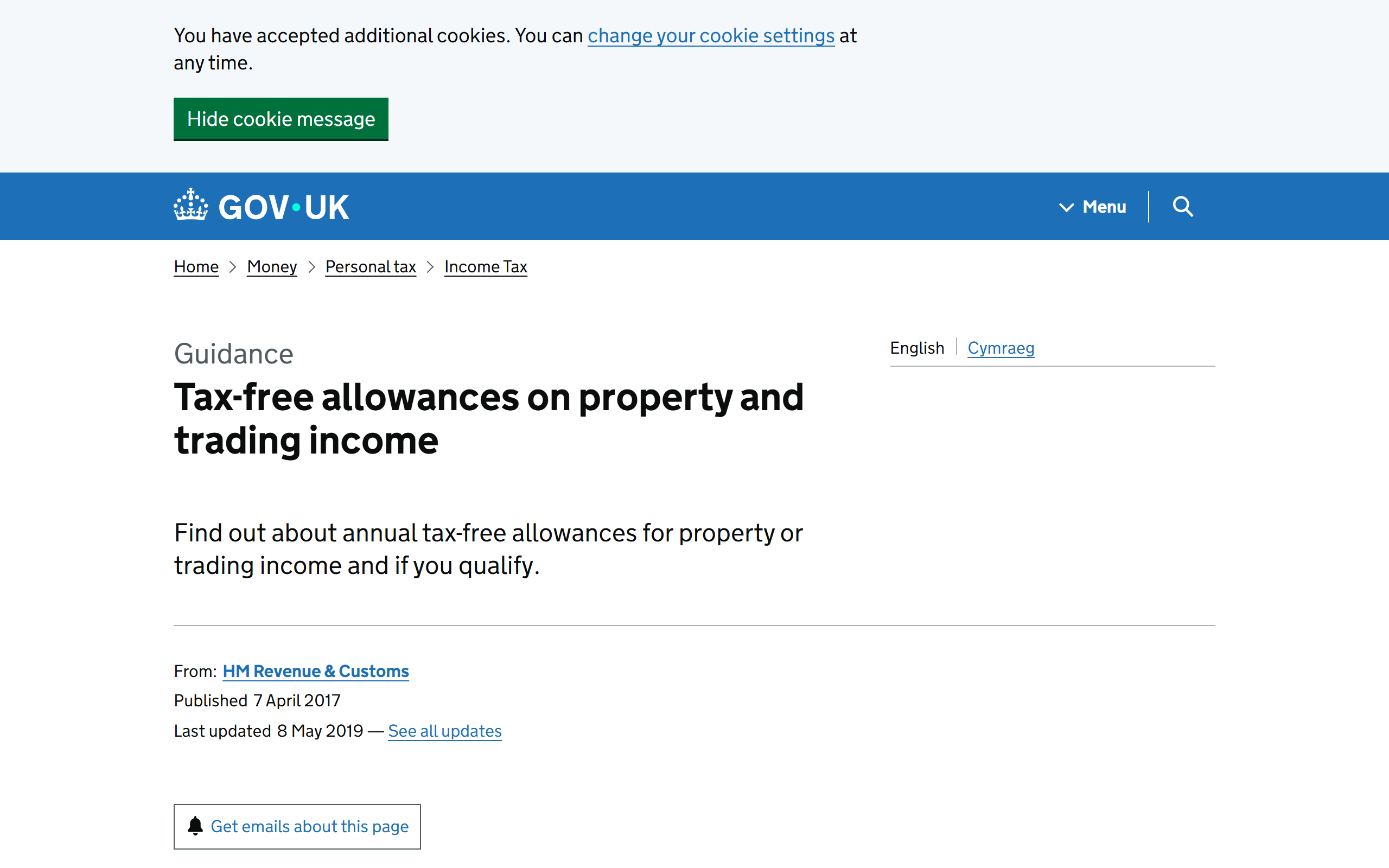
The trading allowance lets you earn up to £1,000 a year of self-employed/side hustle income tax-free, per tax year, without any obligation to register with HMRC or file Self Assessment.
How it works:
- Total trading income (gross sales, not profit) of £1,000 or less in a tax year: no tax, no registration, no Self Assessment
- Total trading income above £1,000: must register and file Self Assessment, with a choice on the return
If you choose to use the allowance on your return:
- You deduct the £1,000 allowance from your gross trading income before tax
- You cannot also deduct actual expenses
If you choose to deduct actual expenses instead:
- You report the full income and your real expenses
- You cannot also use the £1,000 allowance
Choose whichever is more favourable. If your expenses are less than £1,000, use the allowance. If your expenses are more than £1,000, deduct the actual expenses.
There is also a separate £1,000 property allowance covering casual rental income (e.g. occasional Airbnb), with the same logic.
When You Must Register with HMRC
If your gross trading income exceeds £1,000 in a tax year (6 April to 5 April), you must register for Self Assessment. The deadline is 5 October following the tax year of first earnings.
Example: you started selling on Etsy in November 2025 (the 2025/26 tax year). You crossed £1,000 of gross sales by January 2026. Register with HMRC by 5 October 2026 at the latest. Submit your first Self Assessment by 31 January 2027 (online) or 31 October 2026 (paper).
Late filing triggers penalties:
- £100 fixed penalty as soon as the 31 January deadline is missed
- £10 per day after 3 months, capped at 90 days (£900 maximum)
- 5% of tax due or £300 (whichever is higher) at 6 months late, and the same again at 12 months
Register via gov.uk/working-for-yourself using your Government Gateway login. Once registered, you will be sent a Unique Taxpayer Reference (UTR) which you will need every January.
Allowable Expenses
If you deduct actual expenses (rather than using the £1,000 trading allowance), legitimate side-hustle expenses include:
- Cost of goods sold: materials, postage, packaging, fees paid to selling platforms (eBay, Etsy, Vinted)
- Tools and equipment: capped at £1,000/year via the Annual Investment Allowance for most small businesses
- Use of home as office: HMRC simplified flat rates of £10-£26/month depending on hours worked, or actual proportional household costs (more complex but sometimes higher)
- Travel for business: 45p/mile for the first 10,000 miles in a tax year, 25p thereafter, if using your own car
- Software and subscriptions: domain hosting, design tools, accounting software
- Professional fees: accountant, business insurance
Personal use proportions matter. A £600 phone used 20% for business gives £120 deductible. A weekly takeaway is not a "business meal" because you happened to talk shop with someone.
Keep records for 5 years after the 31 January Self Assessment deadline of the relevant tax year. Receipts, bank statements, mileage logs. HMRC enquiries can go back several years.
How Tax Is Calculated on Side Income
Side hustle profit is added to your other taxable income. Your tax bill is calculated on the total, with side hustle profit effectively taxed at your marginal rate on top of your day job.
For 2026/27 marginal rates (England, Wales, Northern Ireland):
| Total income band | Income tax | Class 4 NI | Combined |
|---|---|---|---|
| £12,571 - £50,270 | 20% | 6% | 26% |
| £50,271 - £100,000 | 40% | 2% | 42% |
| £100,001 - £125,140 | 60% (incl. allowance taper) | 2% | 62% |
| £125,141 + | 45% | 2% | 47% |
Marginal tax rate on side hustle income, 2026/27
Side hustle profit stacks on top of your day-job income and is taxed at your marginal rate
Source: HMRC income tax rates 2026/27. NI primary threshold £12,570, upper earnings limit £50,270.
A higher-rate earner taking on a £5,000/year side hustle gives £2,100 of it to HMRC after tax and NI. A worker in the 60% trap gives ~£3,100 of every £5,000 of side income to HMRC unless they reduce ANI through pensions.
Side hustle profits also count towards the £125,140 additional-rate threshold and the £100,000 personal allowance taper, so a side hustle that pushes you over either threshold can have outsized tax effects.
HMRC and the Platform Reporting Rules
From January 2024, UK-engaged digital platforms (eBay, Vinted, Etsy, Airbnb, Uber, Deliveroo, Upwork, Fiverr) must report user transaction data to HMRC each year. The first reports were due in January 2025 covering 2024 activity, and HMRC has been actively cross-matching against Self Assessment registrations.
What this means in practice:
- HMRC sees your platform sales whether you declare them or not
- "Nudge letters" have already gone out to thousands of UK sellers in 2025
- Voluntary disclosure of past undeclared income is much cheaper than waiting for an enquiry
- If your gross platform sales have ever crossed £1,000 in a tax year and you have not registered, do it now
The £1,750 reporting threshold the platforms use for their reports is separate from the £1,000 tax threshold - HMRC may receive data on accounts above £1,750, but the tax obligation kicks in at £1,000.
Frequently Asked Questions
Do I need to declare my side hustle to HMRC?
If gross trading income exceeds £1,000 in a tax year, yes. Register for Self Assessment by 5 October following the tax year of first earnings, then file an annual Self Assessment return by 31 January. Below £1,000, no registration is required.
What is the £1,000 trading allowance?
A tax-free allowance for casual self-employment income. Gross trading income up to £1,000 per tax year is tax-free with no registration required. Above £1,000 you must register, but can still elect to deduct the £1,000 allowance from your taxable profit (instead of actual expenses).
How much tax will I pay on my side hustle?
Your marginal rate on top of your day job. A basic-rate worker pays 20% income tax + 6% Class 4 NI = 26% on side hustle profit. A higher-rate worker pays 42%. A worker in the £100k tax trap can pay 62% combined.
Can I claim expenses against my side hustle?
Yes - either the £1,000 trading allowance or your actual expenses, whichever is lower. Allowable expenses include cost of goods, postage, platform fees, business mileage at 45p/mile, simplified home-working costs, and proportional use of phone and internet. Keep receipts for 5 years.
Will HMRC find out about my eBay or Etsy sales?
Yes. From January 2024, UK digital platforms must report seller data to HMRC annually. The first reports covered 2024 activity. HMRC has been actively contacting unreported sellers since 2025. If your sales have crossed £1,000 in any past year, voluntary disclosure now is much cheaper than an HMRC enquiry later.
Prefer to watch?
We turn these money breakdowns into short videos
A few a week, plain-English UK money. If you would sooner watch than read, follow along:
Enjoying the content?
If this site has been useful, a coffee goes a long way.
Browse more articles
Browse all