





Income Protection vs Critical Illness UK: Which Do You Need?
Critical Illness Cover sounds like the policy you need. The cover everyone forgets pays out when the CIC claim gets denied on a narrow definition. Which one wins on the maths.
Cite this article
Freedom Isn't Free (2026) Income Protection vs Critical Illness UK: Which Do You Need?. Available at: https://freedomisntfree.co.uk/articles/income-protection-vs-critical-illness-uk (Accessed: 10 October 2026).
Italicise the article title in your bibliography. Accessed date set to today.
TLDR
- Income Protection pays a regular monthly income (typically 50-65% of salary) if you cannot work due to illness or injury, until recovery, retirement, or policy end
- Critical Illness Cover pays a one-off lump sum if you are diagnosed with a defined serious illness (cancer, heart attack, stroke, etc.)
- Income Protection wins on probability - long-term sickness is far more common than serious illness, and most CIC claims are denied for narrow definitions
- For working-age people without 12+ months of cash savings, Income Protection is one of the highest-value insurance products available; Critical Illness is largely optional
Income Protection vs Critical Illness Cover (35yo non-smoker)
| Policy | Cost / month | Payout | Best for |
|---|---|---|---|
| Income Protection (£30k/yr to 65) | £30 - £60 | Monthly income, as long as needed | Most working-age adults |
| Critical Illness Cover (£100k lump sum, 25-yr term) | £20 - £40 | One-off lump sum on diagnosis | Mortgage protection |
| Both combined | £50 - £100 | Stacked benefits | High mortgage + dependants |
Office worker, £50k salary. Always choose own-occupation IP over any-occupation.
Income Protection vs Critical Illness UK: Which Do You Need?
The two big "what if I get ill" insurance products in the UK pay out in completely different ways. Income Protection replaces your monthly income while you are too unwell to work. Critical Illness Cover pays a one-off lump sum if you are diagnosed with a defined serious illness. The marketing for both is everywhere; the actual usefulness varies enormously.
This guide covers how each policy works in practice, what real-world claim rates look like, the trade-offs in plain English, and which one (if either) actually deserves a place in your monthly budget.
Contents
- How Income Protection works
- How Critical Illness Cover works
- Real claim probabilities
- Cost comparison
- Which one should most people choose?
- Provider checklist
- Frequently asked questions
How Income Protection Works
Income Protection (IP) pays a regular monthly income if you cannot work due to illness or injury. The standard structure:
- Benefit: typically 50-65% of your gross salary (insurers cap to discourage staying off work indefinitely)
- Deferred period: typically 4, 13, 26, or 52 weeks before the policy starts paying. Longer deferred period = cheaper premiums.
- Claim period: pays until recovery, retirement, or end of policy term, whichever is sooner.
- Definition of disability: best policies use "own occupation" - covered if you can't do your job. Worse policies use "any occupation" - only covered if you can't do any job, which is much harder to qualify for.
A claim works like a salary replacement. The insurer assesses, agrees, and starts paying monthly on whatever schedule you agree. They typically reassess periodically and will stop paying if they can argue you have recovered enough to return to your occupation.
Premiums depend on age, sex, occupation, smoking status, deferred period, and how long until your chosen end date. For a 35-year-old, non-smoking office worker, a £30,000/year benefit (60% of £50k salary) with a 13-week deferred period typically costs £30-£60/month.
How Critical Illness Cover Works
Critical Illness Cover (CIC) pays a one-off, tax-free lump sum if you are diagnosed with a defined serious illness. Common definitions cover:
- Most cancers (with specific exclusions for very early-stage or treatable forms)
- Heart attack of specified severity
- Stroke with permanent symptoms
- Multiple sclerosis
- Major organ transplant
- Major head trauma
- Several others depending on the policy
The lump sum is whatever you choose at policy outset - typically £50,000-£500,000. The point is to clear a mortgage, fund medical care, or replace lost income for a long recovery. Premiums depend on age, sex, smoking status, family history, and the lump sum chosen.
Critical Illness has a reputation for declining claims because the policy definitions are narrow. Cancer covered only if it has reached a specific staging; heart attack covered only with elevated cardiac enzyme markers; stroke covered only if symptoms persist beyond 24 hours. Many real diagnoses do not meet the policy definition. Always read the specific illness definitions before buying, not the marketing summary.
Real Claim Probabilities
The two policies have very different real-world hit rates.
Long-term sickness is common
UK Office for National Statistics data shows around 1 in 4 working-age people will have a period of sickness lasting 6+ months at some point in their working life. Most are stress, depression, anxiety, back problems, and other long-term but recoverable conditions. Income Protection typically covers all of these (provided the diagnosis is genuine and the deferred period elapses).
UK Income Protection providers report claim acceptance rates of 90%+. The Association of British Insurers (ABI) publishes industry claim data; the major providers (LV=, Aviva, Royal London, Vitality, Legal & General) report similar acceptance rates above 88%.
Critical Illness is rarer and more contested
Specific named-illness diagnoses below state retirement age are statistically rarer than long-term sickness. Industry claim acceptance for Critical Illness Cover is typically 92-95%, but that statistic hides the fact that many would-be claims are declined at the assessment stage before they become "claims" at all.
Common reasons for CIC declines:
- Cancer not severe enough to meet policy definition
- Heart attack troponin levels below required threshold
- Stroke symptoms resolved within 24 hours
- Pre-existing condition misdisclosure during application
- Illness not on the policy's covered list
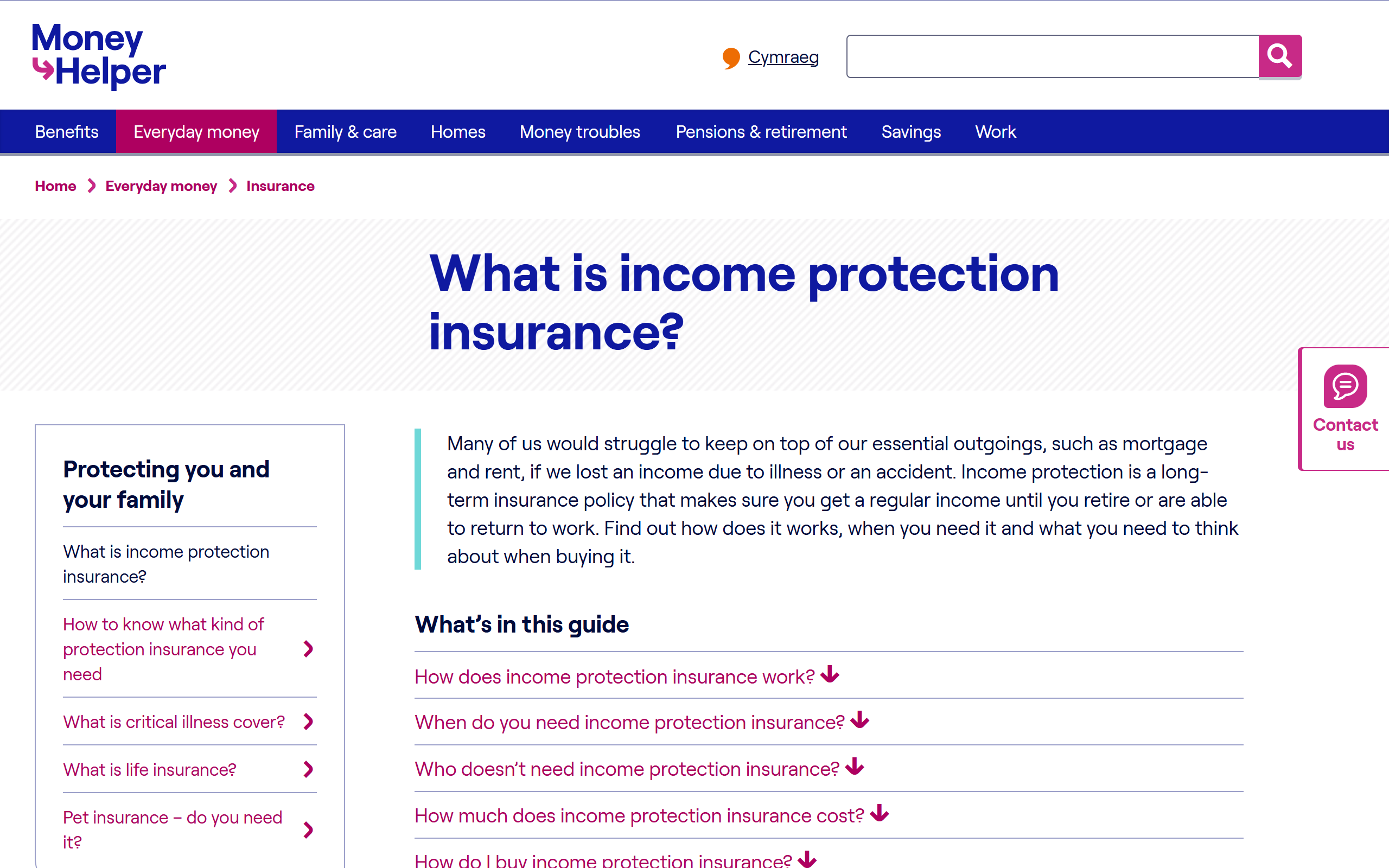
The dispute volume around CIC explains why Income Protection generally has stronger consumer-advocacy approval. MoneyHelper's "What is income protection insurance?" guide and most independent UK financial advisers recommend Income Protection over Critical Illness for working-age adults.
Cost Comparison
For a representative profile (35-year-old, non-smoker, office worker, £50,000 salary):
| Policy | Cost | What it pays |
|---|---|---|
| Income Protection (£30,000/year, 13-wk deferred, to age 65) | £30-60/month | Up to £30k/year for as long as needed |
| Critical Illness Cover (£100,000 lump sum, 25-year term) | £20-40/month | One-off £100k on qualifying diagnosis |
| Both combined | £50-100/month | Stacked benefits |
The numbers vary by provider and personal factors, but the rule of thumb holds: Income Protection costs roughly £30-60/month for the typical working professional and replaces your salary if you cannot work. Critical Illness Cover costs roughly £20-40/month for £100k of lump sum benefit on narrow defined illnesses.
Which One Should Most People Choose?
For most UK working-age adults: Income Protection is the higher-value buy if you have to choose one.
The reasoning:
- The probability of long-term sickness is meaningfully higher than the probability of a defined critical illness diagnosis before retirement.
- Income Protection covers the full universe of conditions that prevent you working. CIC only covers the specifically named ones.
- Replacing income for years of recovery is more financially significant than a one-off lump sum that runs out, unless you specifically need the lump sum for a mortgage.
- Industry claim acceptance is higher for IP than CIC.
CIC makes sense when:
- You have a mortgage you specifically want cleared on a serious diagnosis (so the lump sum has a clear use)
- Family history of specific covered illnesses (cancer, heart conditions) makes the named-illness model match your risk profile
- You already have IP and want a layer of cash for one-off costs
Skip both when:
- You have 12+ months of essential expenses in cash, plus state and employer sick pay benefits, plus a partner's income that can absorb your loss for a year
- You are within a few years of retirement (the cost of cover rises sharply with age)
- Your employer already provides generous group income protection (many large employers do)
Your existing employer benefits often include statutory sick pay (SSP, around £123.25/week for up to 28 weeks - check the current rate on GOV.UK) and possibly Group Income Protection. Check your employer's benefits before buying private cover - many UK employers cover the gap from the end of SSP to either a fixed period or to age 65.
Provider Checklist
When comparing IP or CIC quotes, check:
- Definition of disability for IP: "own occupation" is the gold standard. Anything else is materially weaker.
- Reviewable vs guaranteed premiums: guaranteed costs more but the price never rises during the term. Reviewable premiums look cheap initially but the insurer can raise them.
- Indexation: IP benefits paid out for years should rise with inflation, otherwise the real value erodes.
- Pre-existing condition disclosure: declare everything. A non-disclosed pre-existing condition is the most common reason claims are denied.
- Waiver of premium: ensures premiums stop being charged once you are claiming.
- Provider financial strength: stick to large UK insurers with FSCS protection. Insurance is a multi-decade contract and you want the company to still exist when you claim.
For more on the broader insurance approach, insurance for FIRE UK covers the wider question of which policies to keep through retirement and which to drop as your portfolio grows.
Frequently Asked Questions
What is the difference between Income Protection and Critical Illness Cover?
Income Protection pays a monthly income while you cannot work due to illness or injury, regardless of the specific cause, until recovery or retirement. Critical Illness Cover pays a one-off lump sum if diagnosed with a defined serious illness from a specific list. IP is broader; CIC is narrower but pays as a lump sum.
Which is cheaper, Income Protection or Critical Illness?
Critical Illness Cover is usually cheaper per pound of headline benefit, but the comparison is misleading because they pay differently. Realistic monthly costs for a 35-year-old non-smoker are typically £30-60 for IP and £20-40 for CIC. The ongoing income from IP usually represents better value per pound of premium.
Do I need both Income Protection and Critical Illness Cover?
Most people do not need both. Income Protection covers a wider range of scenarios (any condition that stops you working) and is generally the higher-value single purchase. Critical Illness adds value when you have specific concerns - a mortgage you want cleared on a serious diagnosis, a family history of named illnesses, or you have spare cash flow.
Will my employer's sick pay cover me?
Statutory Sick Pay is around £123.25/week for up to 28 weeks (check the current rate on GOV.UK) - rarely enough to cover normal living costs. Some employers provide enhanced occupational sick pay or Group Income Protection, often paying full salary for 6 months and partial salary thereafter. Check your specific contract before buying private cover - good employer cover can replace the need for personal IP entirely.
Is Income Protection worth it for self-employed people?
Yes - more than for employees. Self-employed workers have no statutory sick pay and no employer Group IP. A serious illness with no income for 6 months can wreck a small business. IP is essentially the self-employed equivalent of an employer's sickness cover.
What does Martin Lewis say about income protection insurance?
Martin Lewis's MoneySavingExpert has broadly backed income protection as a safety net for anyone whose savings and employer sick pay would not cover a long spell off work, and has made the point that it covers a far wider range of situations than critical illness cover because it pays out for whatever illness or injury stops you working. The standing MSE advice is to buy through an FCA-regulated specialist broker, disclose every medical detail honestly, and accept that a policy replaces only part of your salary. MoneySavingExpert carries limited dedicated income protection content and is not a regulated advice service, so check its current guide and take regulated advice for your own circumstances before buying.
What does Martin Lewis say about critical illness cover?
MoneySavingExpert frames critical illness cover as the narrower, lump-sum cousin of income protection: useful when you want a mortgage cleared or a cash buffer on a serious diagnosis, but tied to a defined list of conditions rather than paying out for any illness that stops you working. The MSE line is to compare the condition definitions and not just the headline price (a cheap policy with a short list can be a false economy), to use a regulated protection broker, and to disclose your full medical history. As with all protection, treat this as general information and check the latest MoneySavingExpert guidance against your own situation.
Prefer to watch?
We turn these money breakdowns into short videos
A few a week, plain-English UK money. If you would sooner watch than read, follow along:
Enjoying the content?
If this site has been useful, a coffee goes a long way.
Browse more articles
Browse all