







University vs Job UK: The Real Money Maths
A UK degree now costs roughly £100,000 once you count lost earnings. For some subjects it still pays. For others, a 21-year-old plumber is already ahead and the gap widens.
Cite this article
Freedom Isn't Free (2026) University vs Job UK: The Real Money Maths. Available at: https://freedomisntfree.co.uk/articles/university-vs-job-uk (Accessed: 23 August 2026).
Italicise the article title in your bibliography. Accessed date set to today.
TLDR
- A UK degree now costs roughly £100,000 once you add fees, maintenance and three years of lost earnings. Most graduates never repay it in full because Plan 5 acts more like a 9% graduate tax than a normal debt.
- The graduate earnings premium is real but wildly uneven. Medicine, dentistry, engineering and computer science pay back the cost easily. Creative arts and many humanities degrees from non-selective universities often do not.
- Apprenticeships and skilled trades start earning earlier, accumulate compound interest sooner, and avoid the loan entirely. A 21-year-old plumber on £35,000 with three years of pension contributions is often ahead of a 21-year-old graduate at career-day-one.
- The right answer is subject and route specific, not yes-or-no. The honest test is whether the career on the other side of the degree pays enough above the graduate threshold to clear the loan and recover three years of compounding.
Median UK earnings 5 years after graduation, by subject
Source: Department for Education LEO data. Non-graduate under-30 UK median is ~£28,000.
True cost of a UK degree in 2026
| Item | Per year | Three-year total |
|---|---|---|
| Tuition (England) | £9,535 | £28,605 |
| Maintenance loan (max) | £10,544 | £31,632 |
| Lost earnings (entry-level) | ~£18,000 | ~£54,000 |
| Loan-financed total | £20,079 | £60,237 |
| Full opportunity cost | ~£38,000 | ~£114,000 |
Plan 5 adds a 9% surcharge on income above £25,000 for 40 years on top.
University vs Job UK: The Real Money Maths
The university vs job decision used to be an easy yes for almost any UK school leaver. A degree was the default path into a professional career, fees were a fraction of what they are today, and graduate jobs were plentiful enough that the maths barely mattered. That world is gone. With English tuition fees at £9,535 a year, maintenance loans pushing the total package above £50,000, and Plan 5 student loans hanging around for forty years, the financial case for university is now genuinely subject-specific.
This guide runs the actual numbers. What does a UK degree cost in 2026, including the bit nobody talks about (lost earnings)? When does it pay back? When are you better off taking a job, an apprenticeship, or a trade qualification at 18 and starting compound interest a few years earlier? The answer turns out to be much more case-by-case than either side of the usual argument lets on.
Contents
- What a UK degree actually costs in 2026
- Plan 5 student loans: a 9% graduate tax in disguise
- The graduate earnings premium, by subject
- The case for skipping university
- The case for going to university
- How to decide
- Author's Take
- Frequently Asked Questions
What a UK degree actually costs in 2026
The headline tuition figure understates the real cost by a wide margin. Here's what a three-year English degree actually adds up to for a student living away from home, outside London:
| Item | Per year | Three-year total |
|---|---|---|
| Tuition fees (England, 2025/26) | £9,535 | £28,605 |
| Maintenance loan (max, away from home, outside London) | £10,544 | £31,632 |
| Lost earnings (full-time entry-level job, ~£22,000 net) | ~£18,000 | ~£54,000 |
| Direct cost (loan-financed) | £20,079 | £60,237 |
| Total opportunity cost (loan + lost earnings) | ~£38,000 | ~£114,000 |
Two numbers matter. The borrowed total of around £60,000 is what shows up on your loan statement. The full opportunity cost of around £114,000 is what you've actually given up, because the years you spend at university are years you aren't earning, contributing to a workplace pension, or compounding investments.
Most school-leavers and parents focus on the first number. The second one is the one that decides whether the degree pays back.
That £9,535 headline is not a fixed feature of British life. It is a policy choice that has climbed from nothing in a single generation, and it still differs sharply depending on which side of the border you study:
Plan 5 student loans: a 9% graduate tax in disguise
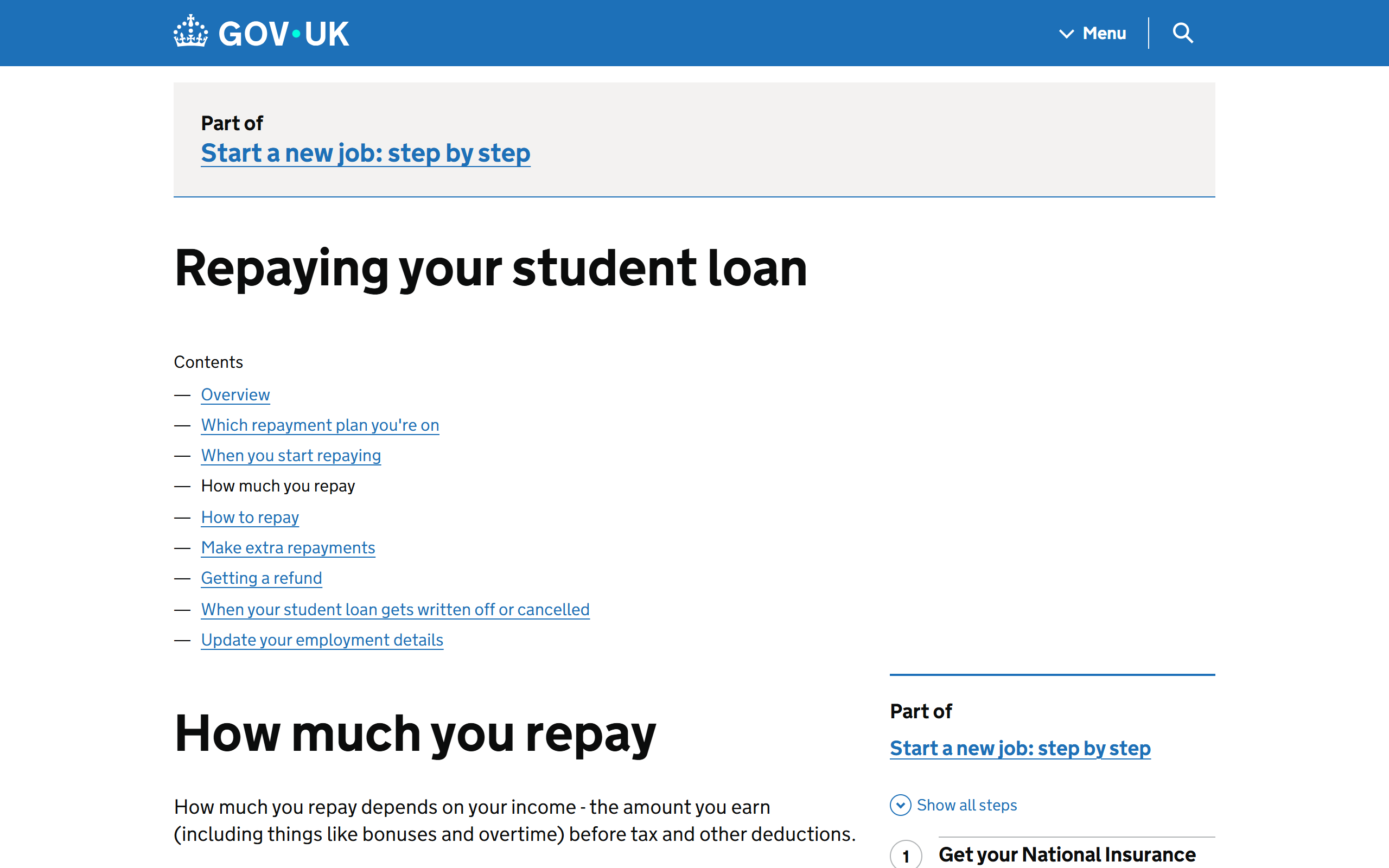
If you started university in September 2023 or later, you're on Plan 5. The terms are noticeably worse than Plan 2, and they change how to think about the loan entirely:
- Repayment threshold: £25,000 (frozen until 2027).
- Repayment rate: 9% of income above the threshold.
- Interest: RPI inflation only (capped to prevent it ballooning).
- Write-off period: 40 years from the April after graduation.
That 40-year window is the punchline. According to government modelling, only the top ~25% of earners are projected to repay the full balance. Everyone else pays the 9% surcharge on income above £25,000 for forty years and then has whatever is left written off.
For most graduates, this means the loan behaves like a 9% additional income tax band rather than a traditional debt. Overpaying it makes no sense unless you're confident you'll be a top earner who'd repay the full balance anyway. The Plan 5 borrower who steadily earns £30,000 from graduation to retirement pays £450 a year in "graduate tax" (9% × £5,000 over the threshold) and the rest gets written off at 60.
This reframes the question. The cost of university isn't really the £60,000 sticker price. It's a 9% bump on lifetime earnings above £25,000, plus the lost three years of earnings, contributions and compounding. The decision is whether the degree adds enough to your lifetime earnings to justify both.
The graduate earnings premium, by subject
The Department for Education's Longitudinal Education Outcomes (LEO) data tracks what graduates actually earn five and ten years after finishing. The picture is brutal in its variation.
Median earnings five years after graduation, by subject (rough figures):
- Medicine and dentistry: £55,000+
- Economics: £45,000+
- Engineering: £38,000-£42,000
- Computer science: £36,000-£40,000
- Mathematics: £35,000-£38,000
- Law: £30,000-£35,000 (huge spread, City vs high street)
- Business: £30,000
- English: £26,000
- Psychology: £25,000
- Creative arts: £22,000-£24,000
The non-graduate UK median for under-30s is roughly £28,000. So if you graduate from a humanities or creative arts degree at a non-selective university, you may be earning the same five years out as someone who went straight into work at 18, except you've also lost three years of earnings and you're paying the 9% Plan 5 surcharge on top.
This is the uncomfortable truth the "university is always worth it" crowd skip past. The graduate premium exists, but it's heavily concentrated in a handful of high-earning subjects from selective universities. For everyone else, the financial case is shaky.
The institution matters too. A computer science graduate from a top university earns roughly twice as much as one from the bottom-ranked institution offering the same subject. Subject and university interact, which is why blanket statements like "engineering pays" are only half right.
The case for skipping university
The financial case for going straight into work at 18 has grown stronger over the last decade, mostly because tuition fees rose while alternative routes improved.
Apprenticeships now cover serious careers. Higher and degree apprenticeships exist in accounting (ACCA, ICAEW), law (CILEx, solicitor apprenticeships), engineering, software, banking and consulting. The apprentice earns a salary (often £18,000-£25,000 starting, rising to £35,000+ by year four), gets the qualification paid for by the employer, and has zero student loan debt. By the time their school friends graduate, the apprentice has four years of earnings, four years of pension contributions, and a professional qualification.
Trades pay well and start earlier. A qualified plumber, electrician or HVAC engineer can earn £35,000-£50,000 by their mid-20s, often more if they go self-employed. Three years of skilled-trade wages in your early 20s plus consistent pension contributions can leave you ahead of a graduate at career-day-one.
Compound interest favours early starters. A 21-year-old who's been investing £200/month into a Stocks and Shares ISA since 18 has roughly £8,000 already compounding. Their graduate counterpart starts from zero at 21. At a 7% real return over 40 years, that £8,000 head start grows to roughly £120,000. Three years of compound interest is genuinely valuable.
No student loan tax band. A non-graduate earning £35,000 takes home roughly £900 more per year than a graduate on Plan 5 doing the same job, because they're not paying the 9% surcharge on the £10,000 above the threshold. Across a 40-year career, that's tens of thousands. (If you do end up with a Plan 5 loan, our should I pay off my student loan? guide covers when overpaying makes sense.)
Real-world experience can compound faster than academic credentials. In sales, marketing, hospitality, software (especially without formal CS) and entrepreneurship, four extra years of work experience often outweighs the degree by your late 20s.
The case for going to university
University still wins comfortably for some people, and not just for income reasons.
Gated professions. Medicine, dentistry, veterinary work, architecture, qualified accountancy via the academic route, and most engineering chartered routes require a degree. If your career goal is one of these, a degree isn't optional.
High-earning specialisms. Investment banking, management consulting, big-tech engineering, quant finance and many corporate graduate schemes recruit almost exclusively from selective universities. The degree functions as both a filter and a network access pass. The lifetime earnings difference can be six figures per year, easily justifying the cost.
Subjects with strong wage premiums. Medicine, dentistry, engineering, computer science, economics and mathematics from a decent university produce graduates who repay the loan in full and still earn substantially more than non-graduates over a lifetime. The maths just works.
Career switching insurance. A degree is portable in a way that most apprenticeships are not. If your industry collapses or you want to retrain at 35, a degree opens doors that lack-of-degree quietly closes.
Non-financial value. Three years of intellectual development, friendships, independence and exposure to new ideas isn't on the spreadsheet but matters to many people. The financial framing isn't the whole story, especially for school leavers who'd benefit from the structured transition into adulthood.
The honest version of the pro-university argument is narrower than the "always worth it" version: the degree pays back if it's in a high-premium subject from a selective institution, or if it's gating a profession you genuinely want, or if you'd struggle without the structured environment.
How to decide
The right financial framework is straightforward. Ask three questions:
1. Does the career on the other side require a degree? If yes (medicine, law, engineering, etc.), the question is which degree, not whether. Move on.
2. Does the chosen subject and university combination produce graduates who out-earn non-graduates by enough to justify the cost? Check the LEO data for the specific subject and institution. If five-year median earnings for that combination are below £28,000, the financial case is weak.
3. What's the realistic alternative? If the alternative is a £20,000 retail job with no progression, university often wins even with a low-paying subject. If the alternative is a degree apprenticeship with a top employer, paying £25,000 starting and a free professional qualification, university is fighting a much harder battle.
For someone choosing between, say, English literature at a non-selective university and a marketing apprenticeship at a major employer, the apprenticeship usually wins on lifetime earnings, lifetime debt, and compounded wealth. For someone choosing between a computer science degree at a top-ten university and a barista job, the degree wins easily.
The decision lives in the specifics. The blanket answer (in either direction) is almost always wrong.
Frequently Asked Questions
Is going to university still worth it financially in the UK?
For some subjects and institutions, yes. For others, no. Medicine, dentistry, engineering, computer science and economics from selective universities still produce graduates who repay the loan and out-earn non-graduates by a wide margin. Creative arts, humanities and business degrees from non-selective universities increasingly produce graduates earning around the non-graduate median, which makes the financial case shaky once you include three years of lost earnings and the 9% Plan 5 surcharge.
How much does a UK university degree cost in total?
Roughly £60,000 in borrowed fees and maintenance for a three-year degree outside London (around £70,000 in London). Add three years of foregone earnings (around £54,000 net for an entry-level job) and the total opportunity cost is closer to £114,000. This is what you give up to attend university, even if most of it never appears as cash leaving your bank account.
Should I overpay my Plan 5 student loan?
Almost certainly not, unless you're confident you'll be a top 25% earner for most of your career. Plan 5 loans are written off after 40 years, and most graduates never repay the full balance. Overpaying voluntarily means handing over money you'd never have legally owed. The exception is if you have a high salary already, a small remaining balance, and you're genuinely on track to repay in full anyway.
Are degree apprenticeships better than university financially?
For most people, yes. The apprentice earns a salary throughout, gets the same professional qualification paid for by the employer, has no student loan debt, and starts pension contributions and investing four years earlier. Competition for top apprenticeships is now fierce because the maths is so favourable. Look at programmes offered by the Big 4 accounting firms, major banks, defence contractors and large engineering firms.
Does the university you attend matter as much as the subject?
Yes, sometimes more. The LEO data shows that earnings for the same subject can vary by 50-100% between the top and bottom-ranked institutions. A computer science graduate from a top university typically earns roughly double what one from the bottom-ranked institution earns five years out. For most fields, the institution-subject combination matters more than either factor alone.
Read Next
- Should I Pay Off My Student Loan?
- Investing in Yourself: The UK Guide
- The UK Personal Finance Flowchart
- Compound Interest Calculator Guide
Further Reading:
I Will Teach You To Be Rich - Ramit Sethi - The clearest playbook for setting up your finances in your early 20s, whether you went to university or skipped it. Automation, savings rate and starting compound interest early. (Affiliate link - we may earn a small commission at no extra cost to you.)
Prefer to watch?
We turn these money breakdowns into short videos
A few a week, plain-English UK money. If you would sooner watch than read, follow along:
Enjoying the content?
If this site has been useful, a coffee goes a long way.
Browse more articles
Browse all