





What to Do When You Inherit Money
You have just inherited money. The single most valuable thing you can do with it in the first week is nothing. The reason is the same reason lottery winners go broke.
Cite this article
Freedom Isn't Free (2026) What to Do When You Inherit Money. Available at: https://freedomisntfree.co.uk/articles/what-to-do-when-you-inherit-money (Accessed: 10 October 2026).
Italicise the article title in your bibliography. Accessed date set to today.
TLDR
- Do nothing for the first week. Park the money in a savings account and resist every urge to spend, invest, or lend it.
- In the first month, clear high-interest debt and build an emergency fund of three to six months of expenses.
- Spend months one to three learning the basics - ISAs, index funds, pensions - before making any big decisions.
- After three months, put the money to work: max out your ISA, consider a pension top-up, and keep the investment strategy boring.
Inheritance timeline: what to do and when
| Stage | Action | Why |
|---|---|---|
| Week 1 | Park cash in easy-access savings | Grief impairs judgement |
| Month 1 | Kill high-interest debt, build emergency fund | Stop the bleeding first |
| Months 1-3 | Learn ISAs, index funds, pensions | Avoid expensive mistakes |
| Month 3+ | Max ISA (£20k), top up SIPP, invest the rest | Put money to work long term |
UK 2026/27 allowances. No income or CGT on the inheritance itself; IHT (if any) is paid by the estate.
What to Do When You Inherit Money
When you inherit money, the world does not stop to let you think. You are grieving, or guilty, or overwhelmed - and now you have a financial decision sitting in your lap that feels bigger than anything you have dealt with before. Maybe it is £50,000. Maybe it is £200,000. Maybe it is more than you have ever seen in one place.
The good news: you do not need to do anything today. The bad news: doing nothing forever is one of the worst things you can do with it. Money sitting in a current account earning 0% interest is quietly losing value every single month to inflation.
This guide gives you a clear timeline. No jargon, no assumptions about what you already know, and no pressure to rush. Just a step-by-step plan for what to do and when to do it.
Contents
- The First Week - Do Nothing
- The First Month - Clear the Decks
- Months One to Three - Learn Before You Spend
- Three Months Onward - Put the Money to Work
- When to Get Financial Advice
- Frequently Asked Questions
The First Week - Do Nothing
This is the single most important piece of advice in this entire article. When you first receive the money, do absolutely nothing with it.
Open an instant access savings account at your bank (or a competitor offering a better rate) and move the money there. That is it. That is the whole first week. The savings account keeps the money safe, earns a small amount of interest, and - most importantly - puts a barrier between you and any rash decisions.
Do not buy anything. Do not "invest" it. Do not lend it to a family member who has a great business idea. Do not pay off your mortgage. Not yet. And do not tell people how much you received. The moment people know you have money, you will be amazed at how many of them suddenly need some.
This is not cynicism. It is pattern recognition. Grief impairs judgement. So does euphoria. So does guilt. If someone you loved has just died, you are not in the right state of mind to make decisions that will affect the next thirty years of your life. Give yourself permission to wait.
A week is not going to cost you anything. A bad decision made in the first 48 hours could cost you everything.
The First Month - Clear the Decks
After a week of breathing room, you can start dealing with the basics. Not the exciting stuff. The boring, practical, "stop the bleeding" stuff.
Priority one: kill high-interest debt. If you have credit card balances, an overdraft you live in, or personal loans charging you 10-30% interest, pay them off immediately. No investment on earth will reliably return 20% per year, so paying off a credit card charging you 20% is the best guaranteed return you will ever get. Do not include your mortgage here - that is a separate, more complex decision for later.
Priority two: build an emergency fund. Work out what your essential monthly expenses are - rent or mortgage, bills, food, transport, insurance - and multiply that by three. Ideally six. Put that amount into an easy-access savings account and do not touch it. This is your safety net. It exists so that the next time your boiler breaks or your car dies, you do not have to sell investments at a bad time or go back into debt.
Priority three: sort the immediate practical stuff. If you have been putting off a necessary car repair, dental work, or a broken appliance because you could not afford it, now is the time. These are not luxuries. They are the kind of deferred maintenance that costs more the longer you ignore it.
Notice what is not on this list: holidays, new cars, house deposits, or "treating yourself." Those conversations can happen later. Right now, the goal is to build a stable foundation so the rest of the money has the best possible chance of working for you long term.
Months One to Three - Learn Before You Spend
You have cleared the urgent stuff. The remaining money is sitting safely in a savings account. Now comes the part that most inheritance guides skip: learning enough to make good decisions.
If you have never engaged with investing or personal finance before, that is fine. You do not need to become an expert. You just need to understand a few core concepts before you start moving larger amounts of money around.
ISAs. An Individual Savings Account is a tax-free wrapper provided by the UK government. Any money you put inside an ISA - and any growth on that money - is completely free from income tax, capital gains tax, and dividend tax. The current annual allowance is £20,000 for the 2026/27 tax year. There are two main types: a cash ISA (basically a savings account inside the tax-free wrapper) and a stocks and shares ISA (which lets you invest in funds, shares, and bonds inside the wrapper). For long-term growth, a stocks and shares ISA is where most of the money should end up.
Index funds. An index fund is a type of investment that buys a small piece of every company in a given market. Instead of picking individual stocks and hoping you chose right, you own a tiny slice of hundreds or thousands of companies at once. A single global index fund - tracking companies across the US, Europe, Asia, and everywhere else - gives you broad diversification for very low fees. It is the simplest, most reliable way to invest for the long term.
Your workplace pension. If you are employed, you already have a workplace pension whether you know it or not. Your employer puts money in, you put money in, and the government adds tax relief on top. If your employer matches contributions up to a certain percentage, increasing your contributions to hit that maximum is free money. With a lump sum in the bank covering your expenses, you can afford to redirect more of your salary into the pension and let the inheritance fill the gap.
Lump sum vs drip feeding. You do not have to invest the entire amount at once. Historically, putting the full amount in on day one beats spreading it out over months - because markets go up more than they go down. But if the thought of investing £100,000 in one go makes you feel sick, splitting it into monthly chunks over six to twelve months is a perfectly reasonable approach. The best strategy is the one you actually follow through on.
Three Months Onward - Put the Money to Work
You understand the basics. You have no high-interest debt. You have an emergency fund. Now it is time to put the rest of the inheritance somewhere it can grow.
Here is the priority order:
1. Max out your ISA. Open a stocks and shares ISA (if you do not have one already) and contribute up to £20,000 for this tax year. If the inheritance arrives near the start of a new tax year, even better - you might be able to use two years of allowance in quick succession. Inside the ISA, invest in a low-cost global index fund. One fund. Keep it simple.
2. Consider a SIPP. A Self-Invested Personal Pension lets you invest for retirement with significant tax relief. If you are a basic-rate taxpayer, every £80 you contribute becomes £100 after the government adds 20% tax relief. Higher-rate taxpayers get even more back. The trade-off is that you cannot access the money until age 57 (from April 2028). If you have decades until retirement, the tax benefits are substantial.
3. The mortgage question. If you have a mortgage, you will be wondering whether to overpay it or invest the money instead. The short answer: if your mortgage interest rate is below the long-term expected return from investing (roughly 4-5% after inflation), investing is mathematically better. But paying off a mortgage gives you certainty and peace of mind that no spreadsheet can replicate. There is no wrong answer here - it depends on how you sleep at night.
4. General investment account. If you have maxed your ISA and made any pension contributions you want to, the remainder can go into a general investment account (sometimes called a GIA or taxable account). It does not have the tax benefits of an ISA or pension, but it has no annual contribution limit and no restrictions on when you can access the money. The same global index fund works here too.
The overarching principle: boring is good. The best thing you can do with an inheritance is make it invisible - sitting in low-cost funds, growing quietly, working in the background while you get on with your life. Resist the urge to do something clever. Clever is how people lose money.
When to Get Financial Advice
If the inheritance is over £100,000, a one-off consultation with an independent financial adviser (IFA) is worth considering. Not because you cannot manage the money yourself - you absolutely can - but because the tax implications get more complex at larger amounts, and an hour of professional advice could save you thousands.
The important distinction: look for a fee-based adviser, not a commission-based one. A fee-based adviser charges you directly for their time (typically £150-300 per hour or a flat fee for a financial plan). A commission-based adviser is "free" because they earn a percentage of whatever products they sell you - which means their incentive is to sell you products, not to give you the best advice.
You almost certainly need professional advice if the inheritance includes property (especially if you already own a home), business assets, or if there are inheritance tax complications. You also need advice if the amount is large enough that you are unsure about the tax treatment.
You probably do not need advice if the inheritance is straightforward cash under £100,000, you have no complex tax situation, and you are comfortable following the steps above. The financial services industry would love you to believe that investing is too complicated for ordinary people. It is not. A single index fund inside an ISA is not complicated. It is just unfamiliar.
Frequently Asked Questions
Should I pay off my mortgage with an inheritance?
It depends on your mortgage rate and your risk tolerance. If your rate is above 5%, paying it off is a strong guaranteed return. If it is below 4%, investing the money is likely to produce better results over 10-plus years. But "likely" is not "guaranteed," and the psychological freedom of owning your home outright is worth something real. There is no objectively wrong choice here.
Do I need to pay tax on inherited money?
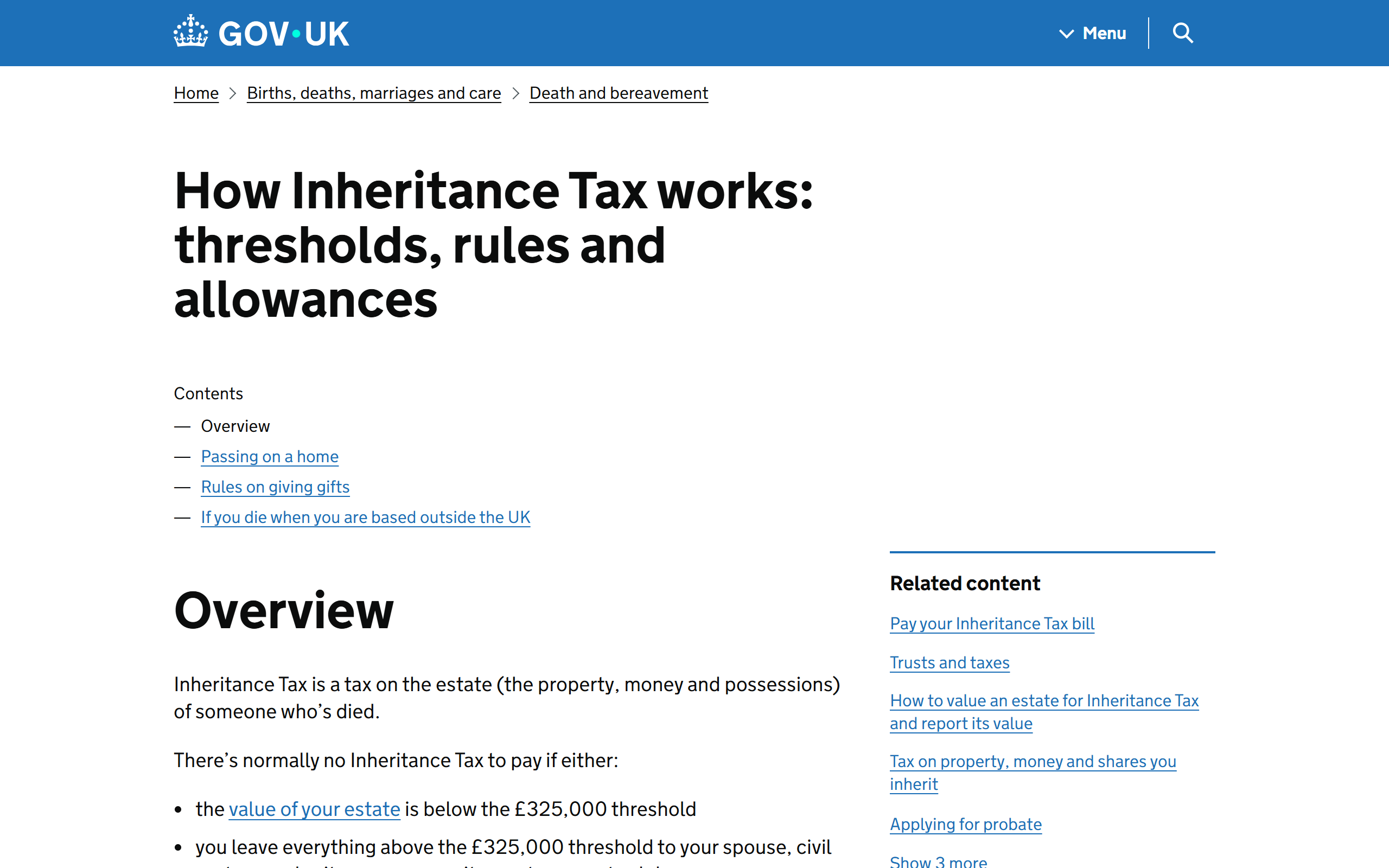
In the UK, you generally do not pay income tax or capital gains tax on money you inherit. The estate itself may have paid inheritance tax (IHT) before the money reached you - this applies to estates valued above the nil-rate band of £325,000 (or £500,000 if the estate includes a home passed to direct descendants). But as the recipient, the money that lands in your account is yours tax-free. The exception is any income or gains the money generates after you receive it - that is taxable in the normal way unless it is sheltered inside an ISA or pension.
How much of an inheritance should I invest?
After clearing high-interest debt and building an emergency fund, most of the remainder should be invested for the long term if you do not need it in the next five-plus years. A common approach: £20,000 into a stocks and shares ISA this tax year, pension top-up if it makes sense for your situation, and the rest into a general investment account. Keep a cash buffer beyond your emergency fund if it helps you sleep - but do not leave six figures sitting in a savings account for years. Inflation will eat it.
Should I tell people about my inheritance?
Be cautious. You do not owe anyone a disclosure of your financial situation. Money changes how people treat you - sometimes subtly, sometimes not. Friends and family who know you have come into a large sum may ask for loans, expect generosity, or quietly resent you. This does not make them bad people. It makes them human. Share the information on your own terms, with people you trust, and only when you are ready.
What is the biggest mistake people make with inherited money?
Spending it immediately. The pattern with windfalls is well documented: the money arrives, it feels unreal, and it gets spent before the recipient has a plan. People buy cars, take holidays, lend to family, and "treat themselves" until the balance is gone - often within a few years. The single best thing you can do is slow down. The money is not going anywhere. You have time.
Further Reading:
I Will Teach You To Be Rich - Ramit Sethi - The best starting point for someone who has money to manage but has never engaged with personal finance. Practical, opinionated, and built for people who want a system they can set up once and forget. (Affiliate link - we may earn a small commission at no extra cost to you.)
The Psychology of Money - Morgan Housel - Short, readable chapters on why we make irrational decisions with money - especially relevant when grief, guilt, or sudden wealth is involved. (Affiliate link - we may earn a small commission at no extra cost to you.)
Related Reading:
Prefer to watch?
We turn these money breakdowns into short videos
A few a week, plain-English UK money. If you would sooner watch than read, follow along:
Enjoying the content?
If this site has been useful, a coffee goes a long way.
Browse more articles
Browse all